How to Prepare Aluminium Scrap Properly
Published June 12, 2026 ·
A bag of mixed metal might still have value, but a clean, sorted aluminium load is easier to assess, faster to process and more likely to get you paid without delays. If you want to know how to prepare aluminium scrap properly, the job is simple – separate it, clean off obvious contamination, and keep different grades apart before you bring it in.
That sounds basic because it is. Most sellers lose time and sometimes money by turning up with aluminium mixed in with steel, plastic, rubber, timber or general rubbish. Whether you’re a homeowner clearing out old frames, a mechanic moving damaged parts, or a tradie with offcuts from site, good preparation makes the whole transaction quicker and more accurate.
Why preparation matters
Aluminium is a valuable non-ferrous metal, but not every aluminium item is treated the same. Clean extrusions, sheet, cast aluminium and mixed household items can all fall into different categories depending on condition and contamination. If everything is bundled together with screws, insulation, glass or other metals still attached, the load takes longer to grade and may be priced more conservatively.
Preparation is not about making scrap look perfect. It is about making it easy to identify. The more obvious the material type and the cleaner the load, the less guesswork there is when it is assessed. That helps casual sellers and high-volume commercial suppliers alike.
How to prepare aluminium scrap before you sell
Start by separating aluminium from everything else. A lot of people assume silver-coloured metal is all the same, but steel, stainless and aluminium are different materials with different values. A quick magnet test helps here. Aluminium is non-magnetic, so if a magnet sticks, it is not aluminium.
Once you’ve pulled aluminium aside, sort it into broad groups. You do not need a laboratory-level system, but you should keep obvious types separate. Window frames and clean extrusions should not be thrown in with old cast engine parts. Thin sheet should not be mixed through with dirty household scrap full of fixings and plastic. Even a rough sort saves time.
Then remove easy contamination. That means taking off anything that is clearly not aluminium if it can be removed without too much effort. Plastic caps, rubber seals, timber inserts, fabric, foam and loose screws are worth stripping away. If an item is heavily combined and would take too long to dismantle, leave it as is and ask for it to be assessed on that basis. There is no point spending an hour to remove a few dollars’ worth of attached material.
Dry storage also matters. Aluminium does not rust like steel, but wet loads are still untidy and can carry dirt, sludge or trapped rubbish. If you can, keep scrap under cover in bins, tubs or separate piles until transport.
Common types of aluminium scrap
Knowing what you have helps you prepare it properly. The most common aluminium scrap from homes and worksites includes window frames, sliding door sections, patio offcuts, sheet, cladding, fencing parts, ladders, cookware, bike frames and old outdoor furniture. In workshops and automotive settings, you might also have cast parts such as gearbox housings, engine components, wheels and brackets.
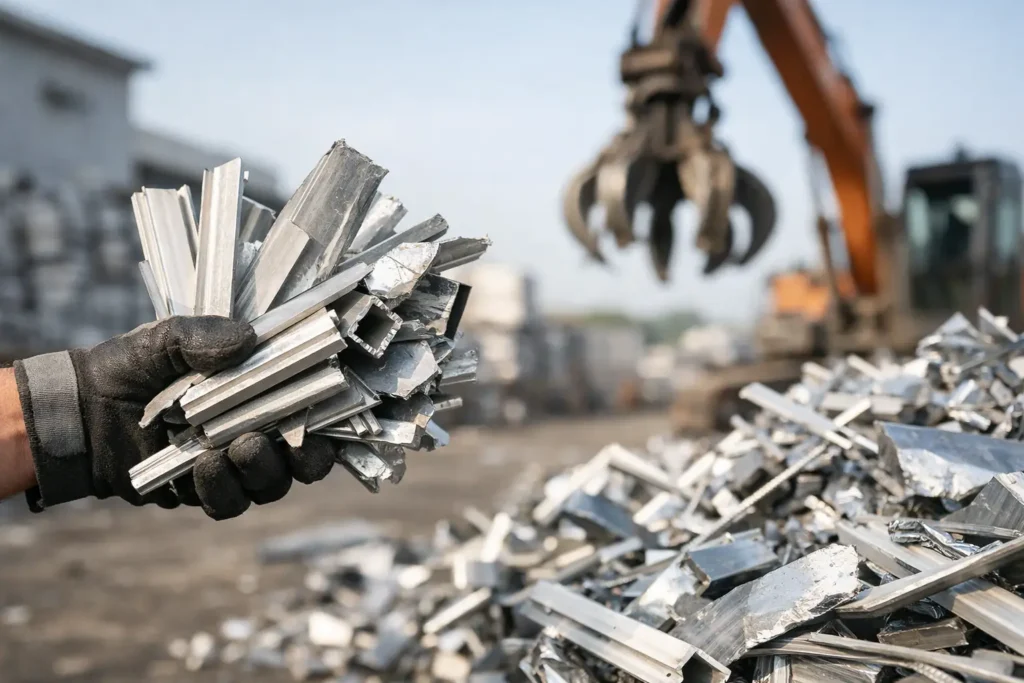
Clean extrusions are usually straightforward. These are the shaped sections used in frames and fabrication. If they are free from glass, steel screws, handles, rubber and excessive paint build-up, they are easier to classify. Cast aluminium is different. It often comes from machinery or vehicles and may have oil, grease or steel inserts attached. It still has value, but it should be kept separate from cleaner fabrication scrap.
Aluminium cans are another category, but they should not be mixed in with heavier industrial or building scrap. Keep them bagged or boxed separately if you are collecting them in volume.
What to remove and what to leave alone
This is where a bit of common sense saves effort. Remove loose non-metal attachments and obvious contaminants you can strip quickly. Take glass out of window frames if it is safe to do so. Pull off rubber seals if they come away easily. Remove brackets, bolts and mixed metal fittings where practical.
Do not turn a simple clean-up into a full demolition project. If an aluminium item has bonded materials, pressed-in components or awkward fixings that require specialist tools, it may not be worth the labour. The same applies to painted or coated aluminium. A surface coating does not automatically make it worthless, and aggressive stripping can waste time and create a mess.
Oil and grease are another factor. Heavily contaminated automotive parts should be drained where possible and kept separate from cleaner scrap. You do not need to scrub every part to showroom condition, but you should avoid bringing in loads covered in fluid and dirt if there is a reasonable way to clean them up first.
How to sort aluminium scrap for a better result
Keep clean and dirty loads apart
If you’re dealing with both clean offcuts and dirty demolition scrap, separate them before transport. A clean stack of extrusion should not be downgraded because it is tangled up with mixed demolition material.
Separate cast from extrusion where possible
Cast aluminium parts tend to look thicker, rougher and more moulded than straight fabricated sections. If you can identify cast items, keep them in their own pile or tub.
Do not mix aluminium with other non-ferrous metals
Copper, brass and stainless all have their own value. Mixing them into aluminium scrap makes sorting slower and increases the chance of confusion at the yard.
Bag smaller pieces securely
Small offcuts, turnings or loose fragments can get lost, scattered or contaminated during transport. Use tubs, buckets or strong bags to keep them contained.
Mistakes that cost time at the yard
The biggest mistake is mixing everything together and expecting a quick answer. If your load contains aluminium, steel, copper, plastic, timber and e-waste all in one trailer, someone has to separate what can be accepted from what cannot. That slows the job down.
Another common problem is assuming all aluminium pays the same. It does not. A clean fabrication load and a dirty mixed load are different. Sellers also make life harder for themselves by tying materials together with rope, wrapping everything in plastic or packing scrap under general rubbish. That can hide the actual metal and delay grading.
Unsafe transport is another issue. Sharp offcuts, loose sheet and unsecured parts can shift in the tray or trailer. Strap the load down properly and avoid overpacking. If you are bringing in larger quantities from a site, sort and stack material at the source rather than throwing it all together for later.
For tradies, workshops and larger clean-outs
If you handle aluminium regularly, set up a simple system on site. One bin for clean extrusion, one for cast, and one for mixed non-ferrous scrap is usually enough to keep things under control. That saves rehandling later and gives you a clearer idea of what you have on hand.
For workshops and industrial sites, routine matters more than perfection. If staff know where to put aluminium offcuts, damaged parts and stripped sections, the scrap pile stays valuable instead of turning into a mixed waste problem. Even basic labelling helps.
If you have bulk quantities, demolition material or ongoing scrap from trade work, it can be worth speaking to a local recycler in advance so you know how best to separate your load. Melton Scrap Recycling deals with both small and commercial quantities, so the right prep depends on what you are moving and how often you sell.
When not to overdo it
There is a point where extra preparation stops paying off. If you are spending too much labour cutting apart low-value assemblies or trying to clean every mark off old aluminium, you are probably doing too much. The goal is to remove obvious contamination, sort materials sensibly and present the load clearly.
For a homeowner with a few old frames and outdoor settings, that may mean taking out the glass and stacking the metal neatly. For a mechanic, it may mean draining fluids and keeping cast parts separate. For a builder, it may mean keeping site offcuts free from steel and rubbish. Same principle, different scale.
Good aluminium prep is not complicated. Sort it properly, strip off what you can without wasting time, keep it dry and transport it safely. That gives you a cleaner load, a faster transaction and a fairer assessment when it is time to get paid. If you are not sure whether something is aluminium or how it should be presented, ask before you load up – it is easier to get it right at the start than fix a mixed pile later.