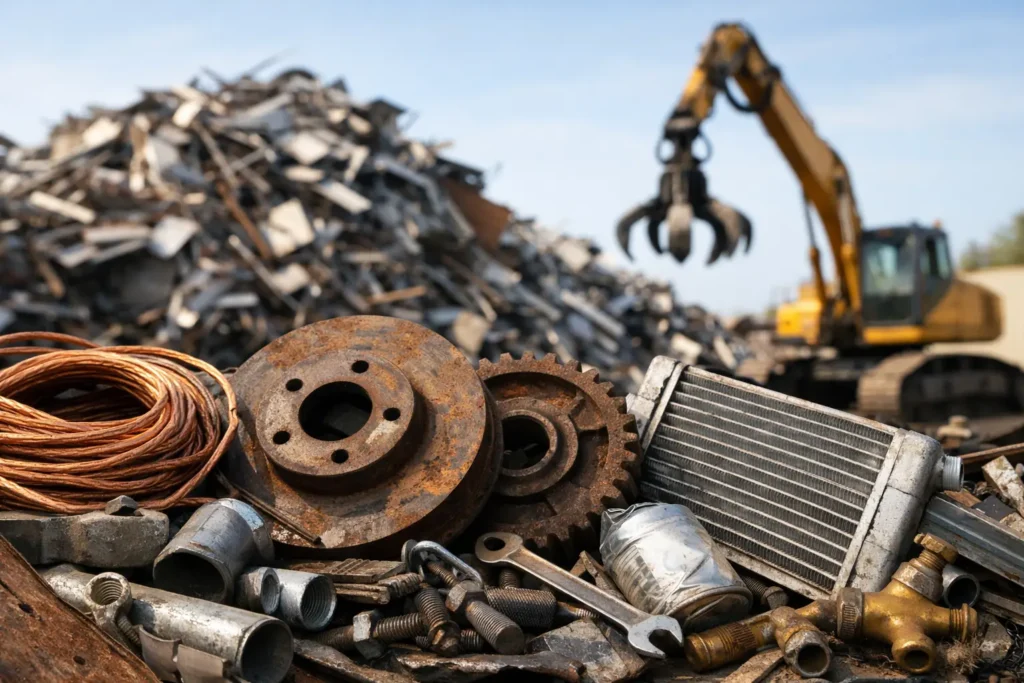
What Is Considered Scrap Metal for Recycling?
Published May 22, 2026 ·
A lot of people throw out value without realising it. Old wire in the shed, broken taps from a reno, a dead hot water unit, car parts in the garage, offcuts from a job site – all of that can fall under what is considered scrap metal for recycling if the material can be recovered, sorted and sold back into the recycling stream.
The short answer is simple. If it is metal, unwanted, and can be processed for reuse, it is usually scrap metal. The catch is that not all scrap is treated the same. Some metals are worth far more than others, some need separating, and some items are only accepted if they are clean, safe and free from non-metal attachments.
What is considered scrap metal for recycling?
Scrap metal is any discarded metal item or metal-bearing material that still has recycling value. That includes household items, trade waste, factory offcuts, demolition metal, vehicle parts and industrial scrap. It can come from a one-off clean-up or from ongoing commercial work.
In practice, scrap falls into two main groups – ferrous and non-ferrous. Ferrous metals contain iron. Non-ferrous metals do not, and they usually attract higher prices because they are more valuable to recover and reuse.
For most sellers, that is the first thing that matters. If you know whether your load is ferrous or non-ferrous, you are already closer to understanding what it is worth and how it should be sorted.
Ferrous scrap metal
Ferrous scrap is the most common category. It includes steel and iron, which show up everywhere from household appliances to structural building materials. If a magnet sticks to it, there is a good chance it is ferrous.
Common examples include steel beams, reo, steel pipes, machinery, whitegoods, tool bodies, roofing sheets, sheds, fencing, cast iron parts and general mixed steel. Car bodies and many heavy vehicle components also fall into this category once fluids, tyres and non-metal parts are dealt with properly.
Ferrous scrap is usually lower in value per kilo than non-ferrous metals, but volume matters. A trailer load of steel from a demolition job, workshop clean-out or rural property can still add up fast. For builders, mechanics, farmers and factories, ferrous scrap often makes up the bulk of the tonnage.
Condition also plays a part. Rust does not automatically make steel worthless, but heavy contamination can reduce the grade. Scrap yards want metal, not piles of dirt, timber, plaster or rubbish mixed through it.
Non-ferrous scrap metal
Non-ferrous scrap is where many of the better payouts sit. These metals are lighter in some cases, more corrosion-resistant in others, and widely used in electrical, plumbing, automotive and manufacturing work.
Copper is one of the best-known examples. It is found in electrical cable, wiring, motors, air conditioning units, plumbing pipe and old electrical components. Clean bright copper generally attracts a stronger rate than copper mixed with solder, insulation or attachments.
Brass is another common one, especially from plumbing and fittings. Old taps, valves, locks, shell casings and decorative hardware can all contain brass. It often looks yellow-gold, though age and tarnish can make that less obvious.
Aluminium turns up in window frames, screen doors, gutters, wheels, engine parts, sheets, extrusions, cans and offcuts from fabrication work. It is lightweight, does not rust like steel, and is commonly recycled in large volumes.
Stainless steel is also non-ferrous for scrap purposes, even though people often assume it is the same as regular steel. You will see it in sinks, benches, commercial kitchens, tanks, food processing equipment and industrial machinery. Grades vary, which means value can vary too.
Lead, batteries, zinc, nickel alloys and certain insulated cables can also count as non-ferrous scrap, depending on the material and how it is presented.
Household items that count as scrap metal
A lot of scrap comes from ordinary homes, not just worksites. If you are clearing out before moving, renovating, replacing appliances or cleaning up an old property, there is often more recyclable metal than people expect.
Whitegoods such as washing machines, dryers, ovens and fridges may be accepted as scrap metal, although some items need special handling because of gas, compressors or other hazardous components. Old bed frames, metal shelving, lawnmowers, bikes, tools, outdoor furniture, barbecue frames and metal gates are also common.
Even smaller items can be worth separating if you have enough of them. Door handles, curtain rods, metal light fittings, copper pipe, aluminium frames and old garden equipment all have recycling potential.
The key point is this – not every metal item belongs in the general rubbish skip. If it is mostly metal, there is a good chance it can be recycled properly and turned into cash rather than landfill.
Trade and industrial scrap that is commonly accepted
For tradies and commercial sellers, scrap usually builds up as part of the job. Electricians collect cable and wire offcuts. Plumbers end up with copper pipe, brass fittings and old hot water units. Mechanics have radiators, alloy wheels, batteries, engines and mixed vehicle parts. Fabricators and builders deal with offcuts, beams, sheets, frames and demolition steel.
Industrial sites can generate larger and more complex loads, including machine parts, stainless process equipment, factory scrap, pallets of offcuts, cable, motors and redundant plant. In those cases, proper grading and on-site weighing can make a real difference to the final return.
This is where sorting matters most. Mixed loads are slower to process and may be priced more conservatively than separated metals. If copper, brass, aluminium and steel are all piled together, the high-value material can get lost in the blend.
What is not considered acceptable scrap metal?
This is where people get caught out. Just because something has metal in it does not mean it is ready for scrap.
Items heavily contaminated with concrete, plastic, timber, insulation, food waste, chemicals or general rubbish may be downgraded or refused. Sealed containers, gas bottles, hazardous waste, asbestos-contaminated materials and anything with unsafe residues can also be a problem.
Some items need prep before they are accepted. For example, batteries, cars, air conditioners and certain appliances may require safe handling because of fluids, refrigerants or other regulated components. That does not mean they cannot be recycled. It means the process has to be done properly.
If you are unsure, ask before loading the ute or booking a pickup. A quick check saves time and avoids arguments at the yard.
How scrap metal is usually graded
When people ask what is considered scrap metal for recycling, they often really mean, what will I actually get paid for? That depends on grading.
Scrap is not priced on metal type alone. It is also assessed by cleanliness, thickness, purity, attachments, volume and current market demand. Clean copper without insulation is worth more than mixed cable. Clean aluminium extrusions are different from dirty cast aluminium. Stainless can be separated by grade. Steel can be light gauge or heavy melt.
That is why transparent weighing and clear grading matter. Good yards explain what they are buying and why one pile pays more than another. If you sort your scrap before you arrive, you usually put yourself in a better position.
Simple ways to get more value from your scrap
You do not need to be an expert to improve your return. Start by keeping different metals separate. Do not mix copper with brass, and do not throw aluminium into a steel pile. Remove obvious non-metal rubbish where you can, and keep your load as clean and dry as practical.
It also helps to think in categories. Household steel goes one way. Wire and cable go another. Batteries, motors, radiators and alloy wheels should be kept apart. For trade and industrial sellers, that basic level of sorting can make pickup, unloading and payment much faster.
If the load is large, awkward or ongoing, collection may make more sense than multiple trips. Businesses like Melton Scrap Recycling deal with that every day, especially for workshops, demolition jobs, factories and commercial clean-outs where time on site matters as much as the metal value itself.
The main thing is not to let scrap pile up until it becomes a headache. If it is metal, unwanted, and recyclable, it has value sitting in it. A clean, sorted load gets processed faster, graded more accurately and paid more fairly. That is better for your pocket and better for keeping useful material out of landfill.