How Does Scrap Metal Recycling Work?
Published May 21, 2026 ·
A pile of old copper wire, a busted hot water unit, worn brake discs, aluminium offcuts from a job site – it all looks like junk until you know what happens next. If you’ve ever asked how does scrap metal recycling work, the short answer is simple: metal is collected, sorted, weighed, graded, processed and sent back into manufacturing. The part that matters is how well that process is done, because that affects both the price you get paid and whether the material is actually recovered properly.
For homeowners, tradies and industrial sellers, scrap recycling is really about two things. First, turning unwanted metal into cash without wasting half a day. Second, making sure the material is handled properly instead of ending up in landfill when it still has value.
How does scrap metal recycling work from start to finish?
At the yard level, the process is practical and fairly direct. You bring scrap in, or arrange a pickup if the load is too large or awkward to move. The metal is then inspected to identify what it is, how clean it is, and whether it falls into ferrous or non-ferrous categories.
Ferrous metals contain iron. Think steel, cast iron and a lot of heavier industrial and automotive scrap. Non-ferrous metals include copper, brass, aluminium, lead, stainless steel and batteries. These usually attract different pricing because they have different market values and recycling demand.
Once identified, the load is weighed. That can happen as a full vehicle weight and tare weight for larger loads, or as individual material weights for smaller drop-offs. After that, the scrap is graded. This is where experience counts. Clean bright copper is not priced the same as mixed copper with insulation attached. Cast aluminium is not the same as extrusion. Stainless is not all one grade either.
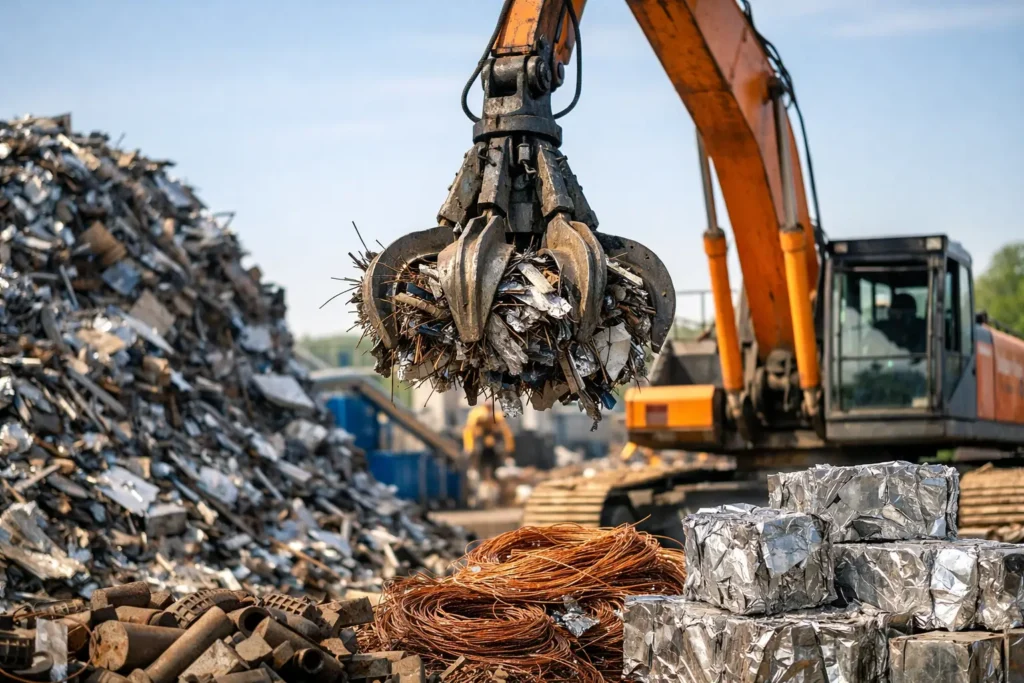
After grading, payment is made based on the current market rate, the type of metal, and the quantity. Then the processing side begins. The yard sorts materials into separate streams, removes contaminants where possible, and prepares the scrap for downstream recycling. That may involve cutting, stripping, baling, shearing or consolidating materials into bulk lots for transport to larger processors, smelters or mills.
Why sorting and grading matter so much
A lot of sellers assume scrap is scrap. It isn’t. Sorting is what separates a quick clean payout from a lower return caused by mixed loads, contamination or misidentified material.
Take copper as an example. Clean, uncoated copper with no solder, plastic or steel attachments is worth more than mixed copper with fittings and rubbish attached. The same applies to brass taps with excess plastic, aluminium with steel bolts still in place, or stainless mixed in with general steel. If a load takes longer to separate or contains too much contamination, the value drops.
That doesn’t mean you need to become a metal expert before selling. It just means clean, separated scrap usually pays better. If you’re a sparky, plumber, mechanic or builder, a bit of basic sorting on site can make a real difference over time. For larger commercial and industrial loads, professional grading is essential because small classification errors get expensive fast.
What happens after scrap leaves the yard?
This is the part many people never see. Once the material has been sorted and prepared, it moves further along the recycling chain. Ferrous metals are often sent for shredding or shearing, then separated magnetically and processed into feedstock for steel production. Non-ferrous metals may go through more detailed separation systems before being melted and refined.
At that stage, the metal is turned into raw material for new products. Recycled steel can end up back in construction, manufacturing or automotive parts. Aluminium may return as window frames, sheet products or packaging. Copper can go back into wiring, plumbing and electrical components.
The main advantage is that recycling metal generally uses less energy than producing it from virgin ore. It also reduces the need for landfill and cuts down on unnecessary extraction. For sellers, that environmental benefit is real, but the immediate draw is still straightforward – your unwanted metal has market value, and recycling puts it back to work.
Ferrous vs non-ferrous scrap
If you’re new to selling scrap, this distinction helps. Ferrous scrap usually includes structural steel, old appliances, car bodies, whitegoods, beams, pipes and general heavy steel. A magnet will stick to most of it. It tends to be lower in value per kilo than non-ferrous metal, but larger quantities can still add up quickly.
Non-ferrous scrap covers metals that usually pay stronger rates. Copper, brass and aluminium are common examples, along with stainless steel, lead and insulated cable. These materials are often found in renovation waste, plumbing jobs, electrical strip-outs, workshops and factory clean-ups.
The trade-off is that non-ferrous scrap often needs more accurate sorting. Mixed loads can still be accepted, but the cleaner and more separated the material, the easier it is to grade properly and the better the result is likely to be.
How different loads are handled
Not every load comes through the gate in the same condition. A household seller might arrive with an old BBQ, some wire, a few taps and a broken washing machine in the boot. A mechanic might have alternators, radiators, brake components and batteries. A demolition contractor might have tonnes of mixed steel and non-ferrous scrap across a site.
The process adjusts to the load. Small domestic quantities are usually assessed quickly and paid on the spot. Trade loads may need more careful separation because there are often several metal types in one batch. Large industrial loads may require on-site collection, bins, machinery access, scheduled transport and weighbridge handling.
This is where speed matters, but accuracy matters more. Fast service is only useful if the grading is right and the weights are transparent. For regular sellers, consistency is what builds trust.
Common issues that affect scrap value
The biggest one is contamination. Scrap with plastic, rubber, timber, dirt, concrete, liquids or general rubbish attached can be harder to process and worth less. Closed containers, gas bottles, fuel tanks and hazardous items may also need special handling or may not be accepted in the same way as standard scrap.
Another issue is mixed metals. If brass is thrown in with copper, or aluminium is mixed through steel, the whole load becomes slower to sort. Sometimes that means a lower blended return than if it had been separated properly from the start.
Volume also matters. A few kilos of clean copper will always have value, but larger, well-prepared loads are usually more efficient to process. On the other hand, if a load is bulky but light, transport costs and handling time may affect the economics of pickup. It depends on the material, the amount and how accessible it is.
How does scrap metal recycling work for cars, batteries and industrial scrap?
Automotive and industrial scrap often involve extra steps. End-of-life vehicles need depollution before recycling. That means removing fluids, batteries, tyres and reusable parts before the shell is processed as metal. Batteries need to be handled separately because they contain recoverable lead and other materials, but also hazardous components.
Industrial scrap can be even more varied. One site may have stainless process equipment, copper cabling, aluminium sections and heavy steel all in the same clean-out. Another may involve factory offcuts, redundant machinery or demolition scrap. In these jobs, on-site sorting, bin placement, lifting access and accurate documentation become part of the service, not an afterthought.
For businesses, downtime is money. A recycler that can quote clearly, collect quickly and grade correctly saves more than just disposal hassle.
What sellers can do before bringing scrap in
You don’t need to overcomplicate it. If you can safely separate copper from brass, aluminium from steel, and keep rubbish out of the load, you’re already helping yourself. Remove obvious non-metal attachments where practical. Keep batteries upright and secure. If you’re dealing with bulky or commercial quantities, take a few photos and get a quote before moving anything.
For local sellers around Melton, that usually means less guesswork, quicker turnaround and a clearer idea of what the load is worth before it hits the scales.
Scrap metal recycling works best when the process is honest, quick and properly sorted. If the metal still has value, it shouldn’t be sitting in a shed, cluttering a yard or taking up space on site. Get it weighed, get it graded properly, and get paid for it while the market is there.