How to Separate Scrap Metal for Recycling
Published May 21, 2026 ·
A mixed pile of scrap usually means one thing – less money and more mucking around. If you want to know how to separate scrap metal for recycling, the goal is simple: sort it well enough that it can be weighed, graded and paid correctly the first time.
That matters whether you have a bucket of old taps at home, offcuts from a job site, stripped cable from electrical work or a trailer full of workshop scrap. Clean, separated metal is easier to process, faster to quote and usually worth more than a tangled, contaminated load. You do not need to be a metal expert, but you do need a practical system.
Why separating scrap properly pays off
Scrap yards do not price every load the same way. Value depends on the metal type, how clean it is, how much non-metal material is attached and whether it has been mixed in with lower-grade material. A box of clean copper can fetch a very different rate from a box of mixed wire, brass fittings, steel screws and plastic.
The biggest mistake casual sellers make is assuming all metal goes in one pile. The biggest mistake trade and industrial sellers make is losing value through contamination. A few bolts, rubber seals, plastic housings or oily residues can drag a load into a lower grade. That does not mean every item has to be stripped to bare metal, but it does mean sorting pays.
How to separate scrap metal for recycling at the start
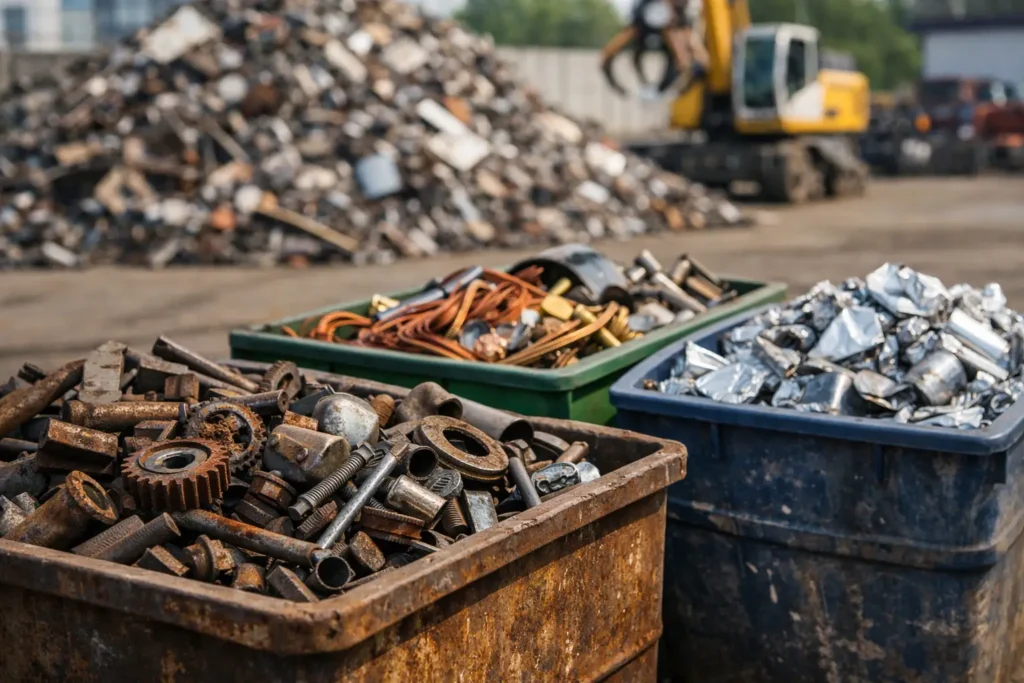
The easiest time to sort scrap is when it is first removed, not later when everything is piled together. On a worksite, in a shed or at a factory, set up separate tubs, bins or stillages for the main categories. Even a basic split between steel, copper, brass, aluminium and mixed non-ferrous is far better than one big heap.
If you are a homeowner doing a clean-up, use what you have. Buckets, crates and heavy-duty tubs are enough for small loads. If you are a tradie or workshop operator, labelled bins save time and stop good metal being downgraded by rubbish, screws, fittings and dirt.
Keep dry metal separate from anything wet, oily or dirty where possible. Water and grime do not just make handling unpleasant – they can affect weight accuracy, grading and the amount of cleaning needed before recycling.
Start with ferrous and non-ferrous metals
The first split is the most important. Ferrous metals contain iron. Non-ferrous metals do not. In practical terms, ferrous metal is usually lower value and includes steel, cast iron and many car parts. Non-ferrous metal usually has better scrap value and includes copper, brass, aluminium, lead and stainless steel.
A magnet is the quickest way to tell the difference. If the magnet sticks firmly, it is usually ferrous. If it does not, it is likely non-ferrous. This is not perfect in every case because some stainless steel grades are magnetic and some mixed items contain both metals, but it is the best first check for most sellers.
Once you have the ferrous pile separated, sort the non-ferrous metals by type. That is where the better return usually sits.
Identifying common scrap metals
Copper
Copper is one of the most valuable and common non-ferrous metals people bring in. You will usually find it in electrical cable, plumbing pipe, old hot water systems, motors and air conditioning units. Clean, bright copper with minimal contamination is generally worth more than burnt wire, mixed copper or insulated cable.
If you strip wire, keep bright copper separate from lower-grade copper and from insulated cable. If you do not strip it, keep cable together and do not mix it with brass fittings or steel clips.
Brass
Brass is common in taps, valves, plumbing fittings and some decorative hardware. It has a yellow-gold colour, although older pieces can look dull or dirty. Brass often gets mixed with copper and stainless steel in plumbing scrap, which is where value gets lost.
Take out obvious rubber washers, plastic parts and steel attachments if they are easy to remove. Do not waste an hour dismantling a low-volume load for the sake of a few grams – but remove what you can without blowing out your time.
Aluminium
Aluminium is light, non-magnetic and turns up in window frames, extrusions, cans, sheet offcuts, ute trays and some vehicle parts. The key with aluminium is to keep clean extrusions, cast aluminium and mixed aluminium separate if possible.
Painted aluminium, dirty aluminium and aluminium with steel screws attached may still be recyclable, but mixed grades can affect the final price. If screws and fittings come off quickly, remove them.
Stainless steel
Stainless steel is commonly found in sinks, benches, food equipment, exhaust parts and industrial machinery. It can look similar to standard steel, which is why people often under-sort it. Some grades of stainless are magnetic, so do not rely on the magnet test alone.
If it looks like high-quality corrosion-resistant metal and came from commercial kitchen, industrial or marine equipment, separate it for checking.
Steel and iron
Steel is everywhere – shelving, frames, tools, roofing, whitegoods, structural offcuts and car components. It is usually magnetic and heavier than aluminium. Keep general steel separate from non-ferrous metals and try not to load it with timber, plastic, concrete or insulation stuck to it.
Heavy steel, light gauge steel and cast iron may be graded differently depending on the load and condition. For household quantities, the main job is simply to keep steel out of your better-value non-ferrous bins.
Clean scrap gets better attention
You do not need to present every item in perfect condition, but cleaner scrap is easier to process and assess. Shake out loose dirt, drain fluids where appropriate and remove obvious rubbish. Keep batteries, e-waste, petrol bottles and hazardous items separate from general metal unless you already know they are accepted.
This is where common sense matters. A copper pipe with a small fitting attached is one thing. A heap of metal buried under plaster, timber, insulation and general site waste is another. Clean loads are safer to handle, quicker to unload and more likely to be graded accurately.
How to separate scrap metal for recycling without wasting time
There is a point where more effort stops making financial sense. If you are dealing with a small domestic load, spending half a day stripping every screw from old aluminium may not be worth it. If you are handling bulk trade scrap, that same effort can make sense across volume.
The rule is simple: separate high-value metals carefully, and do basic cleaning on lower-value metals unless the attachments are easy to remove. Copper, brass and clean aluminium are worth more attention. Mixed steel usually needs less fuss, provided it is free from major contamination.
For businesses producing regular scrap, put a repeatable process in place. Train staff to sort as they go. Use labelled bins. Keep one area for mixed metal only when an item cannot be reasonably separated on site. That saves rework and reduces lost value over time.
Common items that should not go in one mixed pile
A lot of loads lose value because common items get thrown together. Wire and cable should not be mixed with brass taps. Stainless sinks should not be buried under steel brackets. Car batteries should not be dumped in with general workshop scrap. Electric motors, radiators and sealed units often need their own category.
If you are unsure, keep questionable items separate rather than mixing them into a known grade. It is easier to identify one separate tub than to sort through a contaminated trailer later.
Storage, transport and safety matter too
Sorted scrap is only useful if it stays sorted. Use strong containers that can handle sharp edges and heavy weight. Do not overload bins with dense metals like copper or brass. Keep lighter aluminium from blowing around in the wind if it is stored outdoors.
Wear gloves, boots and eye protection when handling scrap. Watch for sharp edges, hidden fasteners and residues. If you are transporting a load, secure it properly. Nothing good comes from losing sheet metal or loose fittings off a trailer on a Melton road.
When it makes sense to get expert help
Some loads are straightforward. Others are not. Industrial scrap, demolition material, bulk car parts, factory clean-outs and mixed commercial loads often contain several grades across ferrous and non-ferrous categories. In those cases, on-site weighing, proper grading and fast collection can save a lot of time.
That is where an experienced yard makes a difference. Melton Scrap Recycling deals with everyday sellers, tradies and larger commercial loads, so if you are not sure what you have, separating the obvious metals first and keeping the rest grouped sensibly is a good start.
The best approach is not complicated. Use a magnet, split ferrous from non-ferrous, keep copper, brass, aluminium and stainless separate, remove obvious rubbish and do not contaminate good metal with mixed junk. If you do that consistently, you give yourself the best shot at a fair price with less back-and-forth. A clean, sorted load speaks for itself.