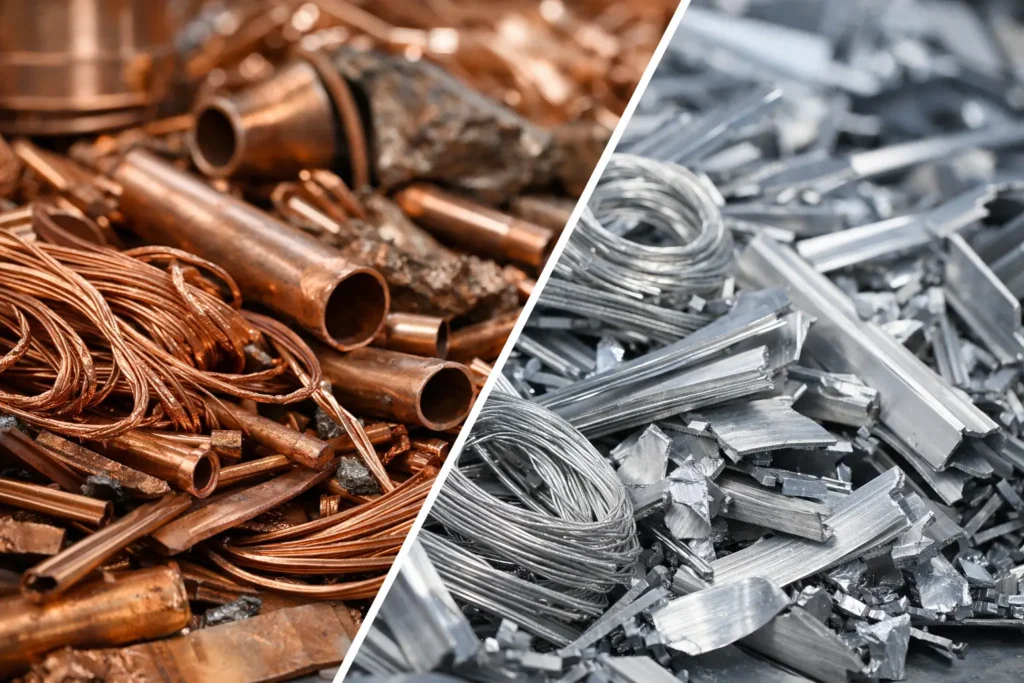
Copper vs Aluminium Scrap Value Explained
Published June 13, 2026 ·
A bucket of old copper cable and a trailer of aluminium offcuts can look like the same thing to a seller – scrap ready to turn into cash. But copper vs aluminium scrap value is not a close contest on price per kilo, and that catches plenty of people out. If you want a fair quote, you need to know why copper usually pays more, when aluminium still stacks up well, and what affects the final rate.
For most sellers, the short answer is simple. Copper is usually worth more per kilogram than aluminium. Aluminium, however, is lighter, more common across building and automotive jobs, and can still return solid money when you bring in clean material and decent volume. The best result comes from understanding what yard buyers are actually paying for – not just metal type, but grade, cleanliness, recovery value and how much work is needed before it can be recycled.
Copper vs aluminium scrap value – why copper pays more
Copper sits higher because it has stronger recovery value and wider demand across electrical, construction and manufacturing uses. It conducts electricity extremely well, which keeps it in demand for wiring, motors, switchboards and all sorts of trade and industrial applications. Clean copper scrap is also easier to reprocess into high-value product, so buyers can pay more for it.
Aluminium is valuable too, but it lives in a different price bracket. It is light, corrosion-resistant and used everywhere from window frames and cladding to wheels, engine parts and cans. The issue for sellers is weight. You need a lot more aluminium to reach the same payout as a smaller load of copper. A few kilos of bright copper can outperform a much larger-looking pile of aluminium.
That does not mean aluminium is not worth bringing in. Far from it. If you are a builder, mechanic, fabricator or demolition operator with steady aluminium volume, those loads can add up fast. The key difference is that copper often rewards quality and purity, while aluminium often rewards quantity and clean separation.
What actually changes scrap value
Market price matters, but it is only one part of the story. Scrap is bought on what it is, how clean it is and how efficiently it can be processed.
Grade is the first thing that affects value. Clean bright copper without insulation, solder or heavy corrosion will sit at the top end compared with mixed copper, burnt wire or copper attached to other materials. Aluminium works the same way. Clean extrusion, cast aluminium and sheet can all be priced differently depending on alloy, attachments and contamination.
Contamination is where sellers lose money without realising it. If your copper has plastic, steel clips, soldered joints or heavy oxidation, the rate can drop. If your aluminium load includes rubber, glass, screws, plastic trims or mixed metals, expect a lower return. The more sorting and processing required, the more that comes off the price.
Volume also matters. Small domestic quantities are straightforward, but larger loads are often more attractive because they justify faster handling and cleaner classification. For tradespeople and commercial sellers, separating metals before arrival can make a noticeable difference to the final payout.
Which metal gives the better return overall?
If you are comparing kilo for kilo, copper wins almost every time. That is the clear answer in any real discussion about copper vs aluminium scrap value. It is the stronger earner on rate, especially when the material is clean and properly sorted.
But if you are comparing a full job lot, the answer can depend on what you actually have. An electrician might have a relatively small amount of copper cable and still walk away with a better return than someone bringing in a bulky aluminium load. On the other hand, a workshop clearing out stacks of aluminium rims, extrusions or offcuts may have enough volume to make the load very worthwhile.
This is where sellers need to think commercially. The best scrap metal is not always the pile that looks biggest. It is the load with the strongest recovery value and the least processing required. Clean, separated copper is hard to beat. Clean aluminium in bulk is still well worth selling instead of letting it sit around the yard or factory floor.
Common copper grades and what they mean
Not all copper is equal. Bright, clean copper wire is usually at the top end because it is high purity and needs less work. Copper tubing can also return well, provided it is free from fittings, solder and other attachments. Mixed copper, old plumbing with joins, and material with paint or corrosion will usually sit lower.
Burnt wire is a problem area. Some sellers assume burning insulation off cable will improve value. In practice, it can reduce the quality of the material, create safety and environmental issues, and make the load less attractive. Clean stripping and proper sorting is the better move.
For trade sellers, separation is where money is made. If you throw copper in with brass, aluminium and steel, you make grading harder and risk a blended rate. If you separate it properly, you give the yard a better chance to pay accurately.
Aluminium scrap value depends on type
Aluminium is often underestimated because people think it is all the same. It is not. Extrusions from frames and construction work are different from cast aluminium parts, wheels, sheet, domestic items or mixed light scrap. Some forms are cleaner and easier to process, which supports a better rate.
Window frames are a good example. Clean aluminium frames with minimal contamination are more valuable than frames still loaded with rubber, screws, sealant and glass residue. The same goes for automotive aluminium. Clean rims or sorted engine components can be worth more than mixed dirty alloy scrap tossed in with general metal waste.
If you are dealing with regular aluminium scrap from fabrication, building or automotive work, keep it dry, keep it separated, and remove obvious non-metal attachments where practical. You do not need to overwork it, but basic sorting can improve the result.
How to get the best price for copper and aluminium scrap
If the goal is maximum payout, the process is simple. Sort your metals before you sell. Keep copper separate from aluminium, and separate cleaner grades from lower-grade mixed material. Remove rubbish, plastic, timber, rubber and steel attachments where it makes sense to do so. Do not mix valuable non-ferrous scrap with general junk and hope for the best.
It also pays to be realistic about what you are bringing in. A seller who knows the difference between insulated copper wire, copper tube, cast aluminium and extrusion aluminium is in a much better position than someone who arrives with everything piled together. Accurate grading protects both sides. You get a clearer quote, and the yard can process the load faster.
Timing can matter too. Scrap prices move with market demand, export conditions and processing costs. That does not mean you should sit on metal for months hoping for a perfect rate. Usually, if you have a clean load ready to go, it makes sense to sell when it is convenient and practical rather than letting it take up space.
Copper vs aluminium scrap value for households and trades
For household sellers, copper often comes from old wiring, hot water services, appliances and renovation leftovers. Aluminium tends to show up in screen doors, window frames, outdoor furniture and miscellaneous shed clean-outs. If you are only bringing in a small load, copper will usually produce the stronger return.
For trades and commercial clients, the calculation is broader. Electricians often generate high-value copper offcuts. Plumbers may have copper tube and brass fittings. Fabricators and builders can produce regular aluminium scrap in larger quantities. Mechanics and automotive dismantlers often deal with both, along with other non-ferrous metals. In those cases, good segregation across the whole load matters more than chasing one single metal type.
That is why a straightforward yard process matters. Sellers want honest grading, quick turnaround and immediate payment, not vague pricing and wasted time. Businesses like Melton Scrap Recycling work best when the transaction is clear from the start – identify the metal properly, sort it correctly, and pay based on real market value.
The smarter way to think about scrap
The real question is not only whether copper beats aluminium on price. It is whether your scrap is being presented in a way that gets the value it deserves. Copper usually wins on rate. Aluminium can still perform strongly on clean bulk loads. Both are worth more when separated, correctly identified and free from unnecessary contamination.
If you are clearing out a shed, stripping a job site, finishing a renovation or managing ongoing industrial scrap, treat metal like a recoverable asset, not rubbish. A bit of sorting upfront can be the difference between an average payout and a strong one.