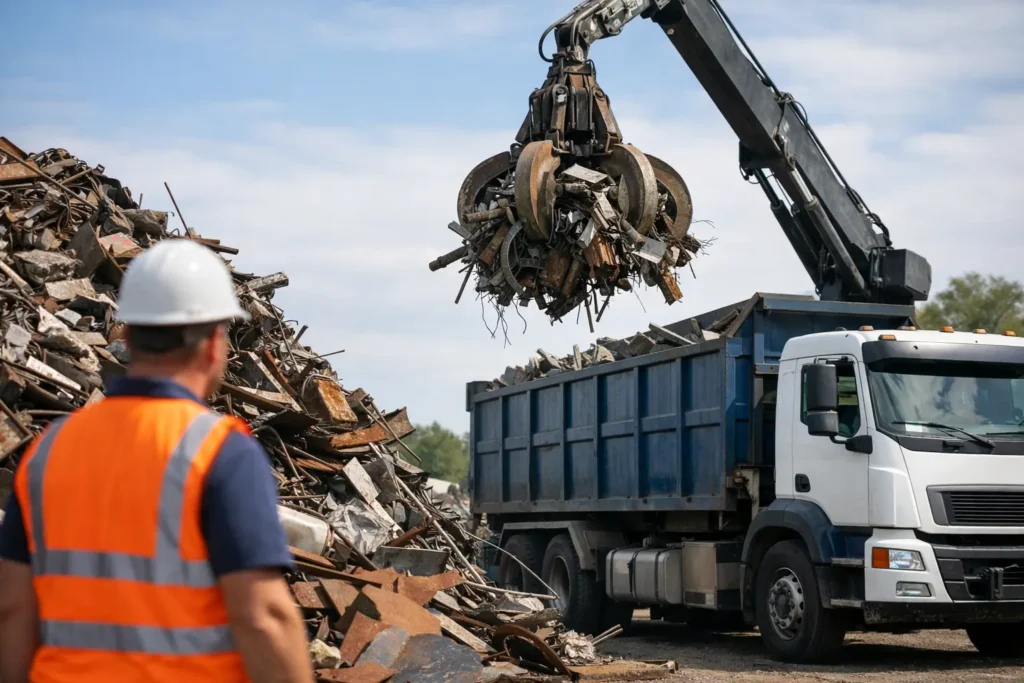
Bulk Scrap Load Pickup Done Fast
Published June 10, 2026 ·
A full bin of offcuts, old cable, stainless sections or demolition scrap can sit on site for days if pickup is slow. That costs space, slows work and leaves money tied up in waste. Bulk scrap load pickup fixes that problem when it is handled properly – fast collection, clear grading, fair rates and payment without the usual run-around.
For trade businesses, workshops and industrial sites, the difference is simple. A good pickup service keeps your yard moving. A poor one leaves you waiting, guessing on price and chasing payment. If you are moving serious volume, speed matters, but so does accuracy.
What bulk scrap load pickup should actually deliver
At its best, bulk scrap load pickup is not just a truck turning up and taking metal away. It is a collection service built around timing, material knowledge and straightforward payment. You need a team that can identify ferrous and non-ferrous metals properly, sort where required and give you a clear outcome on the load.
That matters whether you are clearing a factory corner, stripping out a commercial fit-out, cleaning up after demolition work or moving accumulated scrap from a mechanic’s workshop. Mixed loads are common. So are jobs where access is tight, the timeline is short or the volume is bigger than expected.
A serious operator plans for that. They ask the right questions before collection, show up when booked and process the metal without making you jump through hoops. If the job needs same-day pickup, that should be discussed upfront, not treated like a favour.
Who usually needs bulk scrap load pickup?
Bulk loads do not only come from major industrial clients. Plenty of high-volume scrap comes from everyday businesses and property clean-ups across Melbourne’s west. Electricians can build up copper cable and switchboard scrap quickly. Plumbers often hold brass fittings, copper pipe and old hot water system components. Fabricators and construction crews deal with regular aluminium, steel and stainless offcuts.
Mechanics and automotive dismantlers are another strong example. Parts, shells, radiators, batteries and mixed metal components can pile up fast. Homeowners can also need pickup after a large shed cleanout, renovation or deceased estate clearance, especially where there is too much material to load and haul in a single ute trip.
The common thread is volume. Once the scrap starts affecting workflow, access or safety, pickup becomes the smarter option.
The real value is not just collection
People often focus on convenience first, which is fair enough. If someone else is collecting the load, that saves labour and transport. But the bigger value is often in what happens around the collection.
Correct grading affects what you get paid. Quick sorting affects how fast the site is cleared. Honest communication affects whether the job stays simple or turns into a dispute. In bulk scrap, little mistakes can cost real money.
Take a mixed load with copper, brass, aluminium and steel. If it is all treated as one low-value pile, you leave money on the table. If it is separated and assessed properly, the return can look very different. That is why experience matters. It is not only about getting the metal off site. It is about recognising what is there and paying accordingly.
How to prepare a bulk load for pickup
You do not need to turn the site into a recycling depot before collection, but a bit of preparation can save time and improve results. If you can separate obvious non-ferrous metals from general steel, that usually helps. Copper, brass, aluminium and stainless are worth identifying early instead of burying them in mixed scrap.
It also helps to keep rubbish, timber, plastics and other contamination out of the load where possible. A cleaner load is easier to process and easier to price fairly. If the scrap is spread across a site, grouping it into accessible areas can speed up collection and reduce handling delays.
That said, not every job will be neat. On demolition and industrial sites, mixed conditions are normal. A practical scrap buyer will work with the job as it is, then advise what makes sense for future pickups. The point is not perfection. The point is making collection efficient.
Photos and load details save time
If you are booking a pickup, clear photos help. So does a rough description of material types, estimated volume and site access. Let the buyer know whether the scrap is loose, palletised, boxed or still attached to equipment. Mention if there are stairs, restricted entry points or limited loading space.
That upfront detail usually leads to a faster quote and a smoother arrival on the day. It also reduces the risk of delays caused by the wrong vehicle or unrealistic expectations on volume.
Bulk scrap load pickup for commercial sites
Commercial clients usually care about three things above all else – speed, price and reliability. If a pickup window is missed, the cost is not just annoyance. It can affect subcontractors, deliveries, safety and access for the next stage of work.
That is why a no-nonsense process matters. You book the job, confirm the materials, organise collection, have the load assessed properly and get paid quickly. No vague promises. No chasing updates. No confusion about what was collected.
For repeat suppliers, consistency becomes even more important. If your workshop, factory or site generates ongoing scrap, you want a buyer who can handle regular volume without changing the rules every second week. Fair market-based pricing, clear communication and prompt turnaround build trust. That trust is what keeps the process efficient over time.
What affects the price on a bulk scrap load?
There is no honest way to promise one flat rate for every job, because bulk scrap value depends on what is actually in the load. Metal type is the obvious factor. Clean copper will not be priced like mixed steel, and stainless will not be treated the same as aluminium turnings or dirty brass.
Condition matters too. Clean, sorted metal is generally easier to process than contaminated or heavily mixed loads. Volume can also affect the economics of collection. A large, accessible load with strong material value is different from a small mixed pickup spread across a difficult site.
Distance, urgency and loading conditions can also play a role. Same-day service is valuable, but it needs realistic scheduling. That does not mean bulk pickup should be complicated. It means the quote should reflect the real job, not a made-up number designed to get you on the hook.
Why local pickup usually works better
A local operator can often move faster because they know the area, understand the demand and can respond without dragging the job through layers of admin. That matters if you are in Melton, across Melbourne Metro or in surrounding parts of Victoria and need scrap gone quickly.
It also helps with accountability. If you are dealing with a local yard and a team that handles metal every day, you are more likely to get direct answers and practical service. That suits trade customers and business owners who do not have time for sales talk.
Melton Scrap Recycling works that way – straightforward booking, prompt collection, proper metal assessment and fast payment. For bulk sellers, that is what the service should look like.
Bulk scrap load pickup is not one-size-fits-all
A household clean-up load is different from factory scrap. A demolition site differs from a mechanical workshop. Some jobs need urgent same-day collection. Others benefit from staged pickups over a week or two. The right approach depends on volume, material mix, site conditions and how quickly the area needs to be cleared.
That is why the best service is usually the one that asks practical questions first. What metal is on site? How much is there? Is it sorted? Can a truck access the load easily? Do you need collection outside standard hours? These details shape the job and help avoid wasted time.
If you have bulk metal sitting around, the main thing is not to let it become dead weight. Scrap has value, but only when it is collected, graded properly and turned into payment. The sooner that happens, the sooner your space, workflow and cash flow improve.