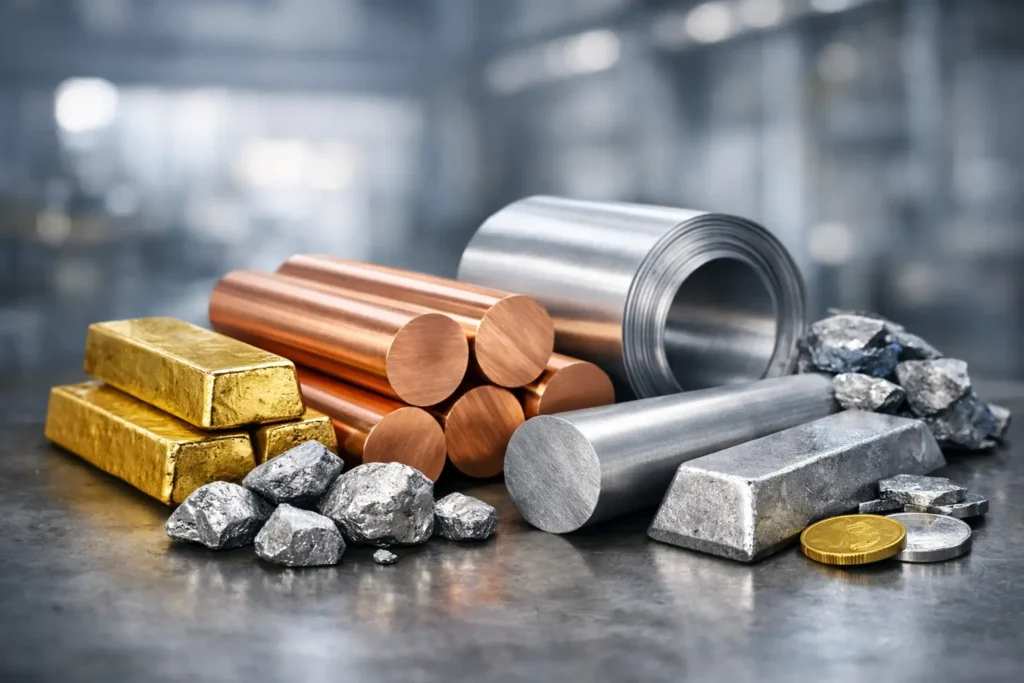
What Metals Are Non-Ferrous?
Published June 4, 2026 ·
If you have ever looked at a pile of scrap and wondered what metals are non-ferrous, the short answer is simple: they are metals with little to no iron content. That matters because non-ferrous metals are usually more valuable, resist rust better, and are widely used across plumbing, electrical, automotive and construction work. If you are sorting scrap for cash, getting this part right can make a real difference to what you get paid.
What metals are non-ferrous in simple terms?
A metal is classed as non-ferrous when it does not contain significant iron. Unlike mild steel or cast iron, non-ferrous metals generally do not rust in the same way, and many are lighter, more conductive, or easier to machine. That is why you find them in wiring, pipes, radiators, roofing, car parts, tools and old household fittings.
For scrap sellers, the main point is practical rather than technical. Non-ferrous metals are the materials that usually attract stronger scrap prices because they are in demand and can be recycled efficiently. Copper, brass and aluminium are the ones most people come across first, but the category is broader than that.
Common examples of non-ferrous metals
The most common non-ferrous metals in scrap yards are copper, brass, aluminium, stainless steel, lead and zinc. You may also come across nickel, tin and precious metals in specialist applications, although these are less common in everyday loads.
Copper
Copper is one of the best-known non-ferrous metals and one of the most sought after in scrap. You will find it in electrical cable, plumbing pipe, hot water units, air conditioning components and motors. Clean copper without contamination generally returns more than mixed or dirty copper, so separating it properly is worth the effort.
Brass
Brass is an alloy made mainly from copper and zinc. It is common in taps, valves, fittings, locks, radiator parts and plumbing hardware. Its yellow-gold appearance makes it easier to spot than some other metals, although it can be confused with bronze by inexperienced sellers.
Aluminium
Aluminium is lightweight, corrosion resistant and everywhere. You will see it in window frames, screens, extrusions, car parts, wheels, drink cans and sheet material. Not all aluminium is equal in scrap terms. Clean extrusions, cast aluminium and mixed aluminium can be graded differently, so sorting by type can improve your return.
Stainless steel
This is where people often get caught out. Stainless steel is usually treated as a non-ferrous metal in scrap because it contains valuable alloying elements such as chromium and nickel, even though some grades do contain iron. In everyday scrap buying, it is commonly separated from standard steel because it has its own value and grading.
Lead and zinc
Lead is often found in old batteries, roofing materials and some industrial applications. Zinc appears in die-cast parts, protective coatings and certain fittings. Both have recycling value, but they need to be handled properly, especially where contamination or safety issues are involved.
How non-ferrous metals differ from ferrous metals
The easiest contrast is this: ferrous metals contain iron, while non-ferrous metals generally do not. Ferrous metals include steel, cast iron and wrought iron. They are usually magnetic and more likely to rust when exposed to moisture.
Non-ferrous metals tend to be more resistant to corrosion and often have higher resale value in the scrap market. That said, value still depends on the exact metal, the grade, the cleanliness and the volume. A small quantity of dirty copper can be worth less than a large, clean load of another material, so there is no single rule that covers every job.
A quick way to identify non-ferrous scrap
If you are sorting metal at home, on site or in a workshop, there are a few practical checks that help.
A magnet is the first step. Most non-ferrous metals are not magnetic, so if a magnet does not stick, there is a good chance the item is non-ferrous. This is not foolproof because some stainless grades behave differently, but it is a useful first filter.
Colour also helps. Copper has a reddish tone, brass looks yellow-gold, and aluminium is usually dull silver and light in the hand. Weight is another clue. Aluminium feels much lighter than steel, while lead feels unusually heavy for its size.
If you are dealing with mixed scrap, coatings, paint, dirt and attached materials can make identification harder. In those cases, proper grading matters. A trusted yard will sort it correctly and tell you what you have, rather than lumping everything together at a lower rate.
Why non-ferrous metals usually pay more
People often ask why non-ferrous scrap attracts better prices. The answer comes down to demand, recoverability and the uses these metals have in manufacturing.
Copper is essential in electrical systems. Aluminium is widely used in transport and construction because it is light and durable. Brass remains common in plumbing and fittings. These materials can be recycled repeatedly without losing their core properties, which makes them valuable in the circular economy.
There is also less point in throwing them into general rubbish when they can be recovered, processed and turned back into useful products. For sellers, that means scrap is not just waste. Sorted properly, it is an asset.
Where you are likely to find non-ferrous metals
Non-ferrous metals turn up in more places than most people realise. Around the home, they are often found in old taps, copper pipe, whitegoods components, screen doors, window frames, extension leads and broken appliances. In garages and workshops, they show up in radiators, alloy wheels, starter motors, alternators, wiring and battery-related parts.
Tradespeople and industrial clients see even more of it. Electricians deal with cable and offcuts. Plumbers remove brass fittings and copper tube. Mechanics handle radiators, alloy components and batteries. On commercial sites, demolition and strip-outs can produce significant volumes of mixed non-ferrous material.
That is why accurate separation matters. If non-ferrous metals are mixed in with general steel scrap, you can easily leave money on the table.
What affects the value of non-ferrous scrap?
Metal type is the biggest factor, but it is not the only one. Cleanliness matters. Metal with plastic, rubber, steel attachments or excessive contamination may be downgraded. Volume matters too, especially for commercial and industrial loads where sorting and pickup logistics come into play.
Market conditions also change. Scrap prices move with local and global demand, so the rate for copper, brass or aluminium today may not be the same next month. That is normal. What matters is dealing with a yard that grades honestly, quotes clearly and pays based on the actual material, not guesswork.
What metals are non-ferrous when alloys are involved?
This is where things can get confusing. Some metals are pure, like certain copper or aluminium products. Others are alloys, which means they are made by combining metals to improve strength, corrosion resistance or workability. Brass is a non-ferrous alloy. Bronze is another one. Many stainless grades are handled separately because of their alloy content and scrap value.
So when people ask what metals are non-ferrous, they are not only asking about pure metals. They are also asking about common alloys that are bought and sold as part of the non-ferrous scrap stream. The exact grade can affect pricing, but the broad category is still useful when you are sorting your load.
Why proper sorting is worth your time
Throwing everything into one pile is quick, but usually not profitable. Separating copper from brass, aluminium from steel, and clean material from mixed scrap gives you a clearer result and often a better payout. It also speeds up the process when you are ready to sell.
For larger loads, professional sorting on arrival helps make sure nothing valuable is overlooked. That matters for tradies, mechanics, factories and demolition jobs where mixed metals can build up fast. A straightforward yard with accurate grading and fast turnaround saves time as well as money.
If you are not sure what you have, ask before you dump it. A few minutes of proper identification can turn a low-value load into a much stronger one.
Knowing what sits in the non-ferrous category is one of the easiest ways to get more from your scrap. Once you know what to look for, copper pipe, brass fittings, aluminium frames and other common metals stop looking like leftovers and start looking like cash waiting to be sorted.