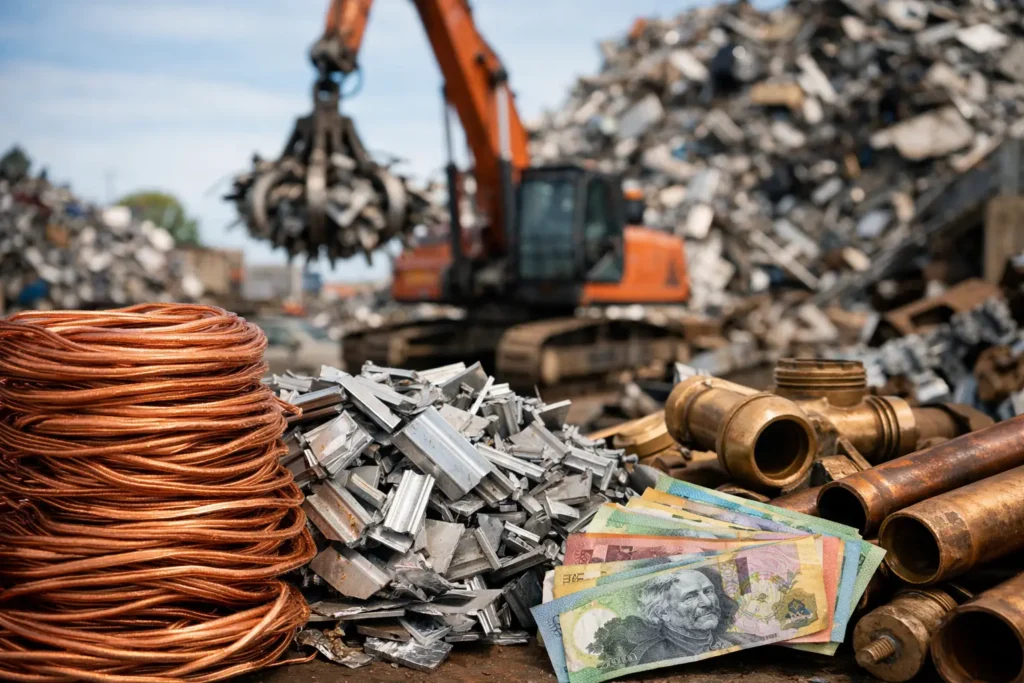
What Scrap Metal Pays Most in Victoria?
Published June 1, 2026 ·
If you have a mixed pile of metal in the shed, the back of the ute or the corner of a workshop, the first question is usually simple – what scrap metal pays most? The short answer is copper, but the real answer depends on the metal type, how clean it is, how much you have, and what condition it turns up in at the yard.
That matters because two loads that look similar can pay very differently. A bucket of clean copper offcuts will usually beat a much bigger pile of rusty steel. A tidy load of sorted brass, aluminium and stainless can also outperform a single mixed load that takes extra time to grade and separate. If you want the best return, knowing what the yard is actually paying for is only half the job. Presenting the metal properly is the other half.
What scrap metal pays most?
In most cases, non-ferrous metals pay the highest rates. These are metals that do not contain significant iron, so they do not rust like steel and they generally hold stronger recycling value. Copper sits at the top for most everyday sellers, especially when it is clean and uncoated. After that, brass often pays well, followed by certain grades of aluminium and stainless steel.
Ferrous metals such as steel and cast iron are still worth selling, especially in volume, but the rate per kilo is normally much lower. That does not make them worthless. It just means quantity matters more. A few kilograms of copper can be worth more than a much heavier load of light steel.
For homeowners and tradies, the usual high-value metals are copper from wiring and plumbing, brass from taps and fittings, and aluminium from window frames, extrusions or automotive parts. For workshops and industrial sites, motors, radiators, batteries and mixed non-ferrous loads can also add up fast when they are graded correctly.
Why copper usually pays the most
Copper is the standout because it is in constant demand and highly recyclable without losing performance. It is used across electrical, plumbing, construction and manufacturing, so clean recovered copper remains valuable.
Not all copper is equal, though. Bright, clean copper wire with no insulation, solder, paint or contamination will usually attract the best rate. Heavy copper pipe and clean clippings also perform well. Burnt wire, dirty copper, mixed copper and insulated cable are usually worth less because they require more processing.
This is where many sellers leave money on the table. If copper is mixed with brass fittings, steel screws, plastic insulation or general rubbish, the grade can drop. The metal still has value, but not top value. A bit of sorting before you arrive can make a clear difference to the payout.
The metals that commonly bring strong prices
Brass is often the next metal people are happy to find. It turns up in plumbing fittings, valves, taps, locks and old fixtures. It is heavier than many people expect and usually pays well when it is clean. If brass pieces are attached to steel, rubber or plastic, that can affect the grade.
Aluminium is more common and lighter, so you usually need more of it to build a strong return. That said, some aluminium grades are far better than others. Clean aluminium extrusions, rims and solid cast pieces can be worthwhile. Thin foil, mixed dirty aluminium and contaminated pieces generally pay less.
Stainless steel can also be valuable, especially higher-grade stainless from commercial kitchens, industrial equipment and fabrication offcuts. But stainless is one of those metals where grade really matters. Different alloys contain different amounts of nickel and other elements, so rates vary.
Lead, batteries, electric motors and radiators are also worth mentioning. They are not always the first materials sellers think of, but they can contribute solid value, particularly in automotive, trade and industrial loads.
What affects how much your scrap is worth
Market price is the obvious factor, but it is not the only one. Global demand, freight costs, local processing conditions and commodity markets all play a role in daily or weekly pricing. That is why scrap rates move.
The second factor is grade. Clean metal that is easy to identify and process will nearly always pay better than mixed, dirty or contaminated material. A load that has already been sorted saves time at the yard and makes the recycling process more efficient.
The third factor is volume. Large commercial and industrial loads can attract more competitive pricing simply because they are efficient to handle. If you are a tradie, mechanic, demolition operator or factory clearing regular scrap, volume matters.
Then there is moisture, attachments and general condition. Wet radiators, sealed units, steel bolts in brass fittings, plastic attached to aluminium, or rubbish mixed through the load can all affect the final payout. Honest grading is part of fair dealing. Clean loads are easier to price strongly and quickly.
What scrap metal pays most when it is sorted properly
Sorting is where better returns usually start. You do not need a laboratory setup. You just need to separate obvious categories and avoid throwing everything together.
Keep copper separate from brass. Keep aluminium separate from steel. Pull out batteries, motors and stainless if you can identify them. If you have insulated cable, keep that on its own rather than bundling it in with clean bright copper or general mixed scrap.
This matters because mixed loads are harder to classify and often get priced more conservatively. If a buyer has to spend extra time breaking down your pile, removing contamination or downgrading uncertain items, the rate reflects that. Clean, sorted scrap is simpler to grade and usually pays better.
For tradies, one of the easiest wins is keeping plumbing brass and copper offcuts in separate tubs on the job. For mechanics, separating batteries, radiators, alloy wheels and steel parts can lift the total return. For households, even basic sorting from a garage clean-out can stop high-value metal from being buried inside low-value scrap.
Common mistakes that reduce your payout
The biggest mistake is assuming weight alone equals value. It does not. A heavy load of low-grade steel can be worth less than a small crate of clean copper and brass.
Another common issue is contamination. Sellers often bring in loads with timber, plastic, rubber, dirt or general rubbish still attached. That slows everything down and can push the material into a lower grade. If a copper pipe still has insulation foam and brackets attached, or aluminium frames still have glass and screws in them, expect the price to reflect the extra work.
Misidentifying metal is also common. Brass and bronze get confused. Stainless gets mixed in with steel. Aluminium can be mistaken for pot metal or light mixed alloy. If you are unsure, a reputable yard will grade it properly, but separating what you do know still helps.
Holding scrap too long can also cost you. Prices move both ways. If you have a clean load ready to go and need the cash or space, waiting for a perfect market can backfire.
How to get the best price for scrap metal
Start with the easy jobs. Sort by metal type, remove obvious rubbish and keep higher-value metals separate. If it is safe and practical, strip out non-metal attachments. Do not burn cable to remove insulation. Apart from safety and environmental issues, burnt wire can be downgraded.
Be realistic about what you have. Clean copper, brass and sorted non-ferrous metals generally bring the best rates, while mixed metal and low-grade steel rely more on quantity. If you have a larger load, mention that upfront when getting a quote because volume and pickup requirements can affect the arrangement.
It also helps to work with a yard that weighs, grades and explains the load clearly. Fast service is good, but transparent service matters just as much. You want to know what is being classified as what, and why. That is how trust is built, especially if you are selling regularly.
For sellers in Melton and across Melbourne’s west, dealing with an operator that offers proper grading, pickup and prompt payment can save time as well as improve returns. Melton Scrap Recycling handles both small drop-offs and larger commercial loads, which matters if you want the process done quickly and without guesswork.
The real answer: the highest-paying scrap depends on the load
If you want one direct answer, copper is usually the metal that pays most for everyday scrap sellers. But that does not mean every copper item will beat every other load. Clean brass can outperform dirty copper. A full load of sorted aluminium extrusions can beat a tiny amount of high-grade metal. Bulk stainless, batteries or motors can also be worthwhile depending on the quantity and current market.
That is why the smartest approach is not chasing one magic metal. It is learning how to identify value in what you already have, sorting it properly, and selling it through a yard that grades honestly. The better your load is prepared, the better chance you have of turning scrap into proper money instead of pocket change.
Before you throw metal into the skip or let it sit around another six months, have a close look at what is actually there. The best-paying scrap is often already on your site, in your workshop or under your bench – it just needs to be separated and sold properly.