How to Recycle Car Battery the Right Way
Published June 3, 2026 ·
A dead car battery is easy to ignore until it starts leaking in the shed, rolling around in the boot, or taking up space in the workshop. If you are wondering how to recycle car battery properly, the short answer is simple: do not put it in the rubbish, do not leave it sitting around, and do not try to break it apart yourself.
Car batteries contain lead and acid, which means they need to be handled through a proper recycling process. The good news is they are one of the most recyclable automotive parts around. If you take them to the right scrap recycler, the battery can be processed safely and valuable material can be recovered instead of wasted.
How to recycle car battery safely
The safest way to recycle a car battery is to keep it intact and take it straight to a licensed recycler or scrap metal yard that accepts automotive batteries. That applies whether you have one old battery from your family car or a stack from a workshop, auto yard or fleet.
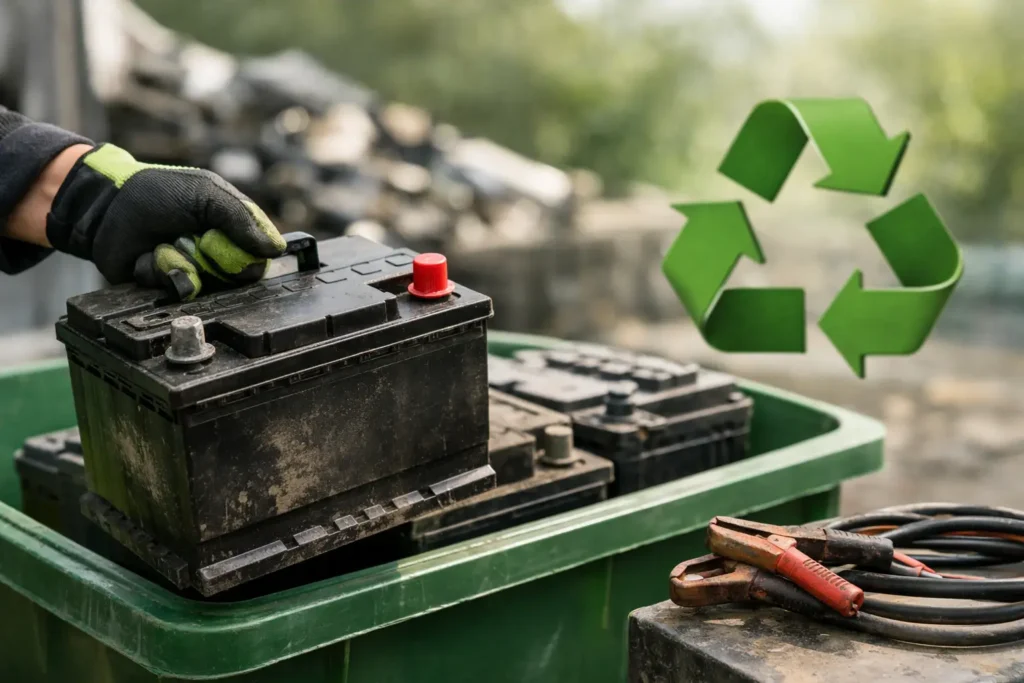
Before transport, check the casing for cracks, swelling or visible leaks. If the battery is damaged, keep it upright and avoid handling it more than necessary. Gloves are a smart move. If there is residue on the outside, do not hose it off onto the driveway or garden. Containment matters because battery acid can damage surfaces and create a hazard.
For a single battery, place it upright in a sturdy plastic tray, container or tub so it cannot tip over in the car. For larger quantities, secure them properly for transport and keep different scrap materials separated where possible. A recycler can usually guide you on what is worth sorting in advance and what can be handled on site.
Why car batteries should never go in household rubbish
This is where people get caught out. A car battery looks like a sealed box, so it is easy to assume it can go out with hard rubbish or sit beside the bins until you deal with it later. That is the wrong move.
Lead-acid batteries contain hazardous materials that can contaminate soil and water if they split, corrode or leak. They are also heavy and awkward, which makes them a poor fit for kerbside collection. Even if a council collection picks them up, that does not mean they have gone into the right recovery stream.
There is also the waste factor. Most of the battery can be recycled, including the lead and plastic casing. Throwing it away means useful material is lost and more raw resources need to be mined and processed. For households, mechanics and industrial operators alike, proper recycling is the cleaner and more practical option.
What happens when a battery is recycled
A lot of people want to know what they are actually dropping off. Fair question. Once the battery reaches a proper recycler, it is processed so the main components can be separated and recovered.
The lead is one of the key values. It can be refined and reused in the manufacture of new batteries and other products. The plastic casing can also be cleaned and recycled. The acid is treated through an approved process rather than being dumped or left to cause damage.
That is why battery recycling matters commercially as well as environmentally. There is real recovery value in these units, which is why scrap recyclers buy them. For sellers, that means an old battery is not just waste. It is a recyclable item with a market value, depending on battery type, condition and quantity.
Can you get paid for old car batteries?
In many cases, yes. Scrap yards commonly buy old lead-acid batteries because of the recoverable lead content. The amount you receive depends on current scrap prices, how many batteries you have, and whether they are standard car batteries, truck batteries or part of a larger mixed load.
If you are a homeowner with one or two batteries, the payout may be modest, but it is still better than storing hazardous waste at home. If you are a mechanic, auto dismantler, transport operator or trade business handling batteries regularly, those units add up quickly and should be treated as part of your recyclable scrap stream.
This is where working with a local operator makes a difference. A straightforward yard process, transparent grading and fast payment matter when you do not want delays or guesswork. If you are in Victoria and dealing with repeat battery loads, it is worth using a recycler that handles automotive scrap every day rather than treating it as a once-off favour.
How to prepare a car battery for drop-off
You do not need to overcomplicate it, but a few basic steps make the process safer and faster.
First, keep the battery whole. Do not open it, drain it or remove parts. Second, store it upright in a cool, stable spot until you can move it. Third, if the terminals are exposed and likely to come into contact with metal during transport, cover them with non-conductive tape as a precaution.
If the battery has been sitting for a long time and the exterior is dirty, leave major cleaning alone unless you know it is safe to handle. A recycler is equipped to deal with used batteries in less-than-perfect condition. Your job is to transport it without spills, not make it look presentable.
For workshops and trade operators, keeping spent batteries in one designated area makes life easier. It reduces clutter, lowers risk and means you can move a batch in one go or organise collection when the volume is worth it.
Where to take old batteries in Victoria
If you want to know how to recycle car battery without wasting time, the best option is usually a local scrap metal recycler that accepts automotive batteries. That gives you a direct path to proper handling and, in many cases, immediate payment.
Some retailers and service centres also accept used batteries, particularly if you are buying a replacement. That can be convenient, but it depends on the business and may not be the best option if you have multiple batteries or mixed automotive scrap to move at the same time.
For larger volumes, a scrap yard is generally the more practical choice. You can drop off batteries with other eligible scrap materials, get clear pricing, and move the lot in one transaction. Businesses around Melton and wider Melbourne that want quick turnaround often prefer this route because it is built for speed.
What types of batteries are accepted?
Standard lead-acid car batteries are the most common, but many recyclers also accept batteries from utes, 4WDs, trucks, machinery and other vehicles. The exact acceptance policy can vary, especially with newer battery chemistries, so if you are not sure what you have, ask before loading up.
This is one of those it-depends situations. A traditional lead-acid battery is usually straightforward. Hybrid or specialist battery systems may require different handling. If you are running an automotive business, it is worth separating common lead-acid units from anything unusual so pricing and processing stay clear.
Melton Scrap Recycling handles battery recycling alongside a broader range of automotive and non-ferrous scrap, which is useful if your load includes more than just batteries and you want one clean handover.
Common mistakes to avoid when recycling car batteries
The biggest mistake is leaving old batteries piled in a corner for months. They do not become safer with time. They become more likely to corrode, leak or get knocked over.
Another mistake is trying to salvage parts yourself. There is no upside for most sellers and plenty of downside if acid is involved. The same goes for tipping liquid out, cracking the case open or tossing batteries into a mixed rubbish skip.
It is also a mistake to assume every buyer pays the same. Rates can vary, and so can service. For one battery, convenience may be the main factor. For regular trade or industrial loads, honest pricing, fast pickup and reliable handling matter a lot more.
When pickup makes more sense than drop-off
If you have one battery and you are already heading past a yard, drop-off is easy. If you have a stack of batteries in a workshop, wrecking yard, factory or commercial site, pickup may be the smarter option.
Heavy batteries are not ideal to move around more than necessary. Collection reduces manual handling, keeps your site cleaner and saves staff time. It also helps when batteries are part of a larger scrap clean-up that includes metals, parts or industrial offcuts.
The right option comes down to volume, urgency and access. A good recycler should make both paths simple – bring it in if that suits, or arrange pickup if speed and convenience matter more.
An old battery is not something to stash and forget. Move it on properly, recycle it through the right channel, and turn a problem item into a cleaner, safer result with cash back where it counts.