Industrial Scrap Removal Guide for Fast Payouts
Published May 30, 2026 ·
A full bin of offcuts, redundant machinery and mixed metal stock does more than take up space. It slows production, creates safety risks and ties up money that should be coming back into your business. That is where an industrial scrap removal guide helps. If you run a factory, workshop, construction site or demolition job, the right process gets scrap off site quickly, keeps the yard cleaner and makes sure you are paid properly for what you have.
Industrial scrap removal is not just about clearing rubbish. The value depends on what the metal is, how it is sorted, how accessible it is and whether the load is contaminated. Get those details right and the job moves faster, the quote is clearer and the return is usually better.
What industrial scrap removal actually covers
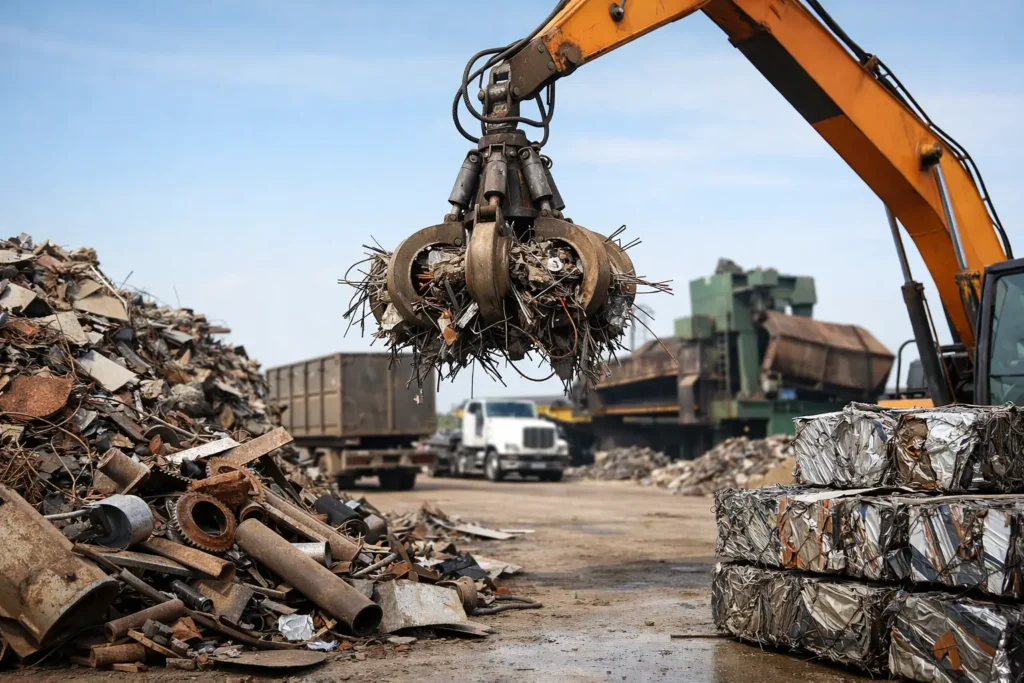
On industrial sites, scrap is rarely one neat pile of clean metal. It is more often a mix of production offcuts, damaged stock, decommissioned equipment, old shelving, cable, stainless components, aluminium sections, copper wiring, motors, steel and demolition material. Some loads are straightforward. Others need on-site grading, weighing and separation before they can be priced accurately.
That is why industrial scrap removal tends to be more involved than a standard household metal drop-off. Access matters. Forklift access matters. Whether the metal is loose, bundled, boxed or still fixed in place matters. If the site needs same-day collection to keep work moving, timing matters too.
For many businesses, the goal is simple. Clear the metal, avoid disruption and get a fair market-based price without wasting half a day chasing it.
Start with identification, not guesswork
The biggest mistake on industrial loads is treating all metal as one category. Mixed scrap can still be removed, but if valuable non-ferrous metal is buried in lower-value steel, you can leave money on the table.
Copper, brass, aluminium and stainless steel are commonly worth more than general ferrous scrap, but only if they are separated well enough to grade correctly. Insulated cable, mixed turnings, painted sections and dirty components may still have value, though contamination can lower the rate. That is the trade-off. Quick clean-outs save time, while better sorting often improves payout.
If you are dealing with regular scrap generation, it makes sense to separate material at the source. Keep copper in one bin, aluminium in another, and steel in its own area. Even basic separation helps speed up pickup and reduces disputes over grading later.
Common industrial scrap categories
Most industrial collections fall into a few broad groups. Ferrous metals include steel fabrication offcuts, beams, frames, pipe, machine bodies and structural scrap. Non-ferrous metals include copper cable, brass valves and fittings, aluminium sheet and extrusion, and stainless components. Then there is mixed industrial scrap such as motors, radiators, machinery, battery units and demolition material.
Some of these items are easy to classify on sight. Others need inspection because attachments, coatings or non-metal parts affect value and handling.
How to prepare a site for faster removal
A good collection starts before the truck arrives. If the load is spread across the yard, blocked by stock or mixed in with general waste, removal takes longer and usually costs you in time if not money.
Set aside a clear area for scrap. If possible, separate metals into obvious groups and keep non-metal rubbish out of the pile. Timber, plastic, rubber, dirt and liquids can all affect grading and make loading harder. For larger sites, use labelled bins or bays so staff know where material goes as it is generated.
Access is the next issue. Let the recycler know whether there is room for a truck, whether forklifts are available and whether loading needs to happen during specific hours. If there are heavy items such as plant, machine bases or oversized steel sections, mention that early. The right vehicle and equipment save delays on the day.
This is also where photos help. A few clear site photos can make quoting and planning much more accurate, especially for bulk loads or factory clean-outs.
The industrial scrap removal guide to getting paid fairly
If you want a fair result, transparency matters more than big promises. Ask how the material will be weighed, how it will be graded and whether the quote is based on current market rates. Industrial sellers usually care less about sales talk and more about clear numbers, fast turnaround and immediate payment.
For bulk loads, the final value often depends on exact grading once the metal is inspected. That is normal. Clean, separated material is easier to price upfront. Mixed loads may need on-site assessment or final sorting before a firm figure is confirmed. Neither approach is wrong. It depends on the condition of the scrap and how much certainty you need before pickup.
The best approach is straightforward. Be clear about what you have, ask how it will be processed and make sure weights and grades are explained. That way, you know where the number comes from.
Why sorting changes the payout
A skip full of mixed metal might seem efficient, but mixed loads usually attract broader pricing because they take longer to process. If your site regularly produces copper, brass or stainless, separating those materials can make a noticeable difference over time.
On the other hand, if labour on site is tight and the priority is clearing space fast, a mixed collection may still be the right call. Businesses often choose speed over perfect sorting when shutdown windows are short or scrap is blocking active work areas. The point is to know the trade-off before the truck arrives.
Collection or drop-off – which suits your site?
There is no single answer here. Smaller workshops with manageable volumes may prefer to load scrap onto a trailer or ute and bring it into the yard. It gives you control over timing and can suit clean, separated material.
For factories, commercial sites and demolition projects, pickup is usually the better option. It reduces downtime, avoids tying up staff and handles heavier or bulkier loads more safely. Same-day collection can also be useful when a site needs urgent clearing after machinery replacement, strip-outs or shutdown works.
If the load is large enough, on-site weighing and grading can streamline the process even further. That is often the practical choice for businesses that generate scrap regularly and want minimal disruption.
Safety and compliance are part of the job
Industrial scrap is not just metal. It can involve sharp edges, residual fluids, batteries, pressurised units, fixed plant and awkward heavy sections. Removal needs to be handled with proper attention to safety, especially on active worksites.
Before collection, isolate any equipment that has not been fully decommissioned. Drain fluids where required, identify hazardous components and let the recycler know if there are batteries, sealed units or items with possible contamination. This is not about making the job harder. It avoids wasted trips and keeps site handling safer for everyone.
It also pays to keep scrap zones tidy. A clean scrap area reduces trip hazards and makes forklift or loader access easier. Good housekeeping is not just presentation – it speeds up the transaction.
Why local service matters on industrial jobs
Industrial sellers usually do not want a long process. They want prompt response, clear communication and collection that happens when promised. Working with a local operator makes that easier, especially if your business is in Melton, Melbourne Metro or surrounding Victorian areas.
A recycler that understands local access conditions, site schedules and the need for fast turnaround can move much quicker than a service trying to manage jobs from a distance. For many businesses, that means less waiting, fewer delays and payment without the runaround. That is one reason companies use Melton Scrap Recycling for repeat industrial pickups.
A cleaner yard is not just about appearance
When scrap is removed properly, you get more than floor space back. You reduce clutter, lower fire and injury risk, improve workflow and keep reusable metal in the recycling stream instead of sending it to landfill. That matters for businesses trying to run leaner operations and show practical environmental responsibility without adding extra admin.
The circular economy side of scrap recycling is simple. Metal that leaves your site as waste can be processed and used again. But the commercial side matters too. If that material has value, there is no sense letting it sit around rusting behind the shed.
If your site has metal building up, the best time to sort it is before it becomes a bigger problem. Clear access, separate what you can, be upfront about the load and choose a recycler that tells you exactly how the job will work. Fast pickup is good. Fast pickup with fair payment is better.