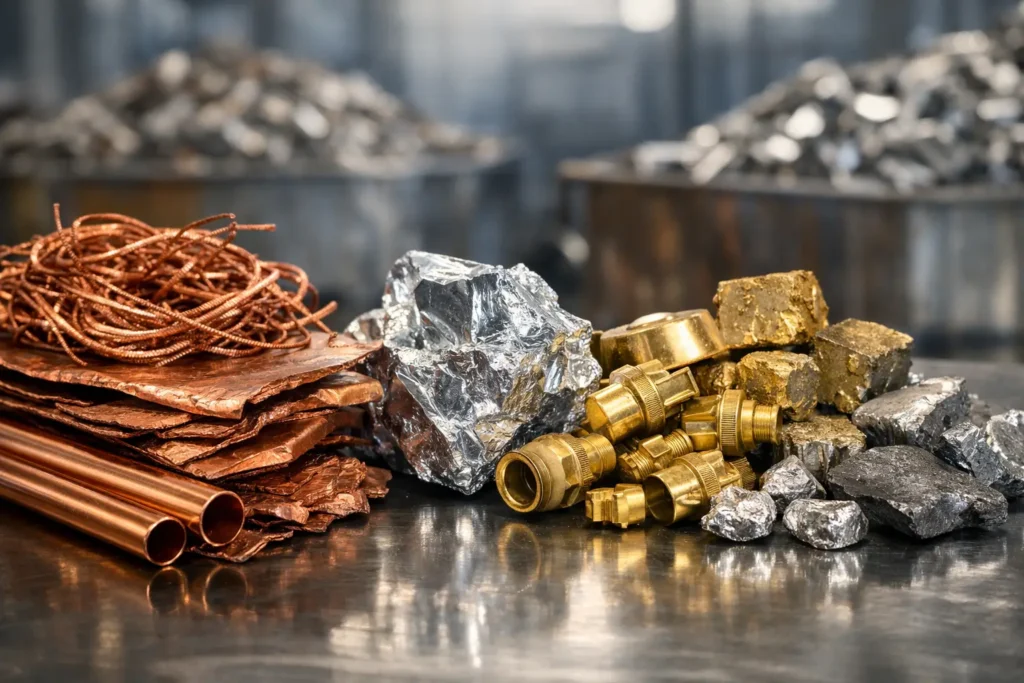
Most Valuable Non Ferrous Metals in Scrap
Published June 18, 2026 ·
A mixed scrap load can look like a pile of offcuts, old fittings and dead cable. In reality, the most valuable non-ferrous metals in that pile can make a big difference to what you get paid. If you know what holds value, what drags a load down and how yards grade material, you put yourself in a better position before you even leave the site.
For homeowners, that might mean separating old brass taps from general rubbish. For sparkies, plumbers, mechanics and factory operators, it usually means the difference between average money and a proper return. Non-ferrous metals matter because they do not contain iron, they resist rust better than ferrous scrap, and they are in steady demand across manufacturing and recycling.
What makes the most valuable non-ferrous metals worth more?
Price is not based on one thing. Metal type matters first, but condition, purity, volume and contamination all affect the final figure.
Copper is a good example. Clean bright copper with no solder, insulation, paint or fittings will always attract stronger rates than mixed copper with attachments. The same goes for aluminium, brass and stainless steel. When a load needs extra time to strip, sort or clean, that usually affects the price.
Market demand also moves up and down. If export demand tightens or local mills change buying activity, prices shift. That is why two metals that look similar to a casual seller can return very different amounts on the day.
The most valuable non-ferrous metals commonly found in scrap
In local scrap recycling, the highest value materials are not always the rarest. They are often the metals that turn up regularly in construction, electrical work, plumbing, automotive jobs and industrial clean-outs.
Copper
Copper is usually near the top of the list for everyday scrap sellers. It is used in electrical cable, plumbing tube, motors, air con units and industrial equipment. Bright clean copper is especially valuable because it is easier to process and reuse.
If you are pulling copper from a site, separation matters. Bare bright wire is different from insulated cable. Copper pipe without solder, fittings or heavy corrosion is different from mixed plumbing scrap. The cleaner the copper, the stronger the result tends to be.
Brass
Brass is another strong performer and shows up more often than many people realise. Old taps, valves, plumbing fittings, hose reels, shell casings, decorative hardware and radiator parts can all contain brass.
It generally pays well because it has a solid copper content, but brass is not all equal. Clean yellow brass is different from mixed brass with plastic, steel attachments or contamination. A bucket of sorted brass fittings can be worth far more than the same material thrown in with general mixed metal.
Aluminium
Aluminium is lighter and usually less valuable per kilo than copper or brass, but it still matters because it is everywhere. Window frames, extrusions, sheet, cast parts, wheels, heat sinks, kitchen items and automotive components often contain aluminium.
The trade-off with aluminium is simple. You often need more volume to make it worthwhile, but clean sorted grades can still return solid money. Extruded aluminium, cast aluminium and aluminium with steel or rubber attached are not treated the same, so sorting helps.
Stainless steel
Stainless steel is often overlooked by casual sellers because it does not always look special. In commercial and industrial settings, though, it can add up quickly. It is common in benches, tanks, sinks, food processing equipment, medical fit-outs, exhaust components and fabrication offcuts.
Not all stainless steel grades carry the same value. Nickel content, grade and contamination all affect pricing. For workshops and factories with ongoing stainless scrap, accurate grading matters more than guesswork.
Lead
Lead still turns up in batteries, roofing materials, cable sheathing and some industrial applications. It is dense, heavy and can be worthwhile in volume. Battery recycling is a major source of lead recovery, although handling and processing need to be done properly.
For sellers, the main point is not to mix lead into general scrap. Keep it separate and let the yard assess it correctly. Lead is one of those metals where weight helps, but clean handling and correct sorting still count.
Zinc, nickel and speciality alloys
These are less common for the average household seller, but they do appear in industrial scrap streams. Galvanised coatings, die-cast components, specialist machinery parts and alloy residues may contain metals with decent recovery value.
The catch is that these materials often need experienced grading. If you are running a factory clean-out or disposing of specialised equipment, it pays to have the load checked properly rather than assuming it is low-grade mixed metal.
Where people usually find high-value non-ferrous scrap
The best-value non-ferrous metals are often hiding in plain sight. Renovation work produces copper pipe, brass fittings and aluminium frames. Electrical jobs create cable, offcuts and old switchboard material. Automotive work brings in radiators, alloy wheels, batteries and wiring looms. Industrial maintenance produces stainless, copper components and process equipment.
That is why good scrap returns usually come from sorting at the source. A demolition site, workshop or warehouse clean-out can produce a lot of value if materials are kept separate instead of tossed into one mixed bin.
Why sorting matters more than most sellers think
A lot of people focus on headline prices. Fair enough. But the fastest way to lose value is poor separation.
If copper has brass fittings attached, or aluminium is mixed with steel bolts, or insulated cable is thrown in with bare bright, the yard has to grade the load accordingly. That does not mean anyone is trying to short-change you. It means the material takes more labour to process and does not meet the same standard as cleaner scrap.
For tradies and regular commercial sellers, this is where real gains happen. Keep copper separate from brass. Separate cast aluminium from extrusion if you can. Pull obvious steel attachments off where practical. Bag or tub smaller non-ferrous items so they do not get lost in mixed scrap. Small changes can improve the return across a full load.
Most valuable non-ferrous metals by real-world scrap value
If you are looking at scrap from a practical selling point of view, copper usually leads common non-ferrous categories, followed by brass, then higher-grade stainless and clean aluminium grades, with lead also worthwhile in the right applications. That order can change with market conditions and grade quality, but copper and brass are consistently strong performers for many local sellers.
The key point is that value per kilo is only part of the story. Aluminium may be lower per kilo, but large quantities from commercial jobs can still add up fast. Stainless may not look impressive, but a steady stream from fabrication or fit-out work has real value. A small amount of clean high-grade material can beat a much larger pile of mixed low-grade scrap.
How to get a better return on non-ferrous scrap
If you want stronger prices, think like a seller who respects grading. Keep metals dry where possible. Remove obvious rubbish, plastic and timber. Do not mix household junk in with scrap you expect to be paid properly for. If you have cable, separate heavy copper cable from low-yield mixed wire. If you have plumbing scrap, keep brass taps and valves apart from copper tube.
Volume helps too. A few kilos of mixed non-ferrous scrap might not tell the full story, but a sorted load from a renovation, workshop clean-up or factory strip-out usually gives a much clearer result. For larger jobs, using a ute can also save time and reduce handling on your end.
For sellers in Victoria, a yard that knows how to sort and grade properly makes a difference. Melton Scrap Recycling deals with everything from household drop-offs to bulk commercial loads, so the process stays straightforward – identify the metal, assess the grade, sort the material and get paid without the runaround.
The best scrap sellers are not always the ones with the biggest loads. They are the ones who know that non-ferrous value comes down to metal type, cleanliness and separation. If you treat your scrap like it has value before it reaches the yard, you are far more likely to see that value in the final payment. Next time you clean out a shed, strip a job site or clear a workshop floor, look twice before calling it mixed metal.