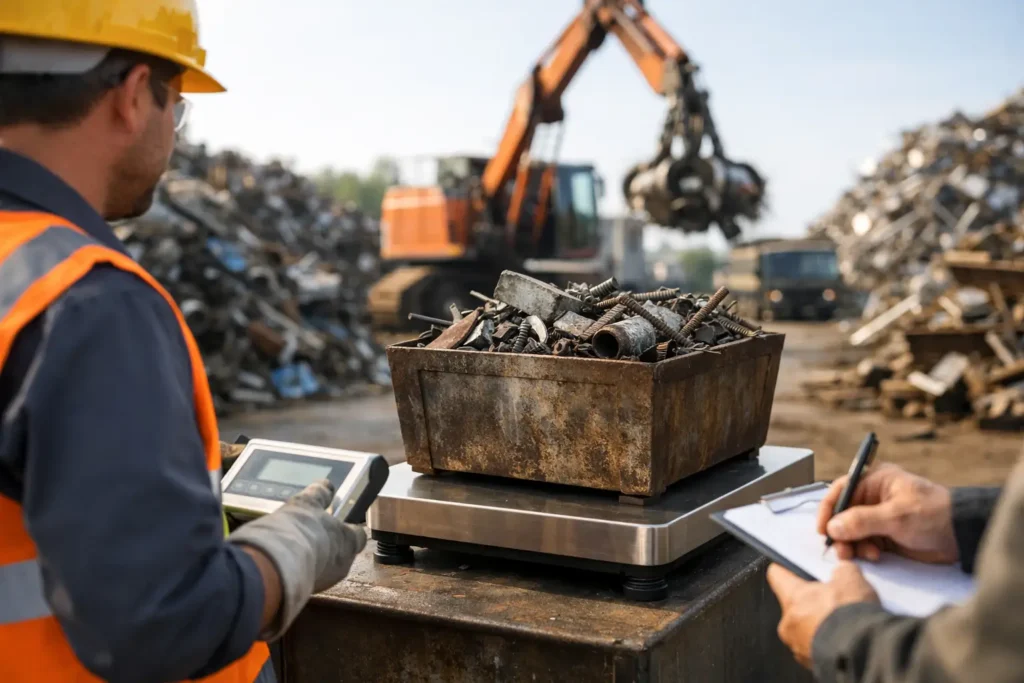
On Site Scrap Weighing Done Properly
Published June 19, 2026 ·
If you have a pile of copper cable behind the workshop, old aluminium offcuts at a job site, or mixed metal from a factory clean-out, the last thing you want is guesswork. On site scrap weighing gives you a clear, practical way to sell metal where it sits, with the load checked, graded and priced before it wastes more of your time.
For plenty of sellers, that matters more than anything else. Tradespeople want to get back to the next job. Workshop owners do not want scrap building up in corners. Industrial sites need metal cleared safely and paid correctly. Homeowners just want the mess gone and the value returned without running around town.
What on site scrap weighing actually means
On site scrap weighing is exactly what it sounds like. Instead of loading everything up and hoping for the best later, the scrap is assessed and weighed at your property, yard, workshop, factory or job site. That gives you a clearer picture of what you have, what grade it falls under, and what it is worth at current market rates.
It is a practical service for sellers who have volume, awkward material, heavy items or no interest in making multiple trips. It is also useful when scrap is spread across a site and needs sorting before collection. Rather than treating all metal as one lump, the material can be separated into the right categories so you are paid on what it actually is.
That point matters. Clean copper does not price the same as mixed wire. Stainless does not pay the same as light iron. A fair return starts with accurate grading and accurate weighing, and both need to happen properly.
Why sellers ask for on site scrap weighing
The biggest reason is convenience, but convenience on its own is not enough. People want speed without losing money. When weighing happens on site, you can see the process as it happens. That reduces confusion and gives you more confidence in the result.
For trade businesses, this is often the difference between a smooth clean-up and a half-day lost to transport, unloading and waiting around. For larger commercial sellers, it helps with workflow. Scrap can be cleared from the premises without tying up staff, vehicles or storage space longer than necessary.
There is also a safety angle. Heavy motors, industrial offcuts, dismantled machinery, batteries and dense non-ferrous loads are not always simple to move. If a buyer can come out, assess the material and handle collection in an organised way, you avoid extra handling and the risk that comes with it.
How the process usually works
A proper service is straightforward. You call, describe the material, the location and roughly how much scrap needs clearing. From there, collection is arranged and the load is checked on site. Metals are identified, sorted where needed, weighed, and priced according to grade and market conditions.
If the scrap is already separated, the process moves faster. If it is mixed, it may take longer because different metals need to be classified correctly. That is not a drawback. It is how you avoid being paid a blended rate that undersells the better material in the pile.
Once the weighing and grading are done, payment can be processed promptly. For many sellers, that is the whole point. No vague promises, no long delays, no confusion over what was included.
What affects your final scrap price
On site scrap weighing gives you transparency, but the number itself still depends on the metal. Type, grade, contamination, volume and current market demand all play a part.
Non-ferrous metals such as copper, brass and aluminium generally return more than common ferrous scrap, but condition matters. Clean, sorted copper pipe is different from burnt wire, and both are different again from mixed cable with insulation still attached. Aluminium cast, sheet and extrusion can all price differently depending on the load. Stainless steel varies by grade. Car bodies, batteries and industrial scrap each have their own considerations.
Contamination is a big one. If a load includes plastic, rubber, timber, dirt or general rubbish, the usable metal content drops. That can reduce the rate because extra labour is needed to separate the scrap, and not all of the weight is recyclable metal. Sellers who separate materials before pickup usually get a cleaner transaction and a stronger return.
Volume also matters, but not always in the way people assume. Bigger loads can be more efficient to collect and process, which may improve the overall deal. On the other hand, a small quantity of high-grade copper can still be worth more than a large pile of lower-value steel. It depends on what is in the load, not just how full the yard looks.
On site scrap weighing for trades and commercial sites
For electricians, plumbers, mechanics and builders, scrap often builds up in the background. Short lengths of cable, brass fittings, old radiators, stainless components, alloy parts and worn-out equipment all take up space. It is easy to let it sit there for months, especially when the daily workload is already full.
That is where on site scrap weighing makes commercial sense. Instead of treating scrap as a nuisance, you turn it into a quick recovery of value. The site gets cleaned up, the metal is removed, and you are paid without pulling staff off other work.
Larger industrial clients get even more value from a service that understands scale. Factory offcuts, redundant machinery, production scrap and demolition metal need more than a casual pickup. They need organised collection, clear grading and a process that does not slow the site down. A no-nonsense operator can assess what is there, separate what matters, and move it efficiently.
Why transparency matters more than promises
Anyone can say they pay top dollar. What sellers really want is a service that shows its working. That means clear grading, accurate weighing, current market-based pricing and prompt payment. If any one of those is missing, the seller is left guessing.
Transparency is especially important for mixed loads. If you have copper, brass, aluminium and steel all bundled together, it is easy for value to disappear if the material is not sorted properly. Seeing the metal identified and weighed in front of you makes the deal cleaner.
This is also why experience counts. A trained scrap buyer knows the difference between lookalike materials, understands non-ferrous value, and can spot where a load needs separating to get a better outcome. For a homeowner that means peace of mind. For a trade or industrial seller, it means less leakage in the final price.
How to get the best result from on site scrap weighing
You do not need to overcomplicate it. If you can separate obvious metals before collection, do it. Keep copper apart from brass, aluminium apart from steel, and batteries away from general scrap. Remove rubbish where possible. If there are access issues, note them early so the pickup can be planned properly.
Photos can help when asking for a quote, especially for larger commercial loads or awkward material. A rough description is useful, but a clear image of the pile, bins, machinery or offcuts gives a more realistic picture of what is involved.
It also helps to be honest about contamination and quantity. If the load is mixed, say so. If there is oil, plastic, insulation or attached parts, mention it. A straightforward quote starts with straightforward information.
Choosing a local operator
A local scrap buyer with proper experience will usually move faster, quote more clearly and understand the practical side of collection in your area. That matters when you need same-day service, fast turnaround, or regular pickups from a worksite.
Melton Scrap Recycling handles on-site weighing, grading, sorting and prompt payment for sellers across Melton and surrounding areas, with a focus on fair pricing and getting the job done without fuss. For everyday sellers and commercial clients alike, that direct approach is what makes the service worthwhile.
If you have metal taking up room, sitting in a skip, or slowing down your site, do not let it keep losing value in a pile. Get it checked properly, get it weighed where it is, and get paid for what you actually have.