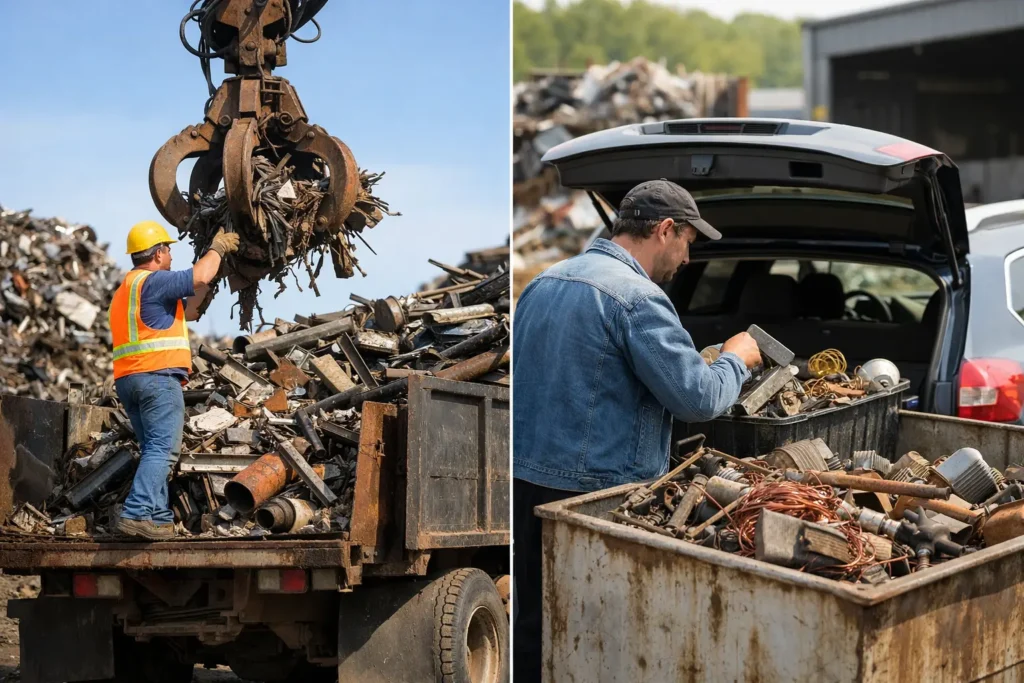
Scrap Pickup vs Drop Off: Which Pays Better?
Published June 16, 2026 ·
If you have a pile of copper, old aluminium frames, stainless offcuts or a dead car battery taking up space, the scrap pickup vs drop off question matters for one reason – which option gets you paid faster, with less mucking around, and at the right price.
The short answer is that neither option is always better. It depends on how much metal you have, what type it is, how clean it is, and whether getting it to the yard is easy or a headache. For some sellers, drop off is the quickest way to turn scrap into cash. For others, pickup saves time, labour and transport costs that can wipe out the benefit of doing it yourself.
Scrap pickup vs drop off – the real difference
At a basic level, drop off means you bring your scrap to the yard yourself. Pickup means the recycler comes to your site, home, workshop or factory and collects it.
That sounds simple enough, but the real difference is in control and efficiency. With drop off, you control when you arrive and what you bring. With pickup, you save the effort of loading, transporting and unloading metal, especially when the job is bulky, heavy or spread across a site.
For homeowners and small sellers, drop off often suits smaller loads like old taps, wire, tools, fencing, rims or household metal waste. For tradies, mechanics and industrial operators, pickup can be the better move when there is regular volume, mixed scrap, demolition material or awkward items that are not worth shifting with your own vehicle and crew.
When drop off makes more sense
If your scrap is already sorted, easy to load, and you have a ute, trailer or van available, drop off can be the most direct option. You bring it in, it gets checked and graded, and you get paid without waiting around for a collection window.
This is often the best fit for smaller non-ferrous loads. Electricians with copper cable, plumbers with brass fittings, workshop owners with aluminium parts, or households clearing out metal odds and ends can usually get the job done quickly by dropping off.
There is also less back-and-forth when the material is straightforward. Clean copper, separated brass, aluminium extrusions and stainless steel are easier to assess when they arrive already visible and accessible. If your load is in the boot, on a trailer, or stacked in tubs, the process is usually quick.
Drop off can also help if you want certainty on the day. You are not booking around site access, staff availability or collection timing. You simply bring the scrap in when it suits your schedule.
That said, convenience only lasts if the trip is actually convenient. If fuel, loading time, labour and vehicle space become an issue, the value of drop off starts to fade fast.
When scrap pickup is the smarter option
Pickup becomes the better option when the metal is too bulky, too heavy, too scattered or too time-consuming to move yourself. That includes factory scrap, demolition offcuts, old machinery, car bodies, batteries, bulk steel, mixed site waste and regular trade scrap that builds up faster than you can clear it.
For commercial sellers, time is money. If your staff are spending half a day loading scrap, driving across town, waiting, unloading and heading back, that is not a saving. It is lost productivity. In those cases, pickup is often the more profitable choice even if the rate structure differs from a walk-in load.
Pickup also makes sense when safety and access are part of the job. Heavy items, sharp offcuts and industrial scrap are not always practical to move with your own gear. Getting a recycler to collect on-site can reduce risk and speed up the clean-up.
For larger loads, same-day pickup can be a major advantage. It clears space, keeps a job site moving and turns scrap into payment without adding another transport task to your list.
Does pickup or drop off pay more?
This is usually the first question, and fair enough. Everyone wants the best return.
In a straight scrap pickup vs drop off comparison, drop off can sometimes deliver a stronger payout per load because the recycler is not factoring in collection logistics, travel time or labour to the same degree. If you are bringing in a tidy, sorted load yourself, that can work in your favour.
But that does not automatically mean drop off pays better overall. If you spend money on fuel, tie up a vehicle, pull a worker off the tools, or make two trips because the load does not fit, your real return drops. The headline rate only tells part of the story.
Pickup can still be the better financial option when the load is large enough or awkward enough that self-delivery costs you more than you realise. That is why serious sellers do not just compare price per kilo. They compare total value after time, transport and labour are accounted for.
The smarter question is not just, “What pays more?” It is, “What leaves me better off by the end of the job?”
Volume changes everything
Small loads and bulk loads should not be treated the same way.
If you have a few tubs of brass, a coil of copper, some old alloy wheels and a battery or two, drop off is often the cleanest option. It is quick, simple and easy to manage.
If you have bins of swarf, stacks of steel, stripped site metal, old equipment, commercial cable or ongoing scrap from workshop operations, pickup starts to look much more efficient. The bigger the load, the more important logistics become.
This is where many sellers get it wrong. They focus only on the metal value and ignore the handling cost. A large unsorted pile on a worksite is not the same as a neatly packed trailer of separated non-ferrous scrap. One needs transport and labour planning. The other is ready to go.
Clean, sorted scrap usually moves better
Whether you choose pickup or drop off, clean and sorted material usually puts you in a stronger position.
Copper separated from insulated wire, brass kept apart from mixed fittings, and aluminium sorted from steel all make grading faster and clearer. That reduces disputes, cuts delays and helps you understand what your load is actually worth.
With drop off, sorting before you arrive can speed the whole process up. With pickup, sorting beforehand can make collection more efficient and improve the quality of the quote.
If your load is mixed, dirty or full of non-metal rubbish, expect that to affect the result. Honest grading matters. Good recyclers will tell you where the value is and where contamination is dragging it down.
Who should choose which option?
Homeowners clearing a shed or backyard usually get the most benefit from drop off unless the items are too large to move safely. A tradie with a manageable load of copper, brass or aluminium can often do the same.
A mechanic with old car parts, batteries and bulk metal waste might be better off with pickup if the material is building up regularly. Builders, demolition crews, manufacturers and workshops with ongoing scrap streams almost always benefit from planned collections because it keeps sites cleaner and operations moving.
There is no one-size-fits-all answer. The right option depends on what you are selling and what your time is worth.
What to ask before deciding
Before choosing between pickup and drop off, think about four things. How much scrap do you actually have? Can you move it safely with your own vehicle? Is it sorted or mixed? And how much time will the job chew through if you handle transport yourself?
Those questions usually point you in the right direction fast. If the load is small and simple, drop off is often the easiest path. If the load is large, messy or awkward, pickup is usually the smarter commercial decision.
A reliable local operator should be able to give you a clear answer without fluff. At Melton Scrap Recycling, that means practical advice, fast service and a straightforward process built around getting your metal cleared and your payment sorted without wasting your day.
The best option is the one that keeps the job simple, the pricing fair and the turnaround fast – because scrap should put money back in your pocket, not create more work than it is worth.