Is Stainless Steel Worth Scrapping?
Published June 21, 2026 ·
If you’ve got an old sink, bench offcuts, exhaust parts or factory scrap sitting around, the question is simple: is stainless steel worth scrapping? In most cases, yes – but only if you understand what you’ve got, how it’s graded, and what affects the price. Stainless won’t usually pay like copper, but it can still be well worth separating and selling instead of tossing it in the skip.
For tradies, workshops, demolition crews and even households doing a clean-up, stainless steel often builds up without much notice. A few pieces here and there might not look like much. Put it together properly, though, and it can turn into a decent return.
Is stainless steel worth scrapping for the average seller?
For the average seller, stainless steel is worth scrapping when you’ve got enough volume, clean material, or higher-grade stock. If you’re expecting copper-level money for a couple of rusty kitchen items, you’ll probably be disappointed. If you’ve got commercial kitchen gear, fabrication offcuts, processing equipment, railings, tanks or mixed demolition scrap, it starts to make a lot more sense.
That’s where a lot of people get it wrong. They either throw stainless in with general metal scrap and lose value, or they assume it has no value because the payout per kilo is lower than other non-ferrous metals. Neither approach helps. Stainless sits in that middle ground – not the highest-paying metal, but often too valuable to waste.
The real answer depends on three things: grade, quantity and cleanliness. Those three factors decide whether your load is just worth clearing out or genuinely worth your time.
What gives stainless steel scrap value?
Stainless steel has scrap value because it contains alloying elements such as chromium and, in many grades, nickel. Those metals are what make stainless resistant to corrosion, and they’re also what give it recycling value. Not all stainless is equal, though.
Some grades contain more nickel than others, and nickel-rich stainless usually attracts stronger prices. That’s why two pieces of stainless that look nearly identical can be priced differently once they’re sorted and graded.
Clean stainless also tends to hold better value than contaminated loads. If it’s loaded with plastic, rubber, insulation, timber, food residue or other attached materials, the yard has to spend more time separating it. That extra handling cuts into what the scrap is worth.
Thickness can matter too, but not always in the way people expect. Heavy industrial stainless can be valuable because of the volume and consistency of the load. Thin household stainless might still be accepted, but if it’s mixed, dirty or lightweight, the return can be modest.
The stainless steel grades that matter most
If you’re trying to work out whether stainless steel is worth scrapping, grade is one of the biggest price drivers.
The most common grades people come across are 304 and 316. Grade 304 is widely used in sinks, benches, kitchen equipment, tubing and general fabrication. Grade 316 is a higher-spec stainless often found in marine settings, chemical applications and some industrial environments because it has better corrosion resistance. It generally contains more valuable alloy content, so it can be worth more.
Then there’s lower-grade stainless, which may have less nickel or different alloy composition. That can mean a lower payout, even if the material still looks clean and usable.
For most sellers, exact grading by eye is not always realistic. A polished sheet, a food-grade bench and a bit of stainless pipe can all look similar. That’s why proper sorting and honest assessment at the yard matters. If you know the source of the material, that helps. If not, separating obvious stainless from mixed scrap is still the best starting point.
Common stainless steel items that are worth separating
A lot of stainless gets missed because it doesn’t look like a premium scrap metal. In reality, it shows up across homes, trades and industrial sites more often than people think.
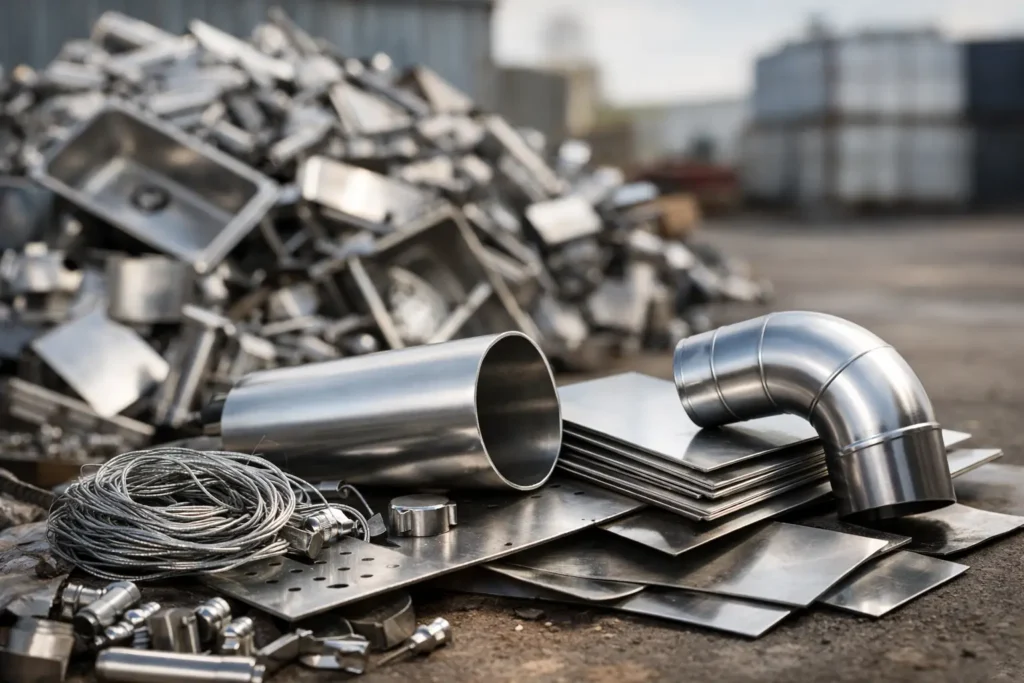
Common items include kitchen sinks, splashbacks, benches, shelving, exhaust components, brewing tanks, balustrades, handrails, bolts, machine guards, food processing equipment, laundry tubs, ducting and fabrication offcuts. In workshops and factory clear-outs, stainless can also turn up in pumps, valves, frames and process lines.
If you’re stripping out a site, it pays to keep stainless separate from plain steel. Mixing it all together usually means you get paid at the lower rate for mixed ferrous scrap rather than the better rate stainless may attract on its own.
That one step – sorting before you load up – can make a noticeable difference to the final payout.
When stainless steel is not really worth the effort
There are cases where stainless steel isn’t worth a special trip on its own. A couple of very light items, badly contaminated scrap, or material with too much non-metal attached may not deliver much after your time and fuel are factored in.
The same goes for loads that haven’t been sorted at all. If stainless is buried in mixed rubbish, tangled with other metals, or combined with non-recyclable waste, the job becomes slower and less profitable.
That doesn’t mean the material has no value. It just means the value can be eaten up by poor preparation. If you’re already bringing in copper, brass, aluminium or other scrap, adding separated stainless to the load usually makes sense. If you’re making a dedicated trip for a tiny amount, maybe not.
For larger loads, trade jobs and commercial clean-ups, the maths changes quickly. Bulk volume makes stainless far more worthwhile.
How to get the best price for stainless scrap
If you want a straight answer to whether stainless steel is worth scrapping, the better question is how to make it worth more.
Start by separating stainless from mild steel and from other metals. Don’t assume the yard will do all the sorting for you without it affecting the rate. Clean loads are easier to grade, quicker to process and usually more attractive from a pricing point of view.
Remove obvious contamination where practical. That could mean stripping out plastic fittings, timber panels, rubber seals or general rubbish. You don’t need to overdo it, but a clean metal-only load puts you in a better position than a pile of mixed waste.
If you’ve got offcuts or recurring stainless scrap from a business, keep it in a dedicated bin or area instead of letting it mix into general scrap. Fabricators, commercial kitchen installers, plumbers and industrial maintenance crews often lose money simply because valuable stainless gets thrown in with everything else.
It also helps to sell to a yard that knows how to grade properly and quote transparently. If the process is vague, you’re left guessing. If the grading is clear and the payment is immediate, you know where you stand.
Market price matters, but so does the yard
Scrap prices move. That’s normal. Stainless steel pricing can shift based on export demand, alloy markets, nickel pricing, freight conditions and local supply. So if you’re asking whether stainless steel is worth scrapping this week, the answer may be slightly different next month.
But market conditions are only part of it. The yard you deal with matters just as much. Fair grading, accurate weighing, fast turnaround and clear pricing all affect what ends up in your hand. A decent yard makes the process simple. A poor one can turn a good load into a frustrating waste of time.
That’s why sellers with regular stainless scrap usually stick with a buyer they trust. They want the material assessed properly, collected quickly if needed, and paid without delays. For bigger sellers, that reliability matters just as much as the day’s rate.
So, is stainless steel worth scrapping?
Yes – in plenty of cases, stainless steel is worth scrapping. It’s rarely the top-paying metal in the yard, but it still has real value, especially when it’s clean, sorted and sold in decent quantity. For households, it can turn unwanted metal into extra cash. For tradies and commercial operators, it can stop useful value from ending up in the bin.
The key is being realistic. Not every stainless item is worth a special run by itself, and not every load will bring a standout return. But if you separate it properly and sell it to a trusted local recycler, stainless can absolutely be worth your time.
If you’re not sure what grade you’ve got or whether your load is worth bringing in, get it checked before you throw it out. Good scrap money often comes from material people almost wrote off.