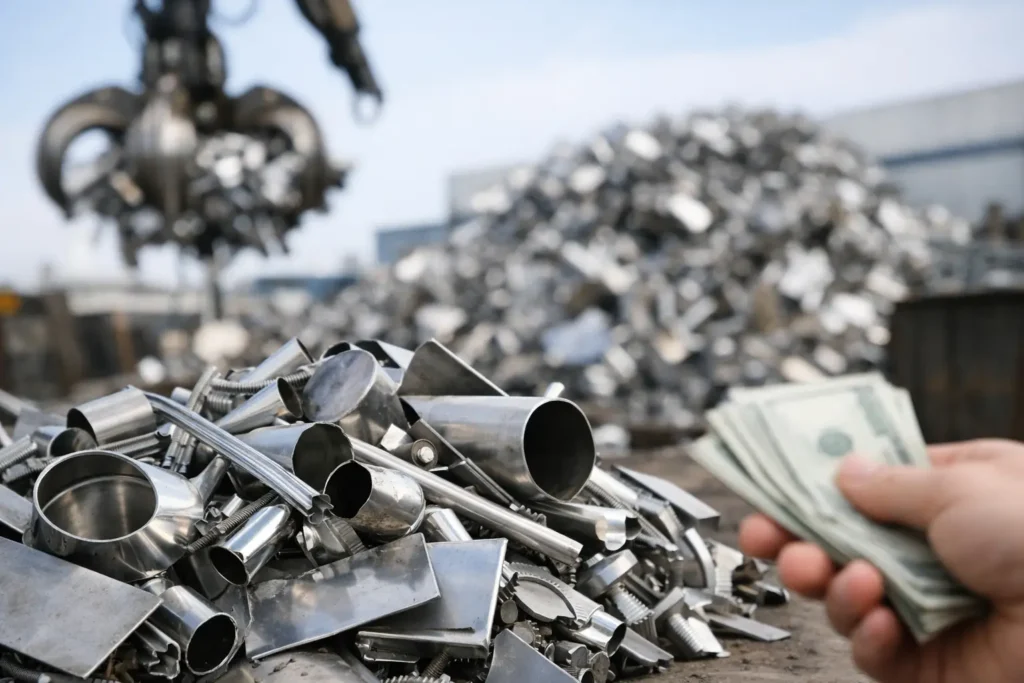
How to Sell Stainless Scrap for More
Published June 29, 2026 ·
If you have stainless piling up in a shed, workshop, factory corner or job site skip, leaving it there is money left on the floor. Knowing how to sell stainless scrap properly makes a real difference to what you get paid, how fast the job gets done, and whether the load is graded fairly the first time.
Stainless scrap is valuable, but it is not priced by guesswork. What you receive depends on the grade, the amount, how clean the material is, and whether it has been mixed with lower-value metals or rubbish. That is why sellers who take a few practical steps before they call usually get a smoother process and a better return.
How to sell stainless scrap without losing value
The first job is simple – know what you are actually selling. A lot of people call everything silver-coloured metal stainless, but that is where value gets lost. Some items are stainless. Some are mild steel, chrome-plated steel, aluminium or mixed assemblies. If the load is mixed, it will need sorting and that can affect the final rate.
Common stainless scrap includes sinks, benches, kitchen equipment, balustrades, pipes, tanks, food-grade machinery, exhaust parts, fasteners and offcuts from fabrication work. Trades and workshops often have stainless turnings, sheet, tube and demolition scrap. Homeowners usually have old appliances or renovation leftovers with some stainless content, but not always pure stainless all the way through.
A quick magnet check can help. Most stainless grades are less magnetic than standard steel, although some stainless will still attract a magnet slightly. So it is a useful clue, not a final answer. If you are unsure, a reputable yard should inspect and grade the material properly rather than giving you a rough number over the phone and changing the story later.
What affects the price of stainless scrap
Price comes down to metal content, cleanliness and quantity. Clean stainless that is sorted and ready to process is worth more than mixed scrap with bolts, plastic, rubber, insulation or general rubbish attached. If your load includes contamination, extra labour is needed to separate it, and that usually reduces the payout.
Grade matters as well. Different stainless alloys contain different amounts of nickel and other elements, which changes market value. That is why one load of stainless can pay better than another even if both look similar at first glance. Industrial sellers and fabricators tend to understand this already. Casual sellers usually do not, and that is exactly why clear grading matters.
Volume can also shift the conversation. A few sink cut-outs and offcuts are handled differently from a large commercial clean-out or recurring factory scrap. Bigger loads may justify collection, on-site sorting and quicker turnaround. Smaller loads are often best dropped off if you want to get paid fast and move on with your day.
Market conditions are another factor. Scrap prices move. Anyone promising a fixed top rate without seeing the material, the grade or the quantity is giving you marketing, not a serious quote. A transparent buyer should explain what they are pricing and why.
Clean scrap usually pays better
You do not need to spend hours making every piece spotless, but basic prep helps. Remove obvious non-metal attachments where practical. Separate stainless from aluminium, brass, copper and plain steel. Keep sealed containers, liquids, timber, plastic and general waste out of the pile.
This does two things. First, it makes grading quicker and more accurate. Second, it shows the load has value and has not just been swept together from a demolition site or hard rubbish pile. That can improve the offer, especially on larger volumes.
The best way to prepare stainless before selling
If you want the process to be efficient, sort the load before collection or drop-off. Put stainless in its own pile, bin or pallet area. Keep heavier sections together and lighter mixed pieces separate if you can. If you are a tradie or workshop operator, that small bit of discipline on every job adds up over time.
For households, preparation is usually more basic. If you have an old sink, shelving, kitchen bench or appliance parts, make sure the stainless pieces are easy to access and not buried under green waste, cardboard or renovation rubble. If you are not certain whether something is stainless, say so upfront. Honest information speeds up the quote and avoids arguments later.
For commercial and industrial loads, access matters almost as much as the metal itself. Let the recycler know whether the scrap is loose, bagged, stacked, in bins, indoors, behind other stock or spread across a site. A fast job depends on good information. If collection is needed, clear details help avoid delays and make same-day collection more realistic.
Separate stainless from other valuable metals
This is one of the easiest ways to protect your return. Stainless should not be mixed through with copper cable, brass fittings, aluminium extrusion, batteries or car parts. Mixed loads can still be bought, but clean separation usually gives you a clearer and more accurate payout across each metal type.
If you are doing strip-outs, factory clean-outs or workshop clearances, sort as you go rather than leaving one big mess for the end. That saves time on site and usually improves the final value of the load.
Choosing where to sell stainless scrap
Not every buyer handles stainless with the same level of accuracy or speed. If you are comparing buyers, look at the basics. Do they explain grading clearly? Do they offer transparent quotes based on the actual material? Can they handle both small drop-offs and bulk collections? Do they pay promptly? Those are the points that matter.
Fast service is not just a convenience. For trades and businesses, it affects labour, site access and how quickly you can clear space for the next job. For homeowners, it is about getting rid of bulky metal without wasting half a day chasing a vague offer.
A local operator with proper stainless buying experience is usually the better option than someone who treats every load as generic scrap. Stainless is too variable for lazy pricing. Sellers should expect a straightforward process, proper inspection and immediate payment once the material is checked and accepted.
How the selling process usually works
Most stainless sales are simple when the buyer knows what they are doing. You provide a description of the material, the estimated amount and whether you want to drop it off or arrange collection. The load is then inspected, sorted if needed, graded and priced according to current market conditions and metal content.
If you are a homeowner with a small amount, the quickest path is often to bring it in, have it assessed and get paid on the spot. If you are a tradie, mechanic, builder or site manager with a larger load, collection may be the smarter option, especially if the metal is bulky or spread across a worksite.
At Melton Scrap Recycling, that practical approach is the point – accurate grading, fast turnaround, clear pricing and payment without the run-around. That suits both small sellers who want cash for unwanted metal and commercial operators who need reliable service on repeat loads.
When collection makes more sense than drop-off
Collection is worth considering when the stainless is heavy, awkward, high in volume or tied to a time-sensitive clean-up. It also makes sense when labour on your side costs more than the effort of moving the scrap yourself. For a few household items, drop-off is usually fine. For workshop bins, factory scrap, demolition material or recurring trade quantities, collection is often the better commercial decision.
Mistakes that can cost you money
The biggest mistake is assuming all stainless pays the same. It does not. The second is mixing good stainless through lower-value scrap and rubbish. The third is taking a blind quote at face value without asking how the material will be graded.
Another common issue is poor access. If a buyer turns up and the load is blocked in, partly buried or completely different from what was described, the job slows down and the quote may change. That is not a trick. It is just the reality of labour and handling.
Finally, do not sit on stainless for months waiting for the perfect price if it is cluttering your site or costing you usable space. Sometimes the best financial move is clearing it quickly, getting paid now and keeping operations tidy. Scrap has value, but so does time.
If you want the best result, treat stainless scrap like a saleable material, not just rubbish with a bit of metal in it. Sort it properly, describe it honestly, choose a buyer who grades it fairly, and move it while the job still makes commercial sense. That is how you turn scrap into a clean, fast payout instead of another pile to deal with later.