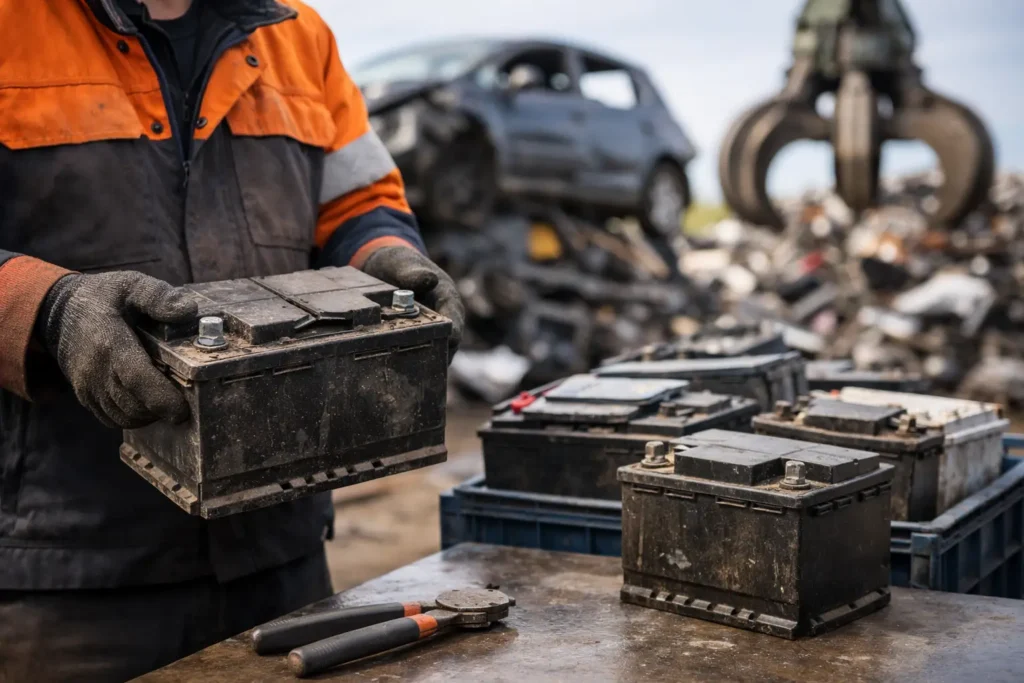
How to Scrap Car Batteries Safely for Cash
Published June 14, 2026 ·
A dead battery sitting in the shed is not just clutter. It is hazardous waste, and if you leave it too long, it can leak acid, corrode nearby metal and create a bigger mess than it is worth. If you want to know how to scrap car batteries properly, the good news is the process is simple when you handle them safely and take them to the right scrap yard.
Car batteries have real recycling value because they contain lead and plastic that can be recovered and processed. That means an old battery is not something to throw in the rubbish bin or dump behind the workshop. It is scrap, and scrap can be turned into cash if you know what buyers expect.
How to scrap car batteries without making a mess
The first rule is straightforward. Do not crack them open, drain them, tip them on their side or try to strip anything out yourself. A standard lead-acid car battery contains sulphuric acid and lead, which means it needs to be handled as a whole unit. If the battery is intact, keep it upright, store it on a flat surface and move it carefully.
If it is still fitted in a vehicle, disconnect the terminals carefully before removal. Negative terminal first, then positive. Once it is out, check the casing for damage. A battery with a split case, heavy swelling or obvious leaks needs extra care. In that case, place it in a heavy-duty plastic tray or container so any seepage is contained during transport.
For household sellers, this is usually where the job ends. Keep the battery upright, load it securely, and bring it in. For mechanics, wreckers and workshops handling multiple units, the same principle applies at scale. Stack them safely, keep damaged units separate and avoid mixing them loosely with other scrap where they can tip or crack.
What scrap yards look for in old car batteries
Most scrap yards buying car batteries are focused on three things: safety, weight and condition. The battery does not need to work. In fact, most scrap batteries are completely dead. What matters is whether it can be accepted and processed without unnecessary risk.
An intact battery is the easiest to handle and usually the simplest to price. If the terminals are still attached and the case is complete, that is fine. Dirt and general workshop grime are not usually a problem, but severe contamination can be. If a battery has been smashed, burned, mixed with loose acid residue or filled with other materials, it may slow the process down or affect what a yard can offer.
There is also a difference between dropping off one or two batteries from the garage and bringing in a bulk quantity from an automotive business. Larger loads may need a faster unloading process and clearer separation from other metal types. If you are dealing with volume, it helps to call ahead so the yard can prepare for it and move things along.
Why car battery scrap prices vary
People often expect a fixed rate, but battery prices move. Like other scrap metals, battery values are tied to market conditions, recovery demand and the quality of the material coming in. Lead is the main value driver, so when lead pricing shifts, battery scrap rates can shift too.
Quantity also matters. A single old battery from a family car will not be priced the same way as a pallet of used batteries from a mechanic or transport operator. Commercial sellers with regular volumes often have different expectations because consistency and load size affect handling efficiency.
Condition can make a difference as well. A sealed, complete battery is easier to process than one that is leaking or damaged. That does not always mean it has no value, but it may require more care and slower handling. If your goal is to get the best return, bring them in as complete units and avoid damaging them during removal or storage.
How to prepare batteries for drop-off or pick-up
If you are bringing batteries to a yard yourself, keep transport simple and safe. Stand them upright in the boot, tray or cargo area, and use crates or barriers so they do not slide around. Do not pile heavy steel or loose scrap on top of them. That is how casings crack.
If you have several batteries, separate obviously damaged ones from intact units. Wipe off excessive grime if needed, but do not hose them down or try to clean the inside of terminals with chemicals. The aim is not presentation. It is safe handling.
For businesses with regular scrap flow, pick-up can save time, especially when batteries are only one part of a larger load. If you are clearing a workshop, dismantling vehicles or moving accumulated scrap from a yard, having collection organised can be the more efficient option. Fast pick-up matters because old batteries take up space, create handling risk and tend to get pushed aside until they become a bigger problem.
Common mistakes when scrapping car batteries
The biggest mistake is putting them in general waste. That is unsafe, potentially unlawful and a waste of recyclable material. The second is storing them badly. A battery dumped on its side behind the shed might not look urgent, but once it leaks, you are dealing with contamination and cleanup as well as disposal.
Another common mistake is trying to dismantle the battery for more value. That does not help. Scrap yards buying batteries want them as batteries. Opening them up creates hazard, exposes you to acid and lead, and can make the load harder to accept.
People also lose time by turning up with mixed loads that are not sorted at all. If you have batteries, radiators, alloy wheels and general metal scrap together, say so upfront. It speeds up the process when the yard knows what is coming and can grade it properly on arrival.
How to scrap car batteries if you run a workshop or yard
If you are a mechanic, auto electrician, wrecker or fleet operator, battery recycling is less about one-off disposal and more about process. The easiest way to keep it profitable is to treat used batteries like a regular scrap stream, not a cleanup job for later.
Set aside a designated storage area. Keep batteries upright. Separate damaged from intact stock. Do not leave them exposed where forklifts, parts or weather can cause damage. Once the volume builds, move them out quickly. Holding scrap too long ties up space and creates unnecessary risk.
This is also where dealing with an experienced local buyer helps. A yard that handles battery recycling regularly can process loads faster, quote clearly and sort out pick-up when needed. For sellers in Melton and surrounding areas, Melton Scrap Recycling fits that practical model – quick turnaround, straightforward pricing and no mucking around.
Safety matters more than squeezing out a few extra dollars
There is always a temptation to shop around for every last dollar. Fair enough. But with car batteries, the best outcome is not just the highest quote on paper. It is a fair price, fast service and safe handling from start to finish.
If a battery is leaking in your vehicle, workshop or shed, time matters. If you have a stack of old units taking up room, convenience matters too. The right buyer should make the process easy enough that you actually clear the load instead of letting it sit there for another six months.
That is the trade-off worth understanding. Chasing a tiny difference in rate can cost you more in time, storage hassle and risk. For most sellers, especially households and busy trades, quick payment and a clean, simple transaction are just as important as the headline price.
When it makes sense to call ahead
If you have one battery, you can usually just bring it in. If you have multiple batteries, damaged units, mixed automotive scrap or a commercial quantity, call first. That avoids delays and gives you a clearer idea of what is accepted, how the load should be prepared and whether pick-up is the better option.
It also helps if you are not sure what type of battery you have. Most standard vehicle batteries are straightforward, but some automotive and equipment batteries differ in size and handling requirements. A quick call can save a wasted trip and make sure everything is processed properly.
Old batteries are not hard to recycle, but they do need to be handled with a bit of respect. Keep them upright, keep them intact, and move them on before they become a problem. If it is dead, unwanted and taking up space, turn it into cash and clear the area properly.