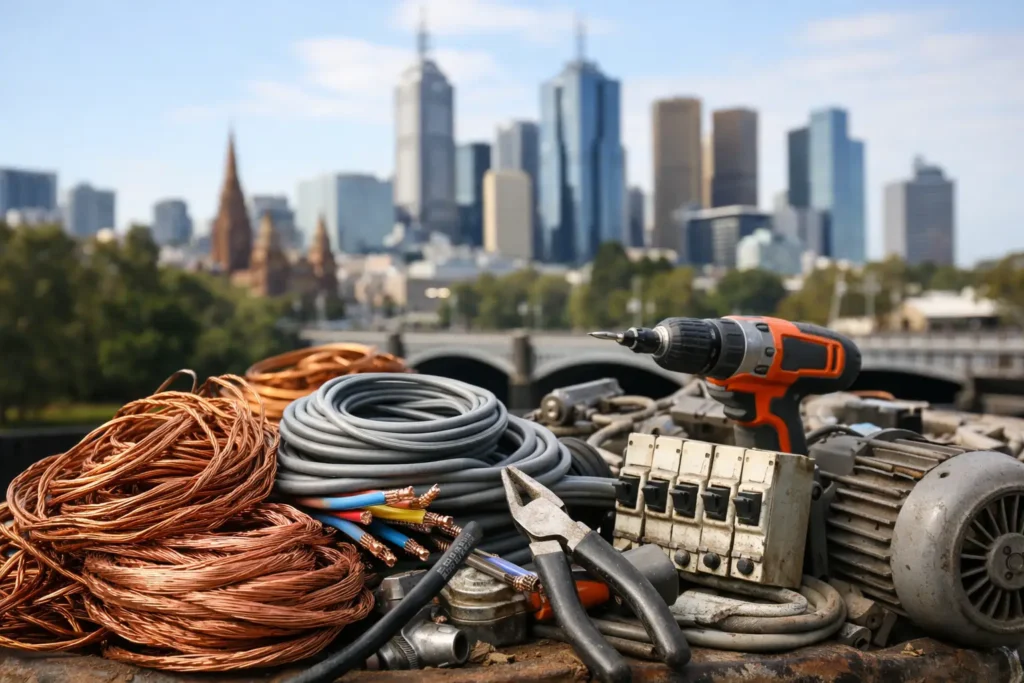
Best Scrap for Electricians in Melbourne
Published May 29, 2026 ·
A bucket of mixed offcuts might not look like much at the end of a job, but for sparkies it adds up fast. The best scrap for electricians is usually the metal already passing through your hands every week – copper cable, brass fittings, aluminium, old switchgear and clean lead from certain removals. If you sort it properly and keep contamination down, scrap stops being rubbish and starts becoming a steady extra return on work you have already done.
That matters more than most tradies think. On fit-outs, strip-outs, upgrades and maintenance runs, electrical waste can pile up quietly in the back of the ute or around the workshop. The difference between tossing it all together and separating it properly is often the difference between average money and top-dollar rates.
What counts as the best scrap for electricians?
For most electricians, value comes down to three things – metal type, cleanliness and volume. Non-ferrous metals usually pay better than ferrous metals, and copper sits at the top of the pile for most electrical scrap. But not all copper is equal. Bright, clean copper without insulation, solder, paint or corrosion will usually attract better pricing than mixed or dirty copper.
After copper, brass often performs well, especially from fittings, glands, terminals and connectors. Aluminium can also be worthwhile if you are handling larger quantities from cable, trays or old fittings. Stainless steel and mixed metals still have value, but they are rarely the headline earners in an electrician’s scrap load.
The real point is simple: the best-paying scrap is usually the material that needs the least extra processing. Clean, separated metal is faster to grade and easier to recycle, which is why it tends to return better value.
Copper is usually the top earner
If you are asking about the best scrap for electricians, copper is almost always the first answer. It is common on residential, commercial and industrial jobs, and it turns up in more places than many crews bother to separate properly.
Bright copper wire
This is the gold standard for many scrap loads. Bright copper wire is clean, uncoated, unalloyed copper that has been stripped of insulation and kept free from contamination. If you have cable offcuts with enough copper content to justify stripping, this is often where the best return sits.
That said, stripping every bit of cable is not always worth the labour. On small jobs, your time may be better spent keeping insulated cable separate and moving on. On larger commercial or industrial work, where cable volume is high, stripping can make financial sense. It depends on the amount, the copper grade and how quickly your team can process it.
Insulated copper cable
Not every electrician has the time or setup to strip cable, and that is fine. Insulated copper wire still has solid value, especially when it is sorted by type and kept reasonably clean. Heavy cable with a high copper recovery rate will generally be more attractive than low-grade mixed data cable or heavily contaminated wire.
The mistake is mixing everything together. If TPS, armoured cable, data cable and mixed site scrap all go into one bin, you make grading harder and often drag the price down.
Copper from switchboards and equipment
Old switchboards, busbars, breakers, transformers and contactors can contain copper that is often overlooked. These materials can be worthwhile, but they need to be separated from steel, plastic and other components where possible. A board full of mixed material still has value, but a load that has been broken down and sorted is easier to price properly.
Brass adds up quicker than people expect
Brass is one of those metals that does not always arrive in bulk, but it turns up regularly across electrical work. Cable glands, terminals, lugs, connectors, screws, meter parts and older hardware can all contain brass.
Because brass is heavier than it looks, even a modest bucket can be worth collecting. The same rule applies here too – keep it clean and keep it separate. If brass is mixed with steel screws, plastic caps, rubber seals or general site rubbish, it becomes slower to process and less attractive as a sorted scrap line.
For electricians doing service work, board upgrades or older building removals, brass can be a reliable secondary earner behind copper.
Aluminium is worth keeping, especially in volume
Aluminium rarely beats copper on price, but that does not mean it should be ignored. On larger projects, aluminium cable, cable tray, light fittings, frames and extrusions can build into worthwhile volume.
The key with aluminium is scale. A few pieces here and there may not feel significant, but when you are doing repetitive work across multiple sites, it becomes another recoverable line instead of wasted material. Clean aluminium without attachments or mixed contamination is usually the smarter way to present it.
Where electricians lose money is by throwing aluminium in with general metal scrap and hoping for the best. Sorted aluminium is one thing. Mixed light gauge scrap is another.
Batteries, lead and older site removals
Electricians involved in backup systems, emergency lighting, telecoms, industrial maintenance or decommissioning work may also handle batteries and lead. These materials can have solid value, but they need proper handling.
Lead from old cable sheathing, flashing-related electrical removals or battery systems should be kept apart from other metal. Batteries are a separate category again and should never be dumped into mixed scrap. Besides value, there is also a safety and environmental issue. Proper battery recycling matters, especially with commercial volumes.
If you are clearing old plant or redundant electrical systems, these heavier materials can make a noticeable difference to the final payout.
What lowers the value of electrician scrap?
Most scrap loads do not lose value because the metal is worthless. They lose value because the load is messy. Contamination is the biggest issue – plastic, insulation, rubber, screws, dirt, timber, gyprock dust and general site rubbish all slow down grading and can reduce what your scrap is worth.
Moisture can also be a problem, particularly with cable and metal stored outside for too long. Corrosion, mixed grades and unnecessary attachments all create more work at the yard.
Then there is the common mistake of not sorting by metal type. Copper mixed with brass, aluminium mixed with steel, or fittings thrown in with cable can all lower the overall result. Scrap yards pay according to what is there and how cleanly it is presented. If your load needs extra labour just to identify it, do not expect top rates.
How electricians can get better returns
The fastest way to improve scrap value is not complicated. Sort on site where possible, use separate tubs or bins in the ute, and do not let good metal get buried under rubbish. A little discipline during pack-up saves time later and protects the value of the load.
For workshops and commercial crews, it often helps to set up dedicated storage for bright copper, insulated cable, brass, aluminium and mixed breakage. Once that system is in place, scrap stops becoming an afterthought.
It is also worth being realistic about labour. Stripping every offcut by hand is not always the smart play. If the time cost is too high, keep the insulated cable clean and separate instead. Better sorting often beats overprocessing.
Why electricians should treat scrap as part of the job
On one-off domestic jobs, scrap money may feel like pocket change. Across months of service work, renovations, upgrades and commercial projects, it becomes part of your margin. It will not replace labour revenue, but it can absolutely improve recovery on materials you would otherwise throw away.
There is also a practical benefit beyond the payout. A clean site, better waste handling and proper recycling all make the job easier to close out. For commercial clients and builders, that matters. For environmentally conscious customers, it matters too. Recovering copper, brass and aluminium properly keeps valuable metal in circulation and reduces unnecessary landfill.
For sparkies around Melton and Melbourne, the best results usually come from working with a yard that grades accurately, moves quickly and pays on the spot. Melton Scrap Recycling deals with the materials electricians generate every day, from cable and copper to brass, batteries and bulk commercial loads, with straightforward pricing and fast turnaround.
If you are already generating scrap on the job, the opportunity is there. Keep the good metal separate, do not let contamination creep in, and treat scrap like part of the work rather than an afterthought. A few smarter habits can turn the leftovers in your boot into money you were leaving behind.