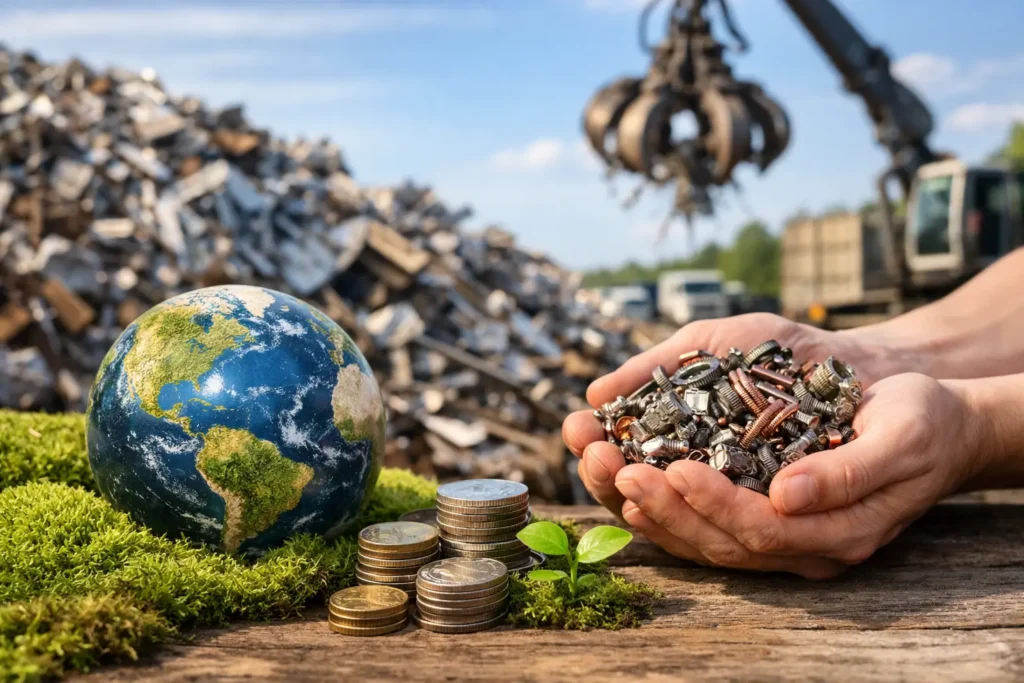
Eco Friendly Metal Recycling That Pays
Published May 28, 2026 ·
A pile of old copper wire, bent aluminium, worn-out tools or scrap from a job site might look like rubbish, but it still has value. That is the point of eco friendly metal recycling – keeping useful material out of landfill, cutting waste, and putting money back in your pocket at the same time. If you are a homeowner clearing space, a tradie cleaning up after a job, or a workshop moving bulk scrap, the right recycling process matters.
Why eco friendly metal recycling matters
Metal is one of the few materials that can be recycled again and again without losing its core properties. That makes it far more useful than waste that can only be downcycled or dumped. When scrap metal is recovered properly, it reduces the need for raw mining, lowers energy use in manufacturing, and keeps hard waste out of landfill.
That sounds simple, but the real benefit depends on what happens after the metal leaves your site. If scrap is mixed, contaminated or sent through the wrong channel, the environmental benefit drops fast. Clean sorting, proper grading and responsible processing are what make metal recycling genuinely eco friendly rather than just convenient disposal.
For sellers, there is another practical reason to care. Better sorted metal usually means better pricing. Cleaner loads are easier to grade, easier to process and worth more in the recycling stream. So doing it properly is not just good for the environment. It is good business.
Not all scrap loads are equal
One of the biggest misconceptions is that all metal goes into one bin and gets treated the same way. It does not. Ferrous metals like steel and iron are handled differently from non-ferrous metals like copper, brass, aluminium and stainless steel. Car bodies, batteries, mixed demolition scrap and factory offcuts all need different handling as well.
This is where many sellers lose value. A mixed load of insulated copper cable, brass taps, aluminium sheet and steel brackets can still be recycled, but if it arrives unsorted, it often takes more labour to separate and grade. In some cases, contamination from plastics, timber, rubber or general rubbish can reduce the overall return.
Eco friendly metal recycling works best when materials are identified early, separated where practical, and kept as clean as possible. You do not need to become a metal expert overnight, but a basic effort in sorting can make a real difference.
What clean sorting actually looks like
For a homeowner, clean sorting might just mean putting old wiring in one tub, aluminium items in another, and keeping general rubbish out of the load. For a tradie, it might mean separating copper pipe, brass fittings and stainless offcuts rather than tipping everything together. For industrial sellers, it often means proper segregation on site before collection.
There is a trade-off here. Sorting takes time, and on a busy workday time is money. If you have a small load, it may not be worth chasing every last grade. But on larger loads, especially with non-ferrous metals, clean separation usually pays for itself.
The environmental payoff is real
Recycling metal uses far less energy than producing new metal from raw ore. Aluminium is the standout example. Recycled aluminium takes a fraction of the energy needed to make primary aluminium. Steel, copper and other metals also offer major energy and emissions savings when recycled properly.
There is also the landfill issue. Metal does not belong in general waste where it takes up space and leaves reusable value buried in the ground. Batteries are an even clearer case. They contain materials that should be recovered carefully, not dumped with mixed rubbish where they can create safety and environmental risks.
The circular economy gets talked about a lot, but for scrap metal it is not theory. It is practical. Old wire becomes new product feedstock. Damaged alloy wheels get melted and reused. Industrial offcuts return to the manufacturing chain instead of being wasted. Eco friendly metal recycling is one of the more straightforward ways to turn waste into a usable commodity again.
How to get the best result from eco friendly metal recycling
Start with honesty about what you have. If the load includes mixed metals, non-metal attachments, oil residue, batteries, car parts or demolition waste, say so upfront. Accurate quoting and grading rely on clear information. That protects both sides and speeds up the process.
Then think about volume and access. A few tubs of household scrap are very different from a factory cleanout or a workshop with several tonnes of mixed metal. If the load is bulky, heavy or spread across a site, ute collection may be the smarter option. If it is already sorted and easy to move, drop-off can be faster.
Finally, work with a recycler that weighs, grades and explains the load properly. Transparent processing is part of what makes the whole system eco friendly. If the material is being handled efficiently and sorted accurately, more of it stays in the recycling stream and less of it gets rejected or downgraded.
Common materials worth recycling
Most sellers are sitting on more recyclable metal than they realise. Copper wire, brass taps, aluminium window frames, stainless benches, old appliances, car parts, lead acid batteries, radiators and sheet metal all have recovery value. Construction and demolition sites often generate repeated scrap volumes that are worth separating as part of normal site cleanup.
That said, value depends on grade, contamination and market demand. Bright copper is not priced the same as mixed cable. Clean aluminium is not the same as painted or attached material. Stainless grades can vary. If you are unsure, get the material checked rather than guessing.
Why speed and process matter
For most sellers, the decision is not just environmental. It is commercial. You want the scrap gone, the site cleaned up and the payment handled without mucking around. That is why efficient recycling matters.
Fast ute collection, on-site weighing where needed, clear grading and immediate payment remove the usual friction. They also reduce the chance that metal sits around your property or business for weeks collecting dirt, weather damage or extra contamination. The longer scrap sits, the less tidy the load usually becomes.
A proper yard setup helps too. When metal is received, sorted and processed by people who know the grades, the outcome is better for the seller and better for recovery rates. Melton Scrap Recycling works in that practical lane – straightforward service, fair dealing and an eco-responsible process that keeps usable metal moving back into the recycling chain.
Good recycling is not just for big operators
Some people assume eco friendly metal recycling only matters at industrial scale. It does not. A single household cleanup, a small plumbing job, a mechanic clearing old parts or an electrician stripping cable offcuts all contribute to the same outcome. Small loads add up quickly.
The difference is mostly in logistics. Commercial and industrial sellers often need repeat collections, bins, site coordination or bulk handling. Householders usually just need clear advice, fair pricing and a quick turnaround. The core principle stays the same – recover the metal, reduce landfill and return the material to use.
A smarter way to look at scrap
The easiest way to waste money with scrap metal is to treat it like rubbish. Once you start looking at it as a recoverable asset, the decision-making changes. You sort it better, store it cleaner and move it faster. That improves the payout and supports a more responsible recycling outcome.
There is no need to overcomplicate it. Keep different metals separate where you can, avoid mixing scrap with general rubbish, be upfront about the load, and use a recycler that knows how to grade and process materials properly. That is what eco friendly metal recycling looks like in the real world – practical, efficient and worth doing.
If you have metal sitting around the house, workshop, site or factory, do not let it rust into a bigger problem. Get it identified, get it moved, and get paid for something that still has real value.