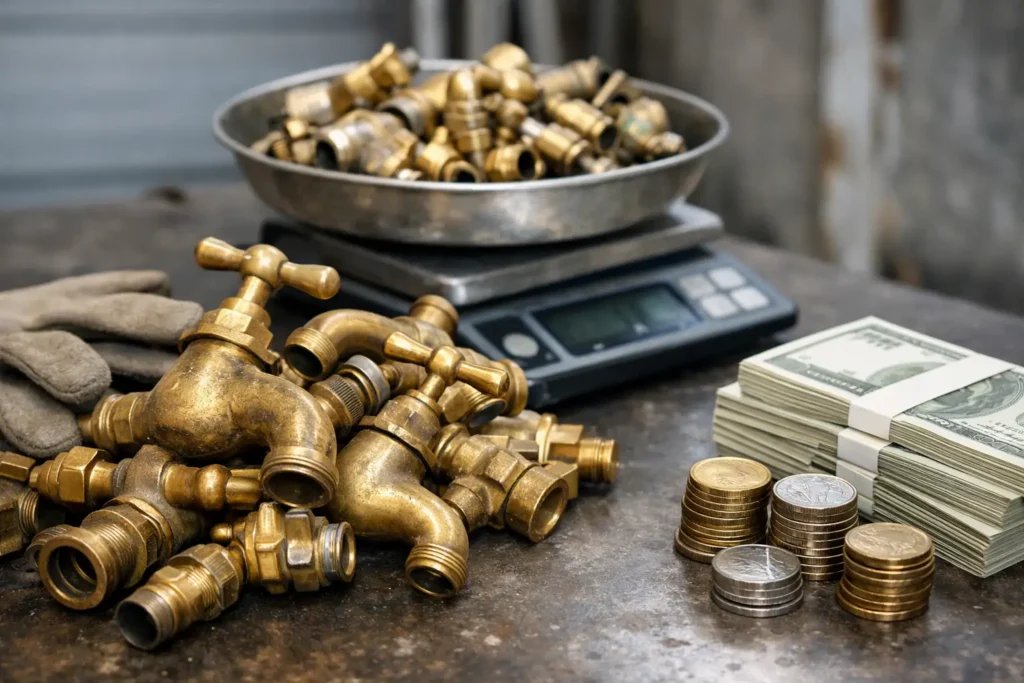
How to Scrap Brass Taps and Get Paid Fairly
Published July 11, 2026 · Melton ScrapRecycling
A pile of old taps can look like ordinary plumbing rubbish, but many contain brass worth separating from the rest of the load. Knowing how to scrap brass taps properly means less contamination, faster grading and a better chance of receiving the right price for your metal.
The job is usually straightforward. Remove obvious non-metal parts, keep brass fittings separate from steel and plastic, and bring the material in dry and reasonably clean. You do not need to spend hours making every tap look new, but a little sorting can make a real difference.
Start by checking whether the tap is brass
Traditional taps, mixers, valves, garden taps and plumbing fittings are commonly made from brass. Brass is a copper-zinc alloy with a yellow-gold colour, although age, grime, paint and chrome plating can hide it.
A solid brass tap often feels heavier than it looks. Check scratched areas, threaded sections or cut ends for a yellow-metal colour underneath. If a fitting is magnetic, it is likely to contain steel or another ferrous component rather than being clean brass. Brass itself is not magnetic.
Chrome-plated brass is common in bathroom and kitchen fittings. The silver surface does not automatically mean the item is stainless steel or chrome scrap. When the body beneath the plating is brass, it may still be accepted as brass, subject to inspection and the amount of attached material.
Some newer taps are not solid brass. They may have plastic bodies, lightweight alloys or a brass component inside a larger mixed fitting. Do not assume every shiny tap is valuable brass. Separate anything questionable rather than mixing it through your clean brass pile.
How to scrap brass taps step by step
Start with the simplest approach: sort the taps into a brass pile and a mixed-metal pile. Old tapware, brass elbows, valves, hose fittings, compression fittings and heavy brass connectors can generally sit together if they are predominantly brass.
Next, remove easy contaminants. Take off plastic handles, rubber washers, flexible hoses, ceramic cartridges and large steel mounting brackets where practical. Use basic hand tools only if the parts come away without a fight. There is no value in spending half an hour dismantling one corroded mixer tap just to remove a small screw.
Keep the removed materials separate. Steel screws and brackets can go with ferrous scrap, while copper pipe offcuts belong in a copper pile. Plastic and rubber are generally rubbish unless they are part of an item being accepted as mixed scrap.
If you have taps connected to pipe, cut or separate the brass fitting from copper pipe where it is safe and easy to do so. Clean copper and clean brass are different grades, and combining them can make the load harder to assess. A plumber, renovator or demolition contractor can build worthwhile quantities quickly by using separate tubs on site.
Finally, make sure the load is dry. Drain trapped water from taps, valves and hoses before loading the ute or trailer. Wet material is messier to handle and may affect the assessed weight of the metal.
What to remove and what to leave on
The best rule is simple: remove large, obvious non-brass items, but do not over-process your scrap. A clean brass tap with a small internal washer or minor steel screw is normally easier to handle than a tap smashed apart into dozens of loose pieces.
It is worth removing these items when they are easy to access:
- Plastic lever handles and decorative plastic covers
- Long braided hoses, rubber seals and flexible connectors
- Steel brackets, large bolts and mounting plates
- Ceramic cartridges and non-metal mixer components
- Large sections of copper pipe attached to brass fittings
Leave small internal parts in place if removing them would require excessive cutting, grinding or force. Scrap yards grade material based on what is actually in the load. Clean, well-sorted brass will generally attract a stronger rate than mixed fittings, but the time and labour involved still need to make sense.
Do not burn, crush or use unsafe methods
Never burn taps or fittings to remove plastic, seals or plating. Burning metal creates hazardous fumes, damages recyclable material and can leave a contaminated load that is harder to grade. It is not a shortcut worth taking.
Avoid using angle grinders or cutting tools unless you know exactly what you are cutting and have the right safety gear. Taps can contain retained water, sharp edges, ceramic parts and awkward spring-loaded components. Gloves, eye protection and stable work surfaces are essential when dismantling plumbing scrap.
If the taps came from a demolition or renovation job, be cautious around older materials. Do not disturb suspected asbestos-containing products, lead flashings or unknown insulation just to recover a small fitting. Set those items aside and follow the correct disposal requirements.
Separate brass by quality where possible
You do not need to become a metal expert, but separating obvious grades helps keep the transaction clear. Clean yellow brass fittings are usually the easiest category. Taps with significant chrome plating, mixed attachments or internal components may be assessed differently depending on their condition.
Brass swarf, turnings, filings and workshop offcuts should be kept away from dirty fittings. These materials can carry oil, moisture or steel fragments and may be graded separately. The same applies to shell casings, radiator parts and electrical components that happen to contain brass.
For household quantities, one clean tub of brass taps and fittings is usually enough. For plumbers, builders and maintenance crews, labelled bins make the job faster. Use one for brass, one for copper, one for aluminium and one for steel. That small bit of organisation reduces sorting time at the yard and prevents higher-value non-ferrous metal from being lost in a general scrap pile.
What affects the price of brass taps?
Brass pricing changes with the market. The amount you are paid depends on the current brass rate, the total weight, how clean the material is and whether the load contains other metals or contaminants.
Quantity matters, but clean sorting matters too. A few kilos of properly separated brass fittings may be more worthwhile than a larger bucket of mixed plumbing scrap. Commercial and trade loads can also benefit from collecting material over time rather than making repeated trips with tiny amounts.
Be realistic about plated and mixed tapware. A heavy old brass tap is often a good scrap item. A modern plastic mixer with a small brass insert may not be. Honest grading protects both the seller and the recycler, which is why it is better to bring questionable pieces separately rather than trying to pass mixed material off as clean brass.
Prepare your load for a fast drop-off or collection
Put your brass taps in a sturdy bucket, crate or tub that will not split under the weight. Do not use thin rubbish bags for heavy fittings. They tear easily, especially when threads, handles and broken pipe ends are involved.
For larger renovation, workshop or demolition loads, keep brass accessible rather than buried under steel, timber or general waste. If you need a collection, provide a clear description of the material and approximate volume. Photos can help identify whether the load is mainly brass fittings, mixed plumbing scrap or a broader non-ferrous collection.
Melton Scrap Recycling buys brass and other scrap metals from household sellers, tradespeople and commercial operators across Melton and surrounding Victorian areas. Material is assessed by grade, weighed on site and paid for promptly, so there is no guesswork about where your metal has gone.
Common mistakes that reduce the value of tap scrap
The biggest mistake is throwing taps into a general metal bin with steel, aluminium, wire and rubbish. Once materials are mixed, it takes longer to sort and the brass can be harder to identify. Keep non-ferrous metals apart from the start.
Another common issue is leaving taps attached to bulky non-metal items such as sinks, cabinets, long hoses or plumbing assemblies. Remove the fitting if it can be done safely. Bring bulky mixed items separately if removal is not practical.
Do not rely on colour alone. Chrome-plated brass can look like stainless steel, while dirty brass can look dull brown or green. A quick magnet test and a look at an exposed edge will often tell you more than the surface finish.
Old taps do not need to sit in the shed until a major clean-out. Separate them as they come off the job, keep them dry, and turn a steady stream of unwanted fittings into a clean brass load when it suits you.