Can You Recycle Brass Fittings for Scrap Cash?
Published July 12, 2026 · Melton ScrapRecycling
A box of old tapware, valves and pipe connectors can look like a pile of useless plumbing leftovers. It is not. Can you recycle brass fittings? Yes. Clean brass fittings are a valuable non-ferrous scrap metal and can be sold for cash once they are sorted and presented properly.
For homeowners clearing a renovation, plumbers cleaning out the ute, or workshops handling regular strip-outs, brass is worth keeping separate from general mixed metal. The better the load is sorted, the faster it can be graded and the clearer the price will be.
Can You Recycle Brass Fittings at a Scrap Yard?
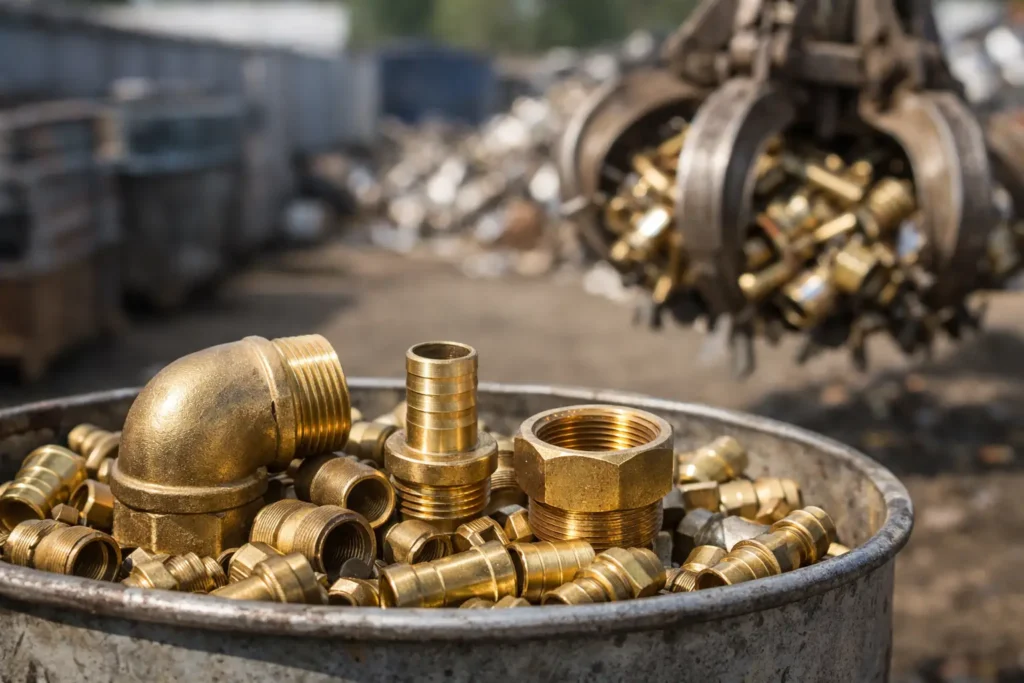
Most scrap yards that buy non-ferrous metals accept brass fittings, including plumbing connections, taps, valves, hose fittings, manifolds, compression fittings and many boiler or hot-water-system components. Brass is an alloy made mainly from copper and zinc. Its copper content gives it strong recycling value, while its toughness makes it common in plumbing, gas, automotive and industrial work.
The catch is that not every fitting is solid, clean brass. A fitting may contain plastic handles, steel screws, rubber washers, chrome plating, copper pipe, solder, or electronic parts. Those items do not make the fitting worthless, but they can affect how the material is classified and paid.
A reputable yard will inspect the load, identify the grade and explain what is being bought. Scrap values move with market demand, so there is no fixed brass price that applies every day. Weight, grade, cleanliness and the amount you bring in all matter.
What Brass Fittings Are Worth Separating?
Brass has a distinctive yellow-gold colour, although older pieces can look dull, brown or greenish after years of use. It is non-magnetic, so a magnet is a quick first check. If the magnet sticks firmly, the item may contain steel or be a plated fitting rather than solid brass.
Common recyclable brass items include:
- Brass taps, mixers and tap bodies
- Plumbing valves, ball valves and gate valves
- Compression fittings, elbows, tees and couplings
- Hose connectors, sprinkler fittings and irrigation parts
- Brass water-meter fittings and backflow components
- Radiator fittings, automotive connectors and some hydraulic parts
Some items need a closer look. Chrome-plated taps are often brass underneath, but the plating and attached handles can affect the grade. Brass fittings joined to copper pipe may be accepted as a mixed load or may be worth separating if there is enough of each metal. Older plumbing fittings may also include lead-based solder, so avoid grinding, cutting or heating them unless you know exactly what you are handling and have suitable safety controls.
Clean Brass Usually Pays Better
The simplest way to improve the value of brass scrap is to remove obvious non-metal contamination. Take off plastic handles, rubber seals, timber, hoses and loose steel brackets where it is safe and practical. You do not need to spend an hour dismantling one small fitting, but a few minutes of sensible sorting can make a noticeable difference across a tub of material.
Keep brass separate from aluminium, stainless steel, copper wire and general steel. Brass is heavier than aluminium and usually more yellow than copper, but mixed loads can still be difficult to assess at a glance. Separate buckets, crates or tubs save time at the yard and reduce the chance of higher-value metal being paid as mixed scrap.
Avoid putting brass fittings in with household rubbish, demolition waste or dirty soil-covered material. Dirt, concrete and water add weight without adding metal value. They also make handling and grading slower. If fittings have come from a buried pipe run or outdoor demolition job, shake off loose dirt and drain any water before loading them up.
Brass Fittings With Other Metals Attached
Mixed fittings are normal, especially from plumbing and renovation work. The question is whether it is worth separating them before you sell.
If a brass valve has a small steel lever or screw, it may be more efficient to leave it intact. If you have a large quantity of brass fittings with long copper pipe sections, stainless components or bulky plastic assemblies, sorting becomes more worthwhile. The goal is not perfection. It is to prevent clearly different metals from being buried in one unsorted pile.
Electricians, plumbers and demolition crews often build separate collection bins on site: one for clean copper, one for brass, one for aluminium and one for insulated cable. This keeps valuable material out of the skip and makes end-of-job clean-up faster. For household sellers, even a couple of labelled buckets in the shed can do the same job.
Do not assume every yellow-coloured fitting is brass. Some items are bronze, which is also a copper-based alloy but may be graded differently. Others are steel with a brass-coloured coating. A scrap metal buyer can confirm the material, particularly when the load includes industrial parts, marine hardware or older fittings with unusual finishes.
How to Prepare Brass Fittings for Sale
Preparation is straightforward. Collect the fittings in a sturdy container, remove loose non-metal parts where easy, and keep them dry and separate from other scrap. Brass is dense, so do not overfill flimsy boxes that can split when lifted. A bucket, crate or solid tub is usually a better option for smaller loads.
For trade and commercial loads, store material securely. Brass fittings are compact, valuable and easy to carry, so unsecured scrap piles can disappear quickly from a worksite. Keep collection containers in a locked shed, workshop or designated area until collection or drop-off.
If the fitting has been removed from gas, fuel, refrigeration or hydraulic equipment, make sure it is safe to transport. Drain any fluids, follow site procedures and do not bring pressurised cylinders or hazardous items in as ordinary scrap. The same goes for fittings with electrical components, batteries or circuit boards attached. Tell the yard what is in the load so it can be handled correctly.
What Affects the Price of Recycled Brass?
Brass prices are market-based, which means they can rise or fall. Global demand, copper and zinc markets, transport costs, processing demand and the quality of the scrap all influence the rate available on the day.
Clean, sorted brass fittings generally attract a better rate than mixed metal because they need less processing. Larger volumes may also be easier to quote accurately, particularly for regular trade, factory or demolition material. That said, small loads are still worth bringing in. A few fittings from a bathroom renovation may not fund the whole project, but they are too valuable to send to landfill.
Transparency matters. You should know what material has been identified, how it has been graded and what rate is being offered before finalising the sale. For larger loads, ask for a quote and explain whether the material is clean brass, mixed brass and copper, or fittings still attached to other metals.
Why Recycling Brass Is the Better Option
Brass can be recycled repeatedly without losing the useful properties that make it suitable for fittings and components. Recovering it reduces the need to mine and process new raw materials, while keeping a long-lasting metal in productive use.
There is also a practical benefit for anyone renovating, clearing a workshop or managing a building site. Brass does not need to occupy a skip, sit in the shed for years or end up mixed into landfill waste. Sorting it gives you a cleaner site and converts unwanted material into immediate value.
For commercial operators, regular brass recovery can also improve job margins. Small fittings add up across plumbing call-outs, bathroom renovations, plant maintenance and demolition work. Treat them as a recoverable material, not as general waste.
Get Your Brass Sorted and Paid
Bring clean brass fittings in for grading, or arrange collection if you have a larger commercial or industrial load. Melton Scrap Recycling buys brass and other non-ferrous metals with straightforward grading, competitive market-based rates and prompt payment by cash or EFT.
Keep your fittings separate, remove the easy contamination, and do not let good brass disappear into the rubbish bin. A properly sorted tub of old valves, taps and connectors can be one of the easiest ways to turn a clean-up job into cash.