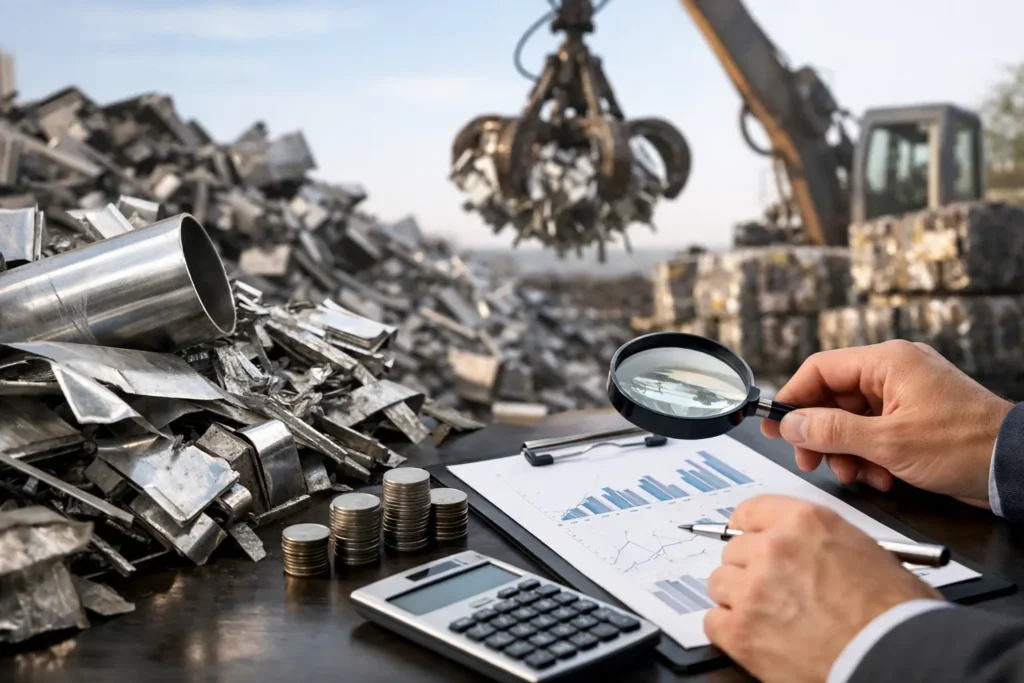
How Stainless Steel Scrap Buyers Set Prices
Published July 5, 2026 ·
A box of offcuts from a workshop and a pile of old kitchen fittings might both look like stainless, but they do not always get priced the same. That is where experienced stainless steel scrap buyers make the difference. If you want a fair rate, fast turnaround and no messing around, it helps to understand what buyers are actually looking at when they quote your load.
For homeowners, tradies and industrial sellers, stainless steel can be one of those metals that seems simple until it is time to sell it. Some loads are clean and easy to process. Others are mixed with attachments, contaminated with other metals or bundled in with lower-value scrap. The better the material is sorted and identified, the easier it is to get paid properly.
What stainless steel scrap buyers actually check
The first thing buyers assess is grade. Not all stainless steel carries the same value, and pricing changes depending on the alloy mix. Common grades like 304 and 316 are often seen in sinks, benches, food-grade equipment, pipework and industrial components, but they do not trade at identical rates. Material with higher nickel or molybdenum content can be worth more, depending on market conditions.
Condition matters as well. Clean stainless steel is more valuable than stainless that is mixed with plastic, rubber, timber, insulation or general rubbish. If your load includes bolts, brackets, copper fittings, mild steel frames or sealed units, a buyer has to allow for the extra time needed to sort and process it. That usually affects the final price.
Weight is the obvious factor, but it is not the only one. A small quantity of well-sorted, high-grade stainless can sometimes outperform a larger messy load once grading and contamination are taken into account. Good buyers will explain this clearly instead of giving you a vague number and expecting you to take it.
Why stainless steel prices vary from one load to the next
People often assume stainless is stainless. In practice, price differences usually come down to three things – grade, cleanliness and volume.
Grade affects recovery value. A buyer is not just paying for the look of the metal. They are paying based on what the material is likely to return through the recycling chain. If the alloy is harder to identify or lower in value, the offer may be lower.
Cleanliness affects processing time. Stainless offcuts from fabrication work are usually straightforward. A dismantled commercial kitchen unit with welded attachments, wiring and mixed metals is not. More labour on the yard side means a different price outcome.
Volume affects logistics. A single sink dropped off by a homeowner is handled differently from a bulk industrial load ready for collection. Larger quantities can make pickup and processing more efficient, which can improve the overall rate. It depends on access, loading time and how well the material has been prepared.
Common sources of stainless steel scrap
Most sellers are sitting on more stainless than they realise. Around homes, it often comes from old sinks, benches, shelving, BBQ parts, hot water components and appliances. In trade and commercial settings, it is common in exhausts, food processing equipment, brewing gear, medical fittings, pipework, balustrades and demolition scrap.
For plumbers, mechanics, builders and workshop operators, stainless tends to build up slowly in corners, bins and mixed metal piles. That is where money gets lost. Once stainless is buried under other scrap or damaged by poor storage, sorting becomes harder and payout can suffer.
If you generate stainless regularly, it pays to keep it separate from the start. It saves time, reduces disputes over grading and gives the buyer a cleaner load to assess. That is better for both sides.
How to get better value from stainless steel scrap buyers
If you want the best price, do the simple things well. Separate stainless from mild steel, aluminium and brass before you bring it in or book a collection. Remove obvious non-metal attachments where practical. Keep the load dry and free from general waste. If you know the source of the material, mention it, because that can help with grade identification.
You do not need to become a metallurgist to sell scrap properly. You just need to make the material easier to inspect. A trusted buyer will still grade it on arrival, but clear sorting puts you in a stronger position and speeds the process up.
Photos can help too, especially for larger loads. If you are calling for a quote on factory scrap, commercial kitchen strip-outs or workshop offcuts, send clear images and an honest description of the quantity. That gives the yard a better basis for pricing and collection planning.
Choosing stainless steel scrap buyers you can trust
This is where plenty of sellers get caught. Some buyers talk up top-dollar rates, then chip away at the price once the load arrives. Others are vague about grading, vague about payment and vague about what they will actually take. That wastes time and leaves sellers second-guessing the deal.
A reliable buyer should be clear about how pricing works, what affects the rate and what condition the material needs to be in. They should also move quickly. If you are a tradie with a ute full of offcuts or a site manager clearing stainless from a job, you do not want a drawn-out process. You want a straight answer, fast handling and payment without delays.
That is the standard serious sellers should expect. At Melton Scrap Recycling, the focus is simple – accurate grading, competitive rates, quick turnaround and honest service for both small and bulk loads.
When pickup makes more sense than drop-off
Drop-off works well for smaller quantities, especially if the material is already loaded and ready to go. But for commercial, industrial or demolition loads, pickup can be the better option. It cuts handling time on your end and keeps the job moving, particularly when access, labour or site deadlines are factors.
This is not just about convenience. It can also protect the value of the scrap. Stainless left sitting around a worksite often gets mixed with rubbish, damaged by other materials or lost among lower-value metals. A prompt pickup reduces that risk and helps keep the load in saleable condition.
Same-day collection is especially useful when you are dealing with shutdowns, strip-outs or scheduled clean-ups. If the material is ready, there is no reason for it to sit there taking up space.
Mistakes that can cost you money
The most common mistake is mixing stainless with everything else and hoping the buyer sorts it all at top rates. That rarely ends well. Mixed loads take longer to process and usually attract lower returns because the buyer has to account for extra labour and uncertainty.
Another mistake is assuming magnetic stainless has no value. Some stainless grades are magnetic or partially magnetic, so a magnet test alone is not enough to judge what you have. It is a useful clue, not a final answer.
Poor load descriptions also create problems. If you say the scrap is clean stainless and it turns up with insulation, sealed sections and heavy contamination, the quote will need to be revised. Straight information gets better results than optimistic guessing.
Why local knowledge matters
Selling scrap is not only about metal prices. It is also about service speed, transport efficiency and dealing with a buyer who understands local trade, industrial and household sellers. A local yard that handles stainless every day can usually assess material faster, arrange collection sooner and give clearer advice on how to prepare your load.
That matters if you are working to a schedule or clearing space in a workshop, factory or garage. It also matters if you are not fully sure what grade you have. Practical guidance from a local operator is worth more than a generic price promise that falls apart once someone sees the actual material.
The best deal is not always the loudest advertised number. It is the combination of fair pricing, honest grading, quick service and payment without hassles. That is what turns a one-off seller into a repeat customer.
If you have stainless steel sitting around, do not let it disappear into a mixed scrap pile or the back corner of the shed. Sort it, get it checked properly and deal with buyers who tell you straight what it is worth. Good scrap should not become wasted value.