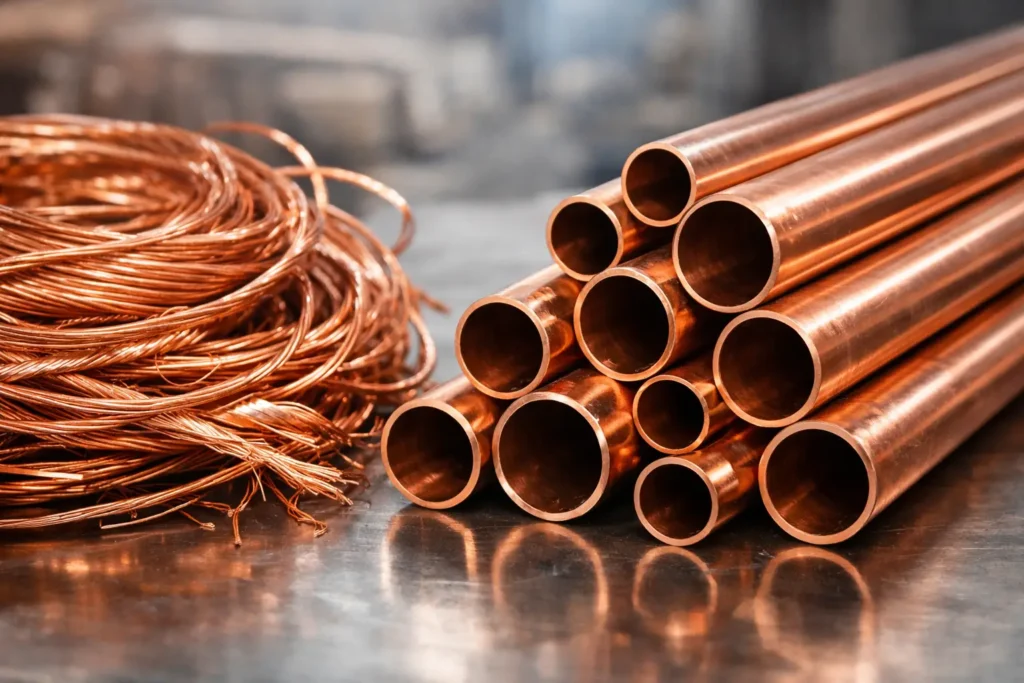
Copper Wire vs Copper Pipe for Scrap Value
Published June 30, 2026 ·
If you have a pile of offcuts in the shed, a bucket of plumbing pull-outs, or stripped cable from a recent job, the question is simple: copper wire vs copper pipe – which one pays better as scrap? The short answer is that both can be valuable, but the price you get depends less on whether it came from an electrician or a plumber and more on grade, cleanliness, and how much work the yard needs to do before it can be recycled.
That matters if you are a homeowner clearing out old materials, a tradie separating job waste, or a workshop moving non-ferrous scrap quickly for cash. Copper is always in demand, but not all copper is priced the same. If you want a fair return, you need to know what buyers are looking at when they sort your load.
Copper wire vs copper pipe: what is the real difference?
At a glance, copper wire and copper pipe are both just copper. In scrap terms, they sit in the same broader metal category, but they are often graded differently because they arrive in different condition.
Copper pipe is usually easier to identify and sort. If it is clean and free from solder, brass fittings, tape, paint, or other attachments, it can fall into a high-value grade. Plumbers and demolition crews often bring in pipe that is straight from strip-outs, which means the main issue is how much contamination is still attached.
Copper wire is a bit more varied. Bright, clean, unalloyed wire can attract one of the strongest prices in the copper category. But once wire still has insulation, burnt coating, connectors, plugs, or mixed metals attached, the grade changes. That changes the payout.
So when people compare copper wire vs copper pipe, they are really comparing clean high-grade copper against copper that may need more sorting or processing. The winner depends on condition.
Why clean copper usually pays more
Scrap yards do not price copper on guesswork. The cleaner the load, the less labour and processing it needs, and that usually means a better rate.
With copper pipe, cleanliness means removing brass taps, steel clips, rubber seals, plastic joiners, and excess solder where possible. A pile of clean tube is simpler to grade than a mixed plumbing bundle with fittings still hanging off it.
With copper wire, the biggest jump in value usually comes from the difference between stripped and insulated material. Bright stripped wire is easier to recover and sell on through the recycling chain. Insulated cable still has value, but the plastic coating and mixed internal content reduce the payable metal percentage.
This is where sellers often leave money on the table. They assume all copper gets one flat rate. It does not. If your load is sorted well, you give the yard less work and give yourself a stronger chance of a better return.
Which usually has the higher scrap price?
In many cases, clean bright copper wire can achieve a higher rate than copper pipe. That is because top-grade wire is often very pure, with minimal oxidation and no joins, solder, or attachments. Electricians stripping clean single-core wire can end up with a premium scrap product.
But that does not mean wire always wins. Unstripped cable can drop well below clean copper tube in value. On the other side, old pipe with solder, green corrosion, paint, or brass fittings attached may also be downgraded.
The practical answer is this: clean bright wire often sits at the top, clean copper pipe can also pay strongly, and dirty or mixed loads of either will be worth less. It depends on presentation, not just material type.
What affects the value of copper pipe?
Pipe is often straightforward, but several things can pull the grade down. Solder is a common one, especially on older plumbing. Brass ends, valves, threaded fittings, and steel supports also matter. If those items stay attached, the load may be treated as mixed copper rather than clean copper.
Corrosion can also affect pricing. Surface ageing is one thing. Heavy oxidation, residue, or contamination from building materials is another. Pipe recovered from renovation, demolition, or old hot water systems often needs better separation to achieve the best rate.
Quantity matters too. A few short offcuts tossed in with general metal scrap may not get the same result as a properly separated copper load. If you want accurate grading, keep your copper apart from brass, aluminium, steel and rubbish.
What affects the value of copper wire?
Wire tends to vary more than pipe because there are so many cable types. Clean, bright, bare copper is one category. House wire with some coating, heavy insulated cable, data cable, burnt wire, and mixed looms all sit differently.
The biggest mistake sellers make is burning insulation off wire. That does not help. Burnt copper can be downgraded because it is dirtier, harder to process properly, and may not meet the standard of clean bright material. If you have insulated wire, leave it as is and let the yard assess it properly.
Mixed cable is another issue. Automotive wiring looms, extension leads, appliance cords, and data cabling do contain copper, but they often include plugs, sheathing, alloy, and lower copper recovery rates. That means the value per kilo will usually be lower than stripped cable or clean copper tube.
How to prepare copper for a better payout
You do not need to overcomplicate it, but a bit of prep can make a real difference. Sort copper wire separately from copper pipe. Keep bright stripped wire on its own. Put insulated cable in a different pile. Keep pipe free from taps, fittings and other non-copper attachments where practical.
Do not mix copper with general scrap just for convenience. Once different metals are thrown together, sorting takes longer and grading becomes less favourable. A little effort before you load the ute can save time and improve the final price.
It is also worth keeping your material dry and reasonably clean. Mud, plaster dust, concrete residue and general rubbish add weight that does not help you. Clean loads are faster to inspect and easier to classify accurately.
Copper wire vs copper pipe for tradies and homeowners
For plumbers, copper pipe is often the easier win. Offcuts from installs, stripped-out tube from renovations, and old hot water connections can add up quickly if they are kept separate from the start. The cleaner the bundle, the easier it is to turn job waste into cash.
For electricians, wire can be more profitable, but only if it is managed properly. Clean stripped wire can deliver strong value, while mixed cable and low-grade insulated material need realistic expectations. Time matters here. If stripping wire takes too long, the extra labour may not be worth the difference in price.
For homeowners, the best approach is simpler. Separate what you have, remove obvious non-copper items if you can, and do not assume every reddish metal piece is worth the same. If you are unsure, ask before you toss it in with other scrap.
When it is worth separating and when it is not
There is a point where labour outweighs value. If you have a large quantity of clean wire, separating it makes sense. If you have a handful of mixed appliance cords, spending hours stripping them probably does not.
The same goes for pipe. Removing loose brass fittings from a decent stack of copper tube is usually worthwhile. Trying to grind off every trace of solder from small plumbing scraps often is not. The goal is not perfection. The goal is cleaner sorting and clearer grading.
That is where dealing with an experienced local buyer helps. A good yard will assess the load honestly, explain the grade, and pay based on current market conditions rather than giving you a vague flat rate for everything.
What buyers want to see
Buyers want copper that is sorted, visible, and easy to classify. That means no hidden rubbish at the bottom of the tub, no unnecessary mixing, and no guesswork about what is in the load. Transparent grading protects both sides. You know what you are being paid for, and the buyer knows what they are processing.
At Melton Scrap Recycling, that practical approach matters because sellers want speed as much as price. Whether it is copper wire from an electrical fit-out or copper pipe from a plumbing strip-out, the process should be straightforward: bring it in, get it assessed properly, and get paid without the run-around.
If you are weighing up copper wire vs copper pipe, do not chase a one-size-fits-all answer. Clean wire can beat pipe. Clean pipe can beat low-grade cable. The best result comes from sorting well, keeping contamination down, and dealing with a buyer who grades scrap properly. A few minutes of prep can turn a rough pile of copper into a much better payday.