Scrap Metal Pickup Guide for Fast Cash
Published June 20, 2026 ·
Got a pile of copper offcuts, old aluminium frames, car parts or factory scrap taking up space? This scrap metal pickup guide explains how to turn it into cash without wasting half a day loading, sorting and chasing quotes. If you want a straight answer on how pickup works, what affects price and how to avoid common delays, start here.
When pickup makes more sense than drop-off
Not every load needs collection. If you have a few kilos of mixed household metal and easy access to a trailer, drop-off can be the faster option. But once the material gets bulky, heavy, awkward or spread across a site, pickup usually saves time and cuts out the hassle.
For homeowners, that might mean old fencing, whitegoods, car batteries, metal roofing or leftover renovation scrap. For tradies, it is often copper cable, brass fittings, aluminium offcuts, stainless steel and site clean-up loads that are not worth carting back and forth. For workshops, factories and demolition jobs, pickup is less about convenience and more about keeping the job moving.
A good collection service should do more than just turn up. It should give you a clear quote process, explain what can be collected, sort the material properly and pay promptly. Speed matters, but so does accuracy. Fast service is only useful if the grading is fair and the pricing is transparent.
Scrap metal pickup guide – what the process looks like
The pickup process is usually simple when the yard knows what it is doing. You contact the recycler, describe what you have, confirm the location and arrange a collection time. In many cases, same-day pickup is possible if the load is ready and the details are clear.
The quality of your first call matters. If you say you have “some metal out the back”, expect a rough answer. If you can say you have insulated copper wire, mixed brass taps, aluminium window frames, two batteries and a pile of light steel, you will get a more accurate response and a smoother pickup.
Once the team arrives, the load is assessed, sorted and graded. Payment is then processed based on the material type, condition and quantity. For larger commercial or industrial loads, there may also be planning around access, loading equipment and staged collections if the job runs over several days.
That is where experience counts. A recycler that handles both small household loads and larger trade or industrial work will usually move faster because they know how to identify materials on site and deal with mixed scrap properly.
What to have ready before booking
You do not need to do a perfect sort, but a bit of preparation can lift the value of your load and make pickup quicker. Separate non-ferrous metals like copper, brass, aluminium and stainless steel from lower-value ferrous scrap where possible. Keep batteries aside. If you have motors, radiators, wire or vehicle parts, mention that up front.
Access also matters. Let the recycler know if the material is in a backyard, factory yard, laneway, under cover or behind locked gates. If there are stairs, tight driveways, forklifts on site or restricted hours, say so early. The more accurate the job details, the less chance of delays or pricing surprises.
Photos can help, especially for mixed or bulky loads. They give a clearer picture than a quick verbal description and can speed up quoting.
What affects the price of your scrap
The biggest factor is the type of metal. Clean copper usually attracts stronger rates than mixed steel. Brass, aluminium, stainless steel, batteries and insulated cable all sit in different price brackets depending on grade and recovery value.
Condition matters too. Clean, sorted metal is generally worth more than contaminated or mixed loads because it takes less labour to process. Copper with excessive plastic, aluminium stuck to other materials or steel mixed through non-ferrous metals can bring the overall value down.
Volume also plays a role, but not always in the way people expect. A bigger load can improve the economics of pickup, especially if collection and handling are straightforward. That does not automatically mean every bulk load commands a premium. If the material is low-grade, hard to access or heavily contaminated, the extra quantity may not make up for the extra work.
Then there is the market itself. Scrap prices move. If you got a rate six weeks ago, it may not be the rate today. That is normal. What matters is dealing with a buyer who quotes against current market conditions and explains how the material has been graded.
The most common metals collected
For most sellers, the usual materials fall into a few clear categories. Copper is a major one, especially for electricians, plumbers and renovators. Brass fittings, taps and valves are also common. Aluminium shows up in window frames, sheet, extrusions and old outdoor structures. Stainless steel comes from commercial kitchens, fabrication work and industrial clean-outs.
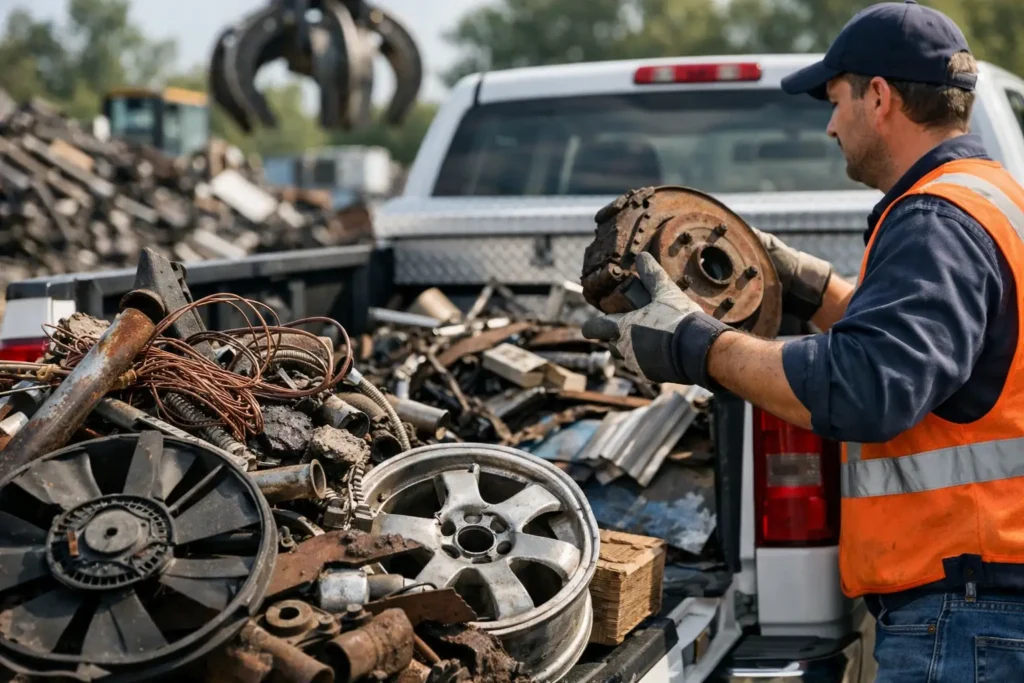
Car bodies, engines, panels, rims and batteries can often be collected as well, particularly when a vehicle is no longer worth repairing or selling. Workshops and wreckers often have mixed automotive scrap that benefits from regular pickup.
On the commercial side, industrial scrap can include machine parts, production offcuts, redundant stock, shelving, cable, ducting and demolition recovery. The key point is simple – not all scrap is valued the same way, so it pays to identify what you have before collection is booked.
Scrap metal pickup guide for homes, tradies and sites
A homeowner clearing out the backyard does not need the same service as a demolition contractor managing tonnes of mixed metal. That is why pickup should be matched to the job, not forced into one process.
For households, the priority is usually convenience. You want unwanted metal gone, a fair price and no mucking around. For tradies, it is often about regular turnover. Small loads of copper, brass and alloy can build up quickly in a ute or workshop, and frequent pickup frees up room while keeping cash flow moving.
For builders, mechanics and industrial operators, timing is everything. Scrap left on site gets in the way, creates safety issues and slows down the next stage of work. In those cases, reliable pickup is part of site efficiency, not just recycling.
This is where a local operator with same-day capability can make a real difference. Melton Scrap Recycling works with everyone from homeowners to trades and bulk commercial sellers, with practical pickup support, on-site sorting and fast payment.
Mistakes that cost sellers money
The most common mistake is mixing valuable metals into a low-value pile. A bucket of brass fittings thrown in with light steel can reduce what you get back. The second is not describing the load properly. If the booking is based on poor information, the pickup may take longer or the quote may need to be adjusted once the material is seen.
Another issue is waiting too long. Scrap often starts as “I will deal with it later” and ends up spread across a shed, yard or worksite. The longer it sits there, the more likely it gets mixed with rubbish, damaged by weather or forgotten altogether.
Finally, some sellers focus only on the highest claimed rate and ignore service. A headline price means very little if the buyer is slow to collect, vague about grading or hard to deal with. Best value is a mix of fair pricing, quick pickup and clear payment.
How to get the fastest, fairest pickup
If you want the process to run cleanly, be clear from the start. Tell the recycler what metals you have, roughly how much there is, where it is located and whether it is loose, bagged, stacked or still attached to anything. Mention access issues before the truck is on the way, not after it arrives.
If possible, separate higher-value non-ferrous metals from general scrap. Keep the site safe and accessible. Have someone available to point out the load if needed. These small steps save time and usually lead to a smoother assessment.
It also helps to deal with a recycler that buys a wide range of metals and handles both one-off and repeat collections. That flexibility matters because the right approach for a few batteries and some old frames is different from a recurring factory clean-out.
Scrap should not sit around costing you space, time and effort. If the metal is ready to go, get it picked up, get it graded properly and get paid without the usual runaround. That is the whole point of a service that knows how to move fast and keep it fair.