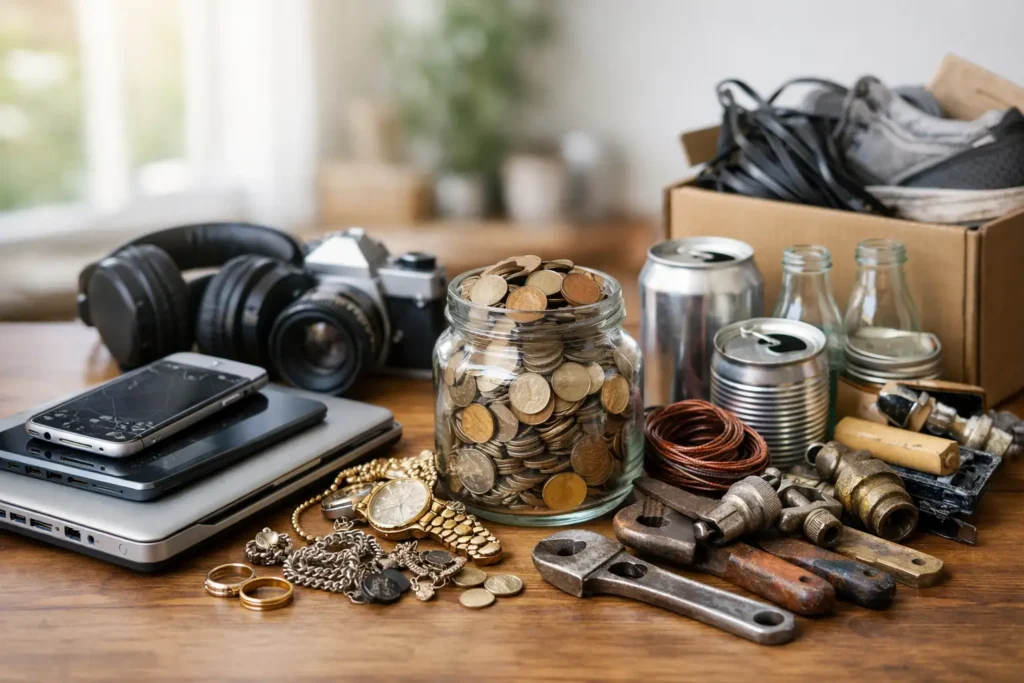
10 Best Scrap Items at Home for Cash
Published July 3, 2026 ·
That old extension lead in the shed, the busted tap fittings under the sink, the dead battery near the fence – they might look like rubbish, but plenty of household scrap has real value. If you are wondering about the best scrap items at home, the short answer is simple: focus on metal items with decent weight, clean separation, and strong resale demand.
The mistake most people make is throwing everything into one pile and hoping for the best. That usually means lower returns. If you know what to look for and separate a few key materials before you load the ute or book a collection, you give yourself a much better shot at getting paid properly.
Best scrap items at home worth separating first
Not all household scrap is equal. Some items are worth your time straight away, while others only make sense if you have a decent volume. The strongest value usually sits in non-ferrous metals – metals that do not contain iron – because they tend to pay better than basic steel.
Copper
Copper is one of the first things to check for. It turns up all over the home in old electrical cable, wiring, air conditioning lines, hot water system parts and some plumbing. If you have done a renovation, cleaned out a garage or had an electrician leave behind offcuts, there is a fair chance copper is sitting there already.
Clean copper generally pays well because it is highly recyclable and in constant demand. Burnt wire, mixed cable and copper attached to other materials can still have value, but the payout depends on how much sorting is needed. If you can safely separate clean copper from plastic, fittings and insulation, that usually helps.
Brass
Brass is another strong household scrap item that gets overlooked. You will often find it in taps, valves, old door hardware, plumbing fittings and some decorative fixtures. It has that yellow-gold look, although older pieces can be dull or dirty.
Brass is worth pulling out of mixed metal piles because it commonly pays better than steel and is easy to store until you have enough to sell. If you have done bathroom or kitchen upgrades, check the old fittings before they go into the skip.
Aluminium
Aluminium is common, light and worth collecting when you have enough of it. Around the home, it shows up in window frames, screen doors, outdoor furniture, some curtain tracks, ladders and certain cookware. Cans count too, but for most households the better return comes from heavier aluminium items rather than a handful of drink cans.
Because aluminium is light, volume matters. A single bent chair frame will not make much difference on its own, but a clean pile from a renovation or shed clean-out can add up quickly.
Stainless steel
Stainless steel usually comes from kitchens, laundries, garages and outdoor areas. Sinks, benches, shelving, tools, barbecue parts and appliance panels are common examples. It is not usually the highest-paying metal in the yard, but it is still worth separating from ordinary steel.
The main issue is identification. Stainless can look similar to other metals, so if you are unsure, keep it aside rather than mixing it into a general scrap load.
Household scrap items that add weight fast
If you are chasing the best scrap items at home, heavier ferrous metals still matter. They may not command the same rates as copper or brass, but they build volume fast and can turn a cleanup into a worthwhile load.
Old appliances
Washing machines, dryers, dishwashers, ovens and old fridges often contain recoverable metal. Some also include copper wiring, electric motors and aluminium components inside. The exact value depends on the item, its condition and whether it has already been stripped.
For most people, the practical move is not to dismantle every appliance unless you know what you are doing. Appliances can be awkward, sharp and heavy. If you have several sitting around, they are often worth scrapping as complete units rather than letting them take up space for another year.
Steel furniture and shelving
Garage shelves, broken bed frames, filing cabinets, tool chests, metal tables and old outdoor settings are common ferrous scrap sources. They do not usually carry premium rates, but they are easy to identify and easy to load.
This is where bulk works in your favour. One item does not do much. A trailer load from a property clean-up, deceased estate, rental clear-out or workshop tidy-up is a different story.
Roofing, fencing and renovation offcuts
Home improvement projects leave behind more scrap than most people expect. Corrugated sheets, fencing panels, guttering, metal studs, brackets and demolition offcuts often end up in a pile out the back and stay there. If it is metal and no longer usable, it may be worth cash.
Condition matters less than people think. Rusty steel is still steel. Bent sheets are still scrap. The key is keeping metal separate from timber, plaster, insulation and general rubbish so the load can be processed properly.
Smaller home scrap that people forget about
A lot of value gets lost in the small stuff. These items are easy to ignore because they do not look like much on their own, but they are often exactly the sort of scrap that builds into a decent return over time.
Car batteries and household batteries
Old vehicle batteries are one of the more common scrap items sitting in sheds and garages across Victoria. They are heavy, recyclable and should not be dumped. If you have replaced a battery in the car, ute, motorbike or ride-on mower, keep the old one aside rather than leaving it in the corner.
Not every household battery type is handled the same way, so it pays to check first. The main point is this: batteries are not general rubbish, and some have clear scrap value.
Electric motors and power tools
Dead pumps, compressors, fans, lawn equipment and broken power tools often contain copper windings and mixed metals. They are common in garages, workshops and under-house storage areas. Individually, they may not be worth a special trip, but grouped together they can be worth separating from general steel.
Extension leads and mixed cable
If you have old extension leads, appliance cords or leftover cable from home jobs, do not toss them out automatically. Cable contains recoverable metal, and even lower-grade mixed wire can still be worth money. Clean, sorted material usually does better than tangled piles mixed with rubbish.
What makes a scrap item worth more
Household scrap value comes down to three things: metal type, cleanliness and quantity. Copper beats steel. Clean metal beats mixed loads. A solid pile beats a few random bits in the boot.
That is why separating materials pays off. If brass taps are mixed through with steel brackets, and cable is wrapped around a broken chair frame, you are making the load harder to sort and usually reducing its value. A few minutes spent organising the basics can make a visible difference.
There is a trade-off, though. Not every job is worth stripping down to the last screw. If you have one old microwave, it probably makes sense to scrap it whole. If you have a stack of cable, a box of brass fittings and a dead hot water unit from a reno, then sorting is worth the effort.
A quick way to check the best scrap items at home
Start with the obvious spots: the shed, garage, laundry, backyard and any leftover renovation pile. Look for non-working appliances, old plumbing fittings, cable, batteries, metal furniture and anything removed during repairs or upgrades.
Then separate the load into simple groups – copper and cable, brass, aluminium, stainless, batteries and general steel. You do not need to be a metal expert to do the basics. You just need to avoid mixing everything together.
If an item still works and has resale value as a usable product, selling it second-hand may beat scrapping it. If it is broken, incomplete, rusted out or not worth the hassle, scrap becomes the faster option.
For larger clean-ups, especially when appliances, car parts or bulk metal are involved, speed matters as much as price. A straightforward yard process, clear grading and fast payment make the whole job easier. That is exactly why plenty of local sellers use Melton Scrap Recycling instead of letting metal sit around for months.
The best household scrap is usually the stuff already in your way. If it is metal, unwanted and taking up room, there is a fair chance it can be turned into cash with less effort than you think.