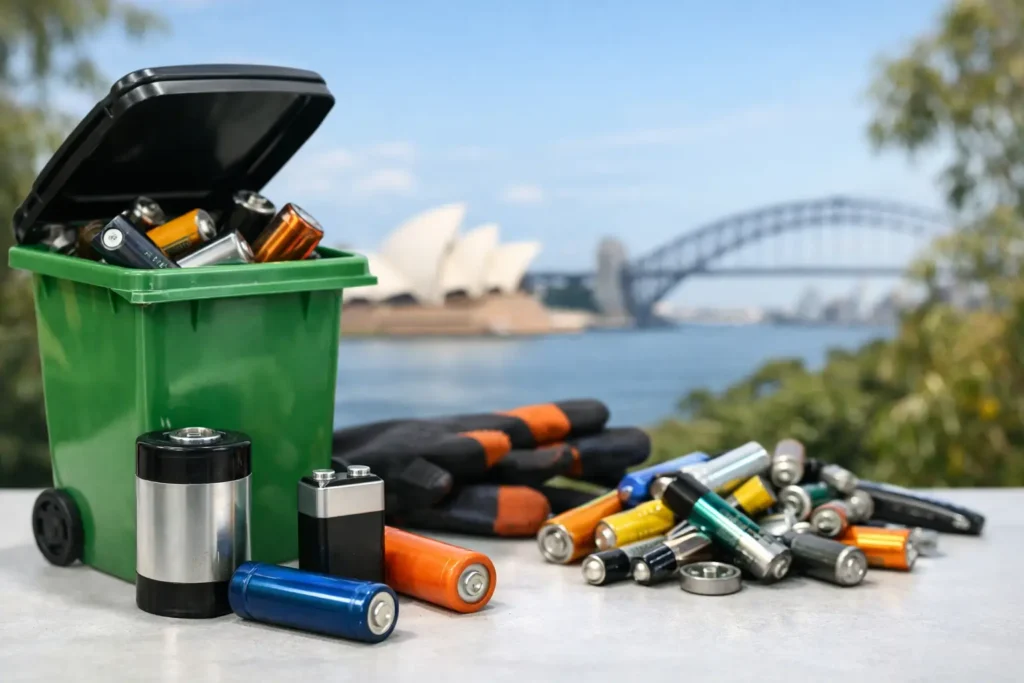
Battery Disposal Guide Australia
Published July 8, 2026 ·
A swollen lithium battery in a drawer, a stack of old lead acid units behind the shed, a tub of dead AA cells in the workshop – this is how battery waste builds up. A proper battery disposal guide Australia businesses and households can actually use starts with one rule: do not throw batteries in the rubbish, and do not leave them sitting around until they leak, spark or become a fire risk.
Batteries look small and harmless until they are damaged, mixed together or handled the wrong way. Some contain valuable recoverable metals. Others contain corrosive or hazardous materials that should never end up in landfill. If you are a homeowner clearing out the garage, a mechanic replacing vehicle batteries, or a tradie carrying used tool batteries back to the workshop, the safest option is to sort them early and dispose of them through the right recycling channel.
Why battery disposal matters in Australia
Battery use has changed fast. Homes now have more rechargeable devices, tradies rely on cordless gear, and workshops handle a steady flow of vehicle and machinery batteries. That means more battery waste, and more chances for the wrong battery to end up in the wrong place.
The risk is not just environmental. Damaged lithium batteries can ignite. Lead acid batteries can leak acid and contaminate surrounding materials. Even standard household batteries become a problem when they are crushed, punctured or left in damp conditions. Good disposal is about safety first, then recovery of useful materials.
For commercial operators, there is also a practical issue. Letting used batteries pile up on-site creates clutter, risk and uncertainty. Sorting them properly keeps your site cleaner and makes the recycling process faster when it is time to move them on.
Battery disposal guide Australia – know what type you have
Not all batteries should be handled the same way. The biggest mistake people make is treating every battery like general scrap. That slows down recycling and can create avoidable hazards.
Household batteries
These include AA, AAA, C, D, 9V and button batteries from remotes, toys, torches, watches and small electronics. Some are single-use, some are rechargeable. Button batteries deserve extra care because they are small, easy to lose and dangerous around children.
For loose household batteries, keep them dry and stored in a non-conductive container until you are ready to take them to an approved recycling point. If the terminals are exposed, taping them is a smart precaution, especially with 9V and rechargeable types.
Lithium-ion batteries
These are common in power tools, laptops, e-bikes, phones and battery-powered equipment. They are efficient, widely used and more sensitive than many people realise. If a lithium battery is dented, swollen, punctured or hot, stop handling it casually. It may need urgent isolation and specialist disposal.
Intact lithium batteries should be stored away from heat, direct sun and metal objects. Do not toss them into a mixed bin with copper offcuts, screws or general scrap. A short circuit is all it takes to turn a disposal job into a fire.
Lead acid batteries
These are the heavy batteries used in cars, utes, trucks, forklifts, motorcycles and backup systems. They contain lead and acid, so they need proper recycling. The good news is they are one of the more established battery recycling streams in Australia, and they often have recoverable value because of the lead content.
Store lead acid batteries upright where possible. If one is cracked or leaking, keep it contained and do not let the fluid spread across the floor or into drains. Gloves and basic care matter here.
Commercial and industrial batteries
This category includes larger batteries from solar storage systems, plant, machinery, alarms, mobility devices and site equipment. These jobs are less about one-off disposal and more about handling volume safely. If your business generates battery waste regularly, the right setup is not a last-minute clean-up. It is a clear process for sorting, temporary storage and collection.
How to store used batteries before recycling
This part is where a lot of people cut corners. Safe disposal starts before the battery leaves your property.
Keep batteries out of the weather. Moisture and heat both increase risk. Separate battery types instead of throwing them all together in one drum or box. Tape exposed terminals on lithium batteries, 9V batteries and any damaged rechargeable units. Use sturdy containers that will not tip over or split open when moved.
If a battery is visibly damaged, leaking or swollen, do not keep shifting it from place to place. Isolate it from other materials and get advice from a recycler or disposal provider that handles batteries properly. The safer move is usually the simpler one – contain it, keep it away from flammable materials, and do not experiment.
For workshops and trade businesses, a designated battery area makes a big difference. It avoids confusion, reduces risk for staff and speeds up disposal when stock builds up.
What not to do with old batteries
A reliable battery disposal guide Australia readers can trust should be clear about the mistakes.
Do not put batteries in your household rubbish bin. Do not burn them. Do not break them open to separate materials yourself. Do not store damaged lithium batteries in the back of the ute next to fuel, rags or metal tools. Do not leave old lead acid batteries lying on bare ground behind a shed or factory.
It also pays not to assume that every metal recycler takes every battery type in every condition. Some specialise in lead acid batteries. Others can handle broader battery streams. If you are dealing with a mixed load, ask first and avoid turning up with the wrong material.
Where to recycle batteries in Australia
For household quantities, local council drop-off points and approved battery recycling programs are often the best fit. For automotive batteries, workshop quantities and commercial loads, a scrap and recycling operator may be the more practical option, especially if you want fast handling and clear information on what is accepted.
If you are in Victoria and dealing with vehicle batteries or trade-related scrap, using a local operator can save time. The process is usually straightforward – confirm the battery type, sort the load properly and arrange drop-off or pickup if the volume warrants it. For sellers who already recycle metal, battery recycling is simply another part of keeping valuable material out of landfill.
Melton Scrap Recycling handles battery recycling as part of a broader scrap service, which suits customers who want to clear out more than one material stream at the same time. That is often the fastest option for workshops, mechanics and industrial sites doing a proper clean-up.
Battery disposal for homes, tradies and workshops
The right approach depends on how many batteries you have and what kind they are.
For households, the main job is safe collection and separation. Keep dead batteries out of kitchen drawers, toy boxes and random tins in the garage. Store them in a container, tape terminals where needed and move them on regularly instead of waiting for a once-a-year cleanout.
For tradies, especially sparkies, plumbers and builders using cordless tools, spent lithium batteries should be treated like a routine waste stream. Waiting until a dozen dead batteries are rolling around the van is poor practice. A simple storage tub at the workshop is better, provided batteries are protected from impact and heat.
For mechanics and automotive sellers, lead acid batteries are usually more familiar. The key is not to let old units stack up in unsafe spots or get mixed with general waste. If you are turning over enough volume, regular recycling keeps the site cleaner and can help recover value from material that would otherwise just sit there.
For factories, demolition crews and industrial operators, battery disposal should be folded into site waste management rather than handled as an afterthought. The bigger the site, the more costly small mistakes become.
The value in recycling batteries properly
Not every battery has a payout, and that is where some guides get too simplistic. But proper recycling still has value, even when the return is not direct cash in hand. It reduces disposal risk, supports material recovery and keeps hazardous waste out of general rubbish streams.
Lead acid batteries are the clearest example of recyclable value because lead recovery is well established. Other battery types are more complex and the economics can vary depending on chemistry, condition and volume. That is why the practical question is not just, Can this be recycled? It is also, Who is the right recycler for this battery type?
That trade-off matters. Chasing the wrong outlet wastes time. Using the right one gets the battery handled safely and efficiently.
A practical battery disposal guide Australia users can follow
If you want the process kept simple, it comes down to four moves. Identify the battery type, separate it from other waste, store it safely, and take it to the right recycling point or arrange collection if you have volume. That is the system.
Complicated disposal usually starts with delay. People leave batteries where they are, mix chemistries together, or assume they will deal with it later. A better approach is to treat used batteries like any other material on-site that needs correct handling. Sort early, ask questions when needed, and move them on before they become a hazard.
If you are looking at a pile of old batteries right now, that is your sign to stop storing a problem and start clearing it properly. Safe disposal is not complicated when you deal with it before the pile gets bigger.