A Guide to Copper Wire Scrap for Better Returns
Published August 13, 2026 ·
Copper wire can be one of the better-paying materials in a mixed scrap load, but only when it is sorted properly. This guide to copper wire scrap explains what you can sell, what affects its value and how to prepare it for a fast, fair quote without wasting hours on work that does not pay.
For homeowners, electricians, plumbers, mechanics and demolition crews, wire builds up quickly. Offcuts from a switchboard job, old extension leads, appliance cords, cable from a renovation and industrial wiring all have value. The key is separating copper-bearing material from low-value rubbish before it reaches the yard.
Why copper wire is worth sorting
Copper is widely used because it carries electricity efficiently and lasts well in demanding conditions. It is also highly recyclable. Recovered copper can be processed and returned to the manufacturing cycle, reducing the need for new mining and keeping valuable metal out of landfill.
Not all copper wire attracts the same price. Clean, bright copper with no insulation, solder, terminals or other contamination is usually more valuable per kilogram than insulated cable. That does not automatically mean every cable should be stripped. Time matters. For a small pile of light household cable, stripping can take longer than the extra return is worth. For thick cable, large volumes or regular trade offcuts, separating and stripping may make commercial sense.
The best approach depends on the type of cable, the quantity you have and how clean it is. A trusted scrap recycler can grade the material and explain the category before payment, so you know what you are being paid for.
Common copper wire grades
Clean bright copper
This is bare, uncoated copper wire that is clean and free from insulation, paint, excessive oxidation, plastic plugs and steel fittings. It commonly comes from stripped electrical cable, large cable offcuts and certain plumbing or electrical jobs.
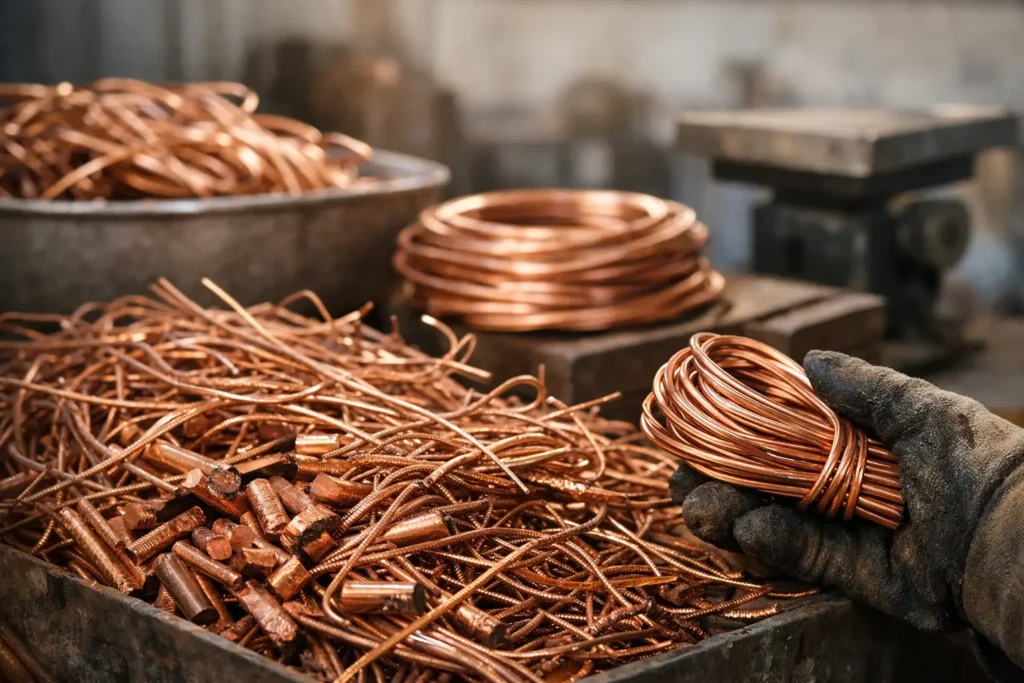
Clean bright copper is easy to identify by its reddish-orange colour and flexible metal strands or solid core. Keep it separate from other copper if possible. Even a small amount of insulation, solder or attached fittings can change the grade.
Heavy copper cable
Heavy cable often contains a substantial amount of copper beneath its insulation. It may come from industrial equipment, large electrical installations, machinery, air-conditioning systems or demolition work. The copper content varies, which is why cable type and thickness matter.
Do not assume a thick outer sheath always means a high copper yield. Some cable contains steel reinforcement, aluminium conductors or multiple layers of plastic. Sorting different cable types before you sell helps make grading quicker and more accurate.
Insulated household and trade wire
This category covers many everyday materials: extension leads, appliance cords, power cable, automotive wiring looms and general building wire. It has copper inside, but the insulation and attachments reduce the percentage of recoverable metal.
Remove obvious non-metal items where practical. A plug, plastic housing or large rubber fitting can be taken off easily, but there is no need to pull apart every small piece. Keep insulated wire separate from bare copper and from mixed electrical scrap for the clearest result.
Copper-coated and mixed wire
Some wires look like copper but are not solid copper. Copper-coated aluminium, copper-coated steel and aluminium cable can be mistaken for higher-value material at a glance. They are lighter, often stiffer or magnetic, and need to be graded separately.
If a magnet sticks, there is steel involved. If the cut end shows a silver-coloured core beneath a thin copper surface, it is not solid copper. Being upfront about mixed material avoids delays and makes sure your quote reflects the actual grade.
How to prepare copper wire scrap
Preparation does not need to be complicated. Start by keeping copper wire away from general rubbish, timber, plaster, insulation batts and wet materials. Dirt and moisture add weight but not value, and mixed loads take longer to process.
Separate bare copper from insulated cable. Then separate heavier cable from light cords where you can. Place each type in its own tub, drum, bag or labelled crate. For regular commercial loads, dedicated bins make collection and sorting far more efficient.
Cut cables into manageable lengths if they are tangled or difficult to handle, but do not create unnecessary work. Short, loose pieces are harder to contain and can slow down handling. Coiling cable neatly is often the better option.
Avoid burning insulation off wire. It is unsafe, creates toxic smoke, damages the copper and can leave residue that affects the grade. Mechanical stripping is the proper option when stripping is worthwhile. Wear gloves and eye protection when cutting or stripping cable, especially around old wiring with sharp strands, brittle insulation or unknown components.
What affects the price of copper wire scrap?
Copper prices move with local and global metal markets, so no honest recycler can offer one fixed price for every load at every time. The final value also depends on grade, copper content, cleanliness and volume.
Clean, sorted material generally earns a better return because it requires less processing. A bag containing bare copper, insulated wire, aluminium, brass fittings and plastic is still recyclable, but it takes more time to sort. Keeping materials separated lets each item be graded on its own merits.
Quantity can also affect the practical options available. A homeowner with a few kilos of cable may prefer a quick drop-off. A factory clearing redundant cable trays or a contractor finishing a major strip-out may need a scheduled pickup, on-site sorting support and fast payment once the load is assessed.
Market value should never be confused with a guess based on colour alone. Copper can look clean while carrying solder, lacquer, steel clips or hidden aluminium. Accurate grading protects both the seller and the recycler.
Copper wire scrap from renovations, cars and worksites
Renovations produce a steady stream of sellable wire, particularly when old light fittings, appliances, air-conditioning units and electrical cabling are removed. Before taking anything apart, make sure the electrical supply has been isolated by a qualified person. Never cut into live wiring or remove cable from a property where ownership is unclear.
Automotive wire looms can contain copper, but they are usually mixed with plastic connectors, tape, clips and other metals. Keep them separate from clean cable. The same applies to wires from whitegoods, electronics and machinery. They may be accepted as mixed cable or electrical scrap, depending on their construction.
For trade and industrial sellers, consistent separation pays off over time. Put clean copper offcuts in one container, insulated cable in another and mixed electrical components elsewhere. Your crew spends less time hunting through piles, and your recycler can process the load faster.
Keep the sale straightforward and legitimate
Only sell scrap you own or are authorised to dispose of. For contractors, that means confirming scrap arrangements with the property owner, builder or project manager before removing materials from site. Keep invoices, job records or other proof of origin for commercial loads where relevant.
This is particularly important for cable and non-ferrous metals. Reputable recyclers follow identification and transaction requirements designed to support lawful recycling. Clear paperwork and honest descriptions make the process quicker for everyone.
At Melton Scrap Recycling, loads are assessed by material type and grade, with transparent pricing based on current market conditions. Whether you have a boot full of household cable or a ute load from a trade job, the aim is simple: sort it properly, get it assessed accurately and get paid without unnecessary delays.
When to strip wire and when to leave it insulated
Strip wire when you have thick, high-copper cable, enough volume to justify the labour and the right equipment to do it safely. It can be a sensible move for electricians, demolition crews and workshops that generate cable regularly.
Leave it insulated when the cable is thin, heavily tangled, mixed with connectors or available only in small quantities. Thin appliance cords can take a surprising amount of time to strip, and the extra return may not cover your effort. Sorting the cable into a clean insulated category is usually the smarter move.
If you are unsure, bring a sample or clearly separate the different cable types before arranging a quote. A quick assessment can help you decide whether further preparation is worth your time.
Copper wire should not sit in a shed, skip or corner of the workshop while its value is being buried under other waste. Keep it clean, separate it by type and take the practical route that gives you a fair return for the material you have.