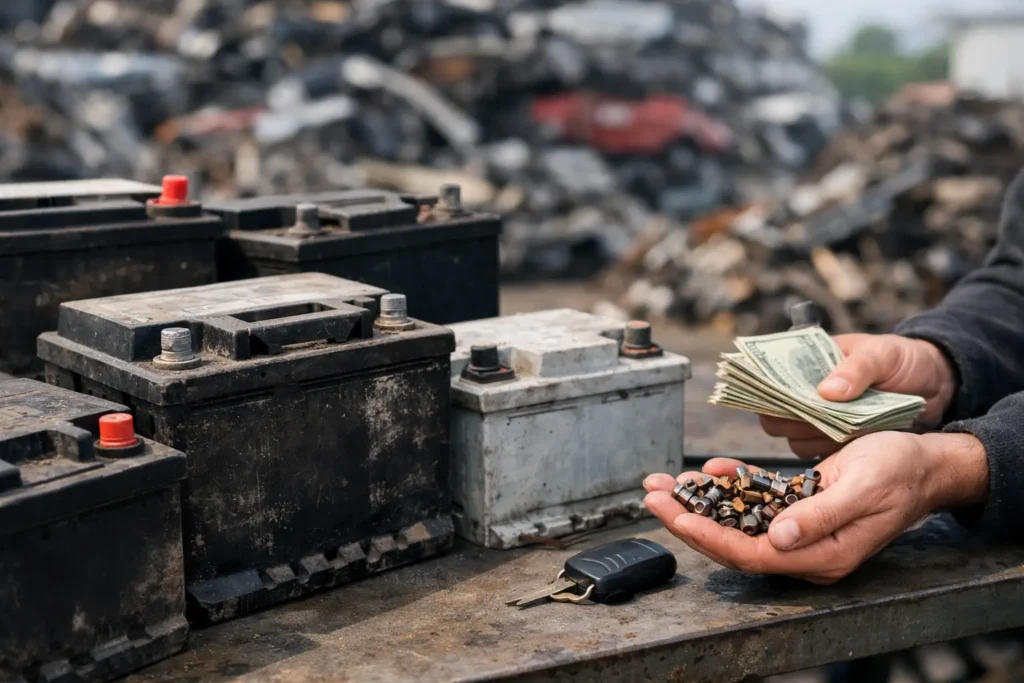
Scrap Car Battery Prices Explained
Published June 26, 2026 ·
If you have an old battery sitting in the shed, the first question is usually simple – what are scrap car battery prices right now, and what will a yard actually pay? The answer depends on weight, condition, chemistry, quantity and current lead market demand. A flat battery is still worth something, but not every battery is priced the same, and not every yard handles them with the same level of accuracy or speed.
For most sellers, the goal is straightforward. You want a fair rate, a clear process and payment without mucking around. That matters whether you are dropping off one battery from the family car or clearing out a stack from a workshop, wrecking yard or transport fleet.
What affects scrap car battery prices
The biggest factor behind scrap car battery prices is the recoverable material inside the battery. Most standard car batteries are lead-acid, which means the scrap value is largely tied to the amount of lead that can be reclaimed and processed back into the recycling chain. When lead prices move, battery prices usually move with them.
Weight matters too. A larger 4WD battery will usually return more than a smaller passenger vehicle battery simply because there is more material in it. That sounds obvious, but it is one reason rough phone estimates can only go so far until the battery is seen, sorted and assessed properly.
Condition can also play a part. In many cases, dead, damaged and used batteries are still accepted because the value is in the material rather than whether the battery still starts a car. But if a battery is badly cracked, leaking or contaminated with other waste, handling becomes more complicated. Some yards may reduce the price or refuse unsafe loads altogether.
Quantity makes a difference as well. One battery is a simple over-the-counter sale. Ten, twenty or a pallet of batteries is a different job. Larger volumes may justify a sharper rate, especially when collection, sorting and turnaround are handled efficiently.
Why prices change from week to week
A lot of people expect a fixed battery price, but scrap markets do not work that way. Battery scrap sits inside a wider metal market, and lead values can rise or fall based on local demand, export conditions, freight costs, processing capacity and global commodity trends. That is why last month’s rate may not be today’s rate.
There is also a local factor. Two yards in the same region may not offer the same price on the same day. Their processing costs, stock levels and buyer networks can all be different. One operator may be aggressively buying battery scrap that week. Another may be focused on other material streams and price batteries more conservatively.
That is why transparent quoting matters. A proper scrap yard should tell you how the price is being applied and what the payout is based on, rather than throwing out a vague number and adjusting it later.
Scrap car battery prices for single batteries vs bulk loads
If you are selling one old battery from your sedan, the process is usually quick and simple. You bring it in, it gets checked, classified and paid out at the current rate. For household sellers, convenience matters almost as much as price. You do not want to spend half a day chasing a few dollars.
Bulk loads are different. Mechanics, auto electricians, transport operators and dismantlers often build up battery stock over time. In that case, scrap car battery prices may be assessed with volume in mind. A yard handling regular commercial quantities may offer better returns because the collection and processing are more efficient per unit.
There is a trade-off, though. If batteries are mixed with rubbish, loose metal, oil-contaminated waste or non-matching battery types, the sorting job becomes slower and more expensive. Clean, separated loads are generally easier to price well.
How battery type can affect value
When people talk about scrap car batteries, they usually mean conventional lead-acid starter batteries. These are the most common in passenger vehicles, utes and light commercial fleets, and they are the standard material stream most scrap yards deal with.
But not every automotive battery is identical. Stop-start vehicles may use AGM or EFB batteries. Some heavy vehicles use larger commercial units. Hybrid and EV batteries are a separate category altogether and should never be lumped in with ordinary lead-acid battery scrap. They require different handling, different safety measures and different pricing logic.
So if you are unsure what you have, ask before loading up the ute. A good yard will tell you what is accepted and how it will be priced, instead of sorting the argument out after you arrive.
How to get the best price without wasting time
The best way to improve your return is to keep the job clean and simple. If you have a single battery, bring it in as-is and make sure it is safe to handle. If you have multiple batteries, stack them securely and keep them separate from general scrap and rubbish.
It also pays to be realistic. The best price is not always the highest number mentioned over the phone. The real test is whether the yard pays fairly when the batteries are inspected, whether the grading is explained properly and whether you get paid on the spot without delays.
If you are dealing with larger volumes, ask for a direct quote based on quantity, battery type and pickup needs. That gives you a clearer picture than a generic advertised rate. For trade and industrial sellers, speed and consistency often matter just as much as squeezing out the final few cents per kilo.
Choosing a yard for scrap car battery prices
Price matters, but service matters too. If a yard is hard to deal with, slow to respond or vague about what it pays, the process stops being worth it very quickly. That is especially true for workshops and businesses that need regular clear-outs and cannot afford downtime.
Look for straightforward pricing, fast turnaround and staff who know what they are handling. Battery recycling is not a throw-it-in-the-corner job. It needs proper sorting, responsible processing and clear communication from the start.
A local operator with direct buying capability is often the better option than passing material through multiple middlemen. Fewer layers usually mean a cleaner transaction and a more competitive payout. For sellers in Melbourne’s west, Melton Scrap Recycling is built around exactly that kind of no-fuss service – fair rates, fast handling and immediate payment.
Why proper battery recycling matters
A dead battery is not just clutter. Lead-acid batteries contain recyclable materials, but they also contain acid and components that should never end up in landfill or dumped with general waste. Selling them to a proper scrap yard is not only the smarter financial move, it is the responsible one.
That matters for households, but it matters even more for trade and commercial sellers. If your business generates battery waste regularly, proper disposal is part of running a clean operation. The right recycler helps turn that waste stream into value while keeping hazardous material out of the wrong places.
There is also a practical point here. Hanging onto old batteries rarely improves the price. They take up room, create safety risks and often end up forgotten until they become a bigger mess to deal with. Moving them on promptly is usually the better call.
When to sell your old batteries
There is no perfect universal day to sell, because market prices move and local buying conditions change. But if you already have unwanted batteries on hand, waiting too long usually does not create much advantage for the average seller. What you gain by timing the market is often less than what you lose in storage hassle, safety concerns and wasted space.
For regular sellers, the better approach is consistency. Move batteries on in manageable loads, keep them separated properly and work with a yard that gives clear pricing each time. That creates a smoother process and removes the guesswork.
If you only have one or two batteries, the decision is even easier. Get rid of them safely, get paid fairly and free up the space. A battery that is finished with the car still has value in the recycling chain, and there is no point letting it sit around gathering dust and corrosion.
The best time to sell is usually when you are ready to stop storing rubbish and start getting paid for it.