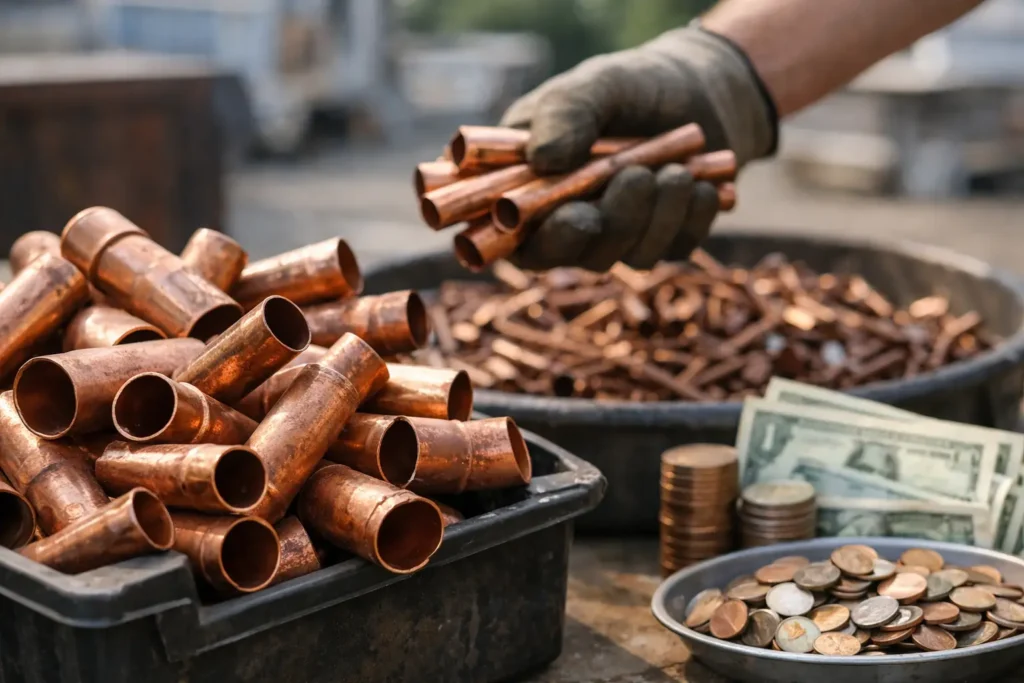
How to Recycle Copper Pipe for Cash
Published June 24, 2026 ·
Copper offcuts pile up faster than most people expect. One bathroom reno, one plumbing refit, or one strip-out job later, and you’ve got a stack of pipe taking up space in the shed, ute, or workshop. If you’re wondering how to recycle copper pipe properly, the good news is it’s straightforward – and if you sort it right, it can also put solid money back in your pocket.
Copper is one of the most valuable non-ferrous metals in the scrap market, which is why it’s worth handling properly instead of throwing it in a skip. Homeowners usually want to clear space and get paid without the run-around. Tradespeople and commercial operators want fast turnaround, accurate grading, and a fair rate based on current market pricing. Either way, the process is simple when you know what buyers are looking for.
How to recycle copper pipe without losing value
The biggest mistake people make is treating all copper the same. It isn’t. Scrap yards pay based on grade, cleanliness, and quantity, so a pile of clean copper tube will usually return more than mixed copper with solder, brass fittings, paint, or other contamination still attached.
Start by separating your copper pipe from everything else. Don’t mix it in with steel, aluminium, brass taps, wire, or general site scrap. If your load is sorted before you arrive, the process is faster and the grading is clearer. That matters because clean, well-prepared copper is easier to process and generally earns a better price.
If you’ve got time, remove obvious non-copper parts. That might include plastic clips, insulation, brackets, rubber, or brass connectors. You do not need to make every piece spotless, but the cleaner the load, the easier it is to classify. For small household amounts, basic sorting is usually enough. For plumbers, demo crews, and workshop operators with regular volume, better prep can make a noticeable difference across repeat loads.
What kind of copper pipe can be recycled?
Most copper pipe can be recycled, including old plumbing tube, heating pipe, air-conditioning copper, and offcuts from construction or renovation work. Even older pipe removed during strip-outs can still have value, provided it isn’t heavily contaminated.
What matters is condition and what’s attached to it. Clean copper pipe with minimal residue is the ideal outcome. Pipe that still has solder joins, paint, fittings, scale build-up, or mixed materials attached can still be recycled, but it may be graded differently. That does not mean it’s not worth bringing in. It just means the payout may depend on how much processing is required after it leaves your hands.
For larger commercial or industrial loads, mixed material is more common and often unavoidable. In that case, honest grading and transparent quoting matter more than trying to over-process everything yourself. If you’re unsure whether your load is worth separating, ask first. A quick conversation can save time on site.
Clean copper vs mixed copper pipe
Clean copper usually means pipe that is mostly free from attachments and excessive contamination. Mixed copper includes pipe with soldered joints, brass ends, paint, dirt, or other materials still fixed to it. The difference matters because clean material is simpler to recycle and tends to attract stronger rates.
There’s a trade-off here. Stripping every fitting from every piece takes time. If you’ve only got a small amount, the extra effort may not be worth it. If you’ve got buckets of offcuts or repeated trade waste, separating the better-grade copper from the lower-grade material often pays off.
How to prepare copper pipe for scrap
Preparation does not need to be complicated. The goal is to present the material in a way that makes grading quick and accurate.
Cut very long lengths down if they’re awkward to handle or transport. Keep copper separate from brass taps, steel brackets, screws, and plastic fittings. If there’s water still trapped inside old plumbing sections, drain it out before loading. Wet, muddy, or rubbish-filled material slows everything down and can affect how the load is assessed.
It also helps to keep different metals in separate tubs or piles. If you’re clearing out a job site, don’t throw copper in with general demo scrap and expect top value. Sorted loads are easier to process and easier to price fairly.
If you’re a homeowner with a small amount from a DIY job, don’t overthink it. Just separate obvious non-metal waste and keep the copper together. If you’re a plumber, sparkie, mechanic, or demolition operator, a bit more sorting usually makes commercial sense because the volume adds up quickly.
Where to take copper pipe for recycling
The right place is a scrap metal recycler that buys non-ferrous metals and grades material properly. That gives you a clearer idea of what you’re being paid for and avoids the usual guesswork.
For small quantities, drop-off is often the easiest option. You bring the copper in, it gets sorted and assessed, and you get paid on the spot. For trade and industrial loads, pickup can be the better move, especially if you’ve got ongoing scrap generation, bulky material, or no time to run loads yourself.
Speed matters here. Most sellers do not want to sit on scrap for weeks, and they definitely do not want vague pricing. A straightforward yard process, quick turnaround, and immediate payment make a big difference when you just want the metal gone and the job finished.
What to expect when you sell copper pipe
A proper recycler will look at the grade, amount, and cleanliness of the pipe, then price it based on current market conditions. Rates can move, so the value of copper today may not be the same next month. That’s normal in the scrap market.
What you should expect is transparency. If part of your load is clean copper and part of it is mixed, that should be explained clearly. If a fitting or attachment drops the grade, you should know why. Straight dealing matters, especially for tradies and commercial operators moving regular volume.
How much is recycled copper pipe worth?
There is no fixed price because copper values shift with market demand, grade, and quantity. Clean copper pipe will usually command a stronger rate than dirty or mixed material, but the exact difference depends on current conditions and the quality of the load.
Quantity can also influence the overall return. A handful of old pipe from a home reno is still worth recycling, but larger and better-sorted loads tend to make the trip more worthwhile. For businesses generating copper regularly, it makes sense to treat scrap as recoverable value rather than site waste.
That’s the practical view. Copper is too valuable to send to landfill, and too useful in the recycling stream to ignore. Once processed, it can be reused in new products without losing much of its quality, which is why demand stays strong.
Common mistakes when recycling copper pipe
The biggest one is mixing copper with general rubbish. The second is assuming every bit of copper pays the same. The third is holding onto a pile for months and letting it get dirtier, wetter, and harder to sort.
Another common issue is leaving too many attachments on the pipe when they could be removed in a few minutes. You do not need to spend half a day cleaning scrap, but obvious brass fittings, plastic clips, or insulation are worth taking off when it’s easy to do.
And if you’ve got regular trade scrap, don’t wait until it becomes a mess. Keeping copper in a separate bin or corner of the workshop makes recycling quicker and keeps the material in better condition.
Is it worth recycling small amounts of copper pipe?
Yes, in most cases it is. Even a modest amount of copper has value, and recycling it is better than dumping it in hard waste or leaving it under the bench for years. For homeowners, the main win is clearing clutter and getting a bit of cash back. For tradies, it’s about turning regular offcuts into repeat returns.
The only time it becomes less worthwhile is when the material is heavily mixed with rubbish or the effort to separate it is completely out of proportion to the value. Even then, it’s usually better to ask than assume. Many people underestimate what their copper is worth.
If you’re in Melton or surrounding areas and want a fast, no-fuss way to move copper pipe, Melton Scrap Recycling buys copper and other non-ferrous metals with straightforward grading, quick service, and immediate payment.
Copper pipe should never be treated like rubbish. If you sort it properly, keep it clean, and take it to a recycler that deals straight, it becomes one of the easier ways to turn leftover metal into real value.