How to Sort Copper Scrap for Better Prices
Published June 22, 2026 ·
If you turn up to a scrap yard with mixed copper, fittings, wire, steel attachments and rubbish all thrown together, you make the job slower and usually cut into your own payout. Knowing how to sort copper scrap before you sell it is one of the simplest ways to get a better price and avoid arguments over grading.
For tradies, workshops, sparkies, plumbers and even homeowners clearing out old materials, sorted copper means faster processing and a clearer quote. It also helps you understand why one pile is worth more than another. Not all copper is paid the same, and small contamination can shift a load into a lower grade.
How to sort copper scrap without wasting time
The aim is not to make the job complicated. The aim is to separate high-value copper from lower-grade copper and remove anything that does not belong there. If you do that properly, the load is easier to assess and you give yourself the best chance of a strong return.
Start by splitting your material into broad groups. Keep bright clean copper on its own, keep heavier mixed copper together, keep insulated wire separate, and pull out brass, aluminium, stainless steel and steel attachments. A few minutes of sorting in the shed, workshop or on site can make a real difference when the load is priced.
If you handle copper regularly, use tubs, buckets or labelled bins instead of building one mixed pile. That way you are sorting as you go rather than doing a messy clean-up job at the end.
The main copper scrap grades to separate
Bright clean copper
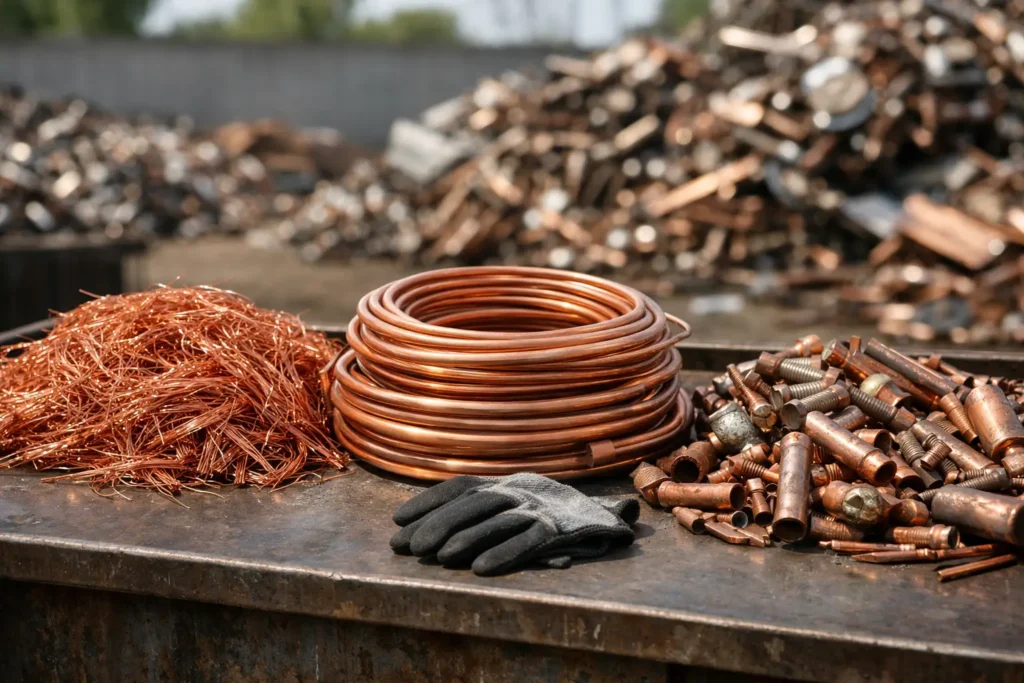
This is usually the top-paying category. It is clean, uncoated, unalloyed copper with no paint, no solder, no insulation and no attachments. Common examples include stripped copper wire with a bright shiny finish and clean copper tube offcuts that have not been soldered or painted.
This grade matters because it is the easiest to process and has the highest copper content. If you have bright wire mixed in with lower-grade material, do not leave it there out of convenience. Separate it properly.
Clean copper tubing and solids
This includes copper pipe, sheet and solids that are mostly clean but not quite in the top category. It might be dull rather than bright, or it may have minor oxidation from age. As long as it is free of heavy contamination, it will usually sit above mixed or dirty copper.
Plumbers often build up this type of scrap quickly from pipe offcuts, old hot water services and renovation work. The key is to cut away valves, clips and any joined metals before the load goes in.
Mixed or dirty copper
This is where many loads lose value. Mixed copper can include painted copper, soldered pipe, burnt copper, tarnished material with heavy residue, or copper with attachments still fixed to it. It is still worth money, but it is usually priced below cleaner grades because more work is needed to process it.
If you are short on time, this is often the category where yards will place material that has not been sorted carefully enough. That is why preparation matters.
Insulated copper wire
Insulated wire should be kept separate from stripped copper. The copper inside still has value, but the plastic insulation changes the grade and the recovery rate. Different wire types can also vary in value depending on copper content.
Heavy cable is different from fine household wire, and both are different again from data cable or low-content wire. If you have a decent volume, separating thicker cable from lighter mixed wire can help make the grading more accurate.
What to remove before selling
The quickest way to improve a copper load is to remove obvious non-copper material. Steel screws, brackets, plastic fittings, rubber, insulation, dirt and general rubbish all affect grade. Some contamination is unavoidable, but a lot of it is just poor preparation.
Magnets are useful here. Copper is non-ferrous, so a magnet will quickly pick up any steel left attached to pipe or fittings. If a copper item has a steel clamp, screw or bracket, take it off where practical. The same goes for brass taps, aluminium parts and plastic connectors. Mixed metals can still be sold, but when they are blended into one heap, the entire load can be valued more conservatively.
Do not burn wire to remove insulation. It lowers quality, creates safety and environmental issues, and can reduce what the material is worth. Clean stripping is one thing. Burnt copper is another.
How to sort copper scrap from common jobs
Electrical work
Sparkies often deal with a mix of stripped wire, insulated cable, cable tails, switchboard offcuts and old fittings. The best approach is simple: keep stripped bright copper separate from insulated wire, and keep fittings and mixed hardware in another container.
If the wire is too thin or too time-consuming to strip, do not waste labour chasing a small gain. Sometimes it is more efficient to sell it as insulated wire. It depends on quantity, the type of cable and how much time you are burning to clean it.
Plumbing work
Plumbers usually see value lost through solder, brass valves and mixed attachments being left on copper pipe. If you are pulling out old pipework, cut brass ends off and separate clean tube from joined or soldered pieces.
A pile of clean tube will generally be worth more than a mixed tub of pipe, taps, fittings and clips all jammed together. It is not about perfection. It is about giving each metal its own category.
Automotive and mechanical work
Mechanics and auto dismantlers often have copper in wiring looms, radiators, starter motors and electrical components. This material can be valuable, but it rarely belongs in the same pile.
Copper wire, mixed electrical components and non-ferrous assemblies should be sorted apart where possible. Radiators, for example, may contain copper and brass, but they are not the same as clean copper tube or stripped wire. Better separation usually means cleaner grading.
A simple setup for home sellers and small businesses
You do not need a full workshop system to sort properly. A practical setup is enough. Use separate bins or buckets for bright copper, copper pipe and solids, insulated wire, brass and mixed metals. Label them clearly and keep them under cover if possible.
If you are only doing a one-off clean-up, lay the material out on the ground or a bench and sort it by eye first. Pull out the obvious high-grade copper, then remove anything attached to it. Once the clean material is isolated, put the rest into lower-grade groups. Even that basic effort can make a noticeable difference.
For regular sellers, consistency is what saves time. Sort each day’s scrap before it builds into a mess.
Mistakes that cost you money
The biggest mistake is mixing everything together and expecting top rates across the lot. Scrap is priced by grade, not by wishful thinking. If high-grade copper is buried in dirty material, it may all end up assessed at the lower level.
Another common mistake is over-cleaning low-value material. Stripping every last piece of thin wire is not always the best use of your time. If labour outweighs the gain, you are better off moving it as sorted insulated wire and getting paid quickly.
People also lose value by leaving moisture, mud or rubbish in the load. Wet or dirty scrap is harder to process and can complicate grading. Keep it clean, dry and separated wherever you can.
Why proper sorting leads to faster, fairer selling
When your copper is sorted, the sale is more straightforward. The grading is clearer, the process is quicker and there is less room for confusion about what belongs in each category. That matters whether you are dropping off a few kilos from a reno or moving regular commercial loads.
It also puts you in control. You know what you have, you know why one pile is worth more than another, and you are less likely to accept a lower return just because the load is a jumble. That is exactly why experienced sellers sort first and sell second.
At Melton Scrap Recycling, we see it every day: the sellers who separate their copper properly usually get through the process faster and with fewer surprises. If you want the best result, treat sorting as part of the job, not an afterthought.
Copper prices move, grades vary, and every load is a bit different. But clean separation nearly always works in your favour. Put in a small amount of effort before you sell, and your scrap has a better chance of paying what it should.