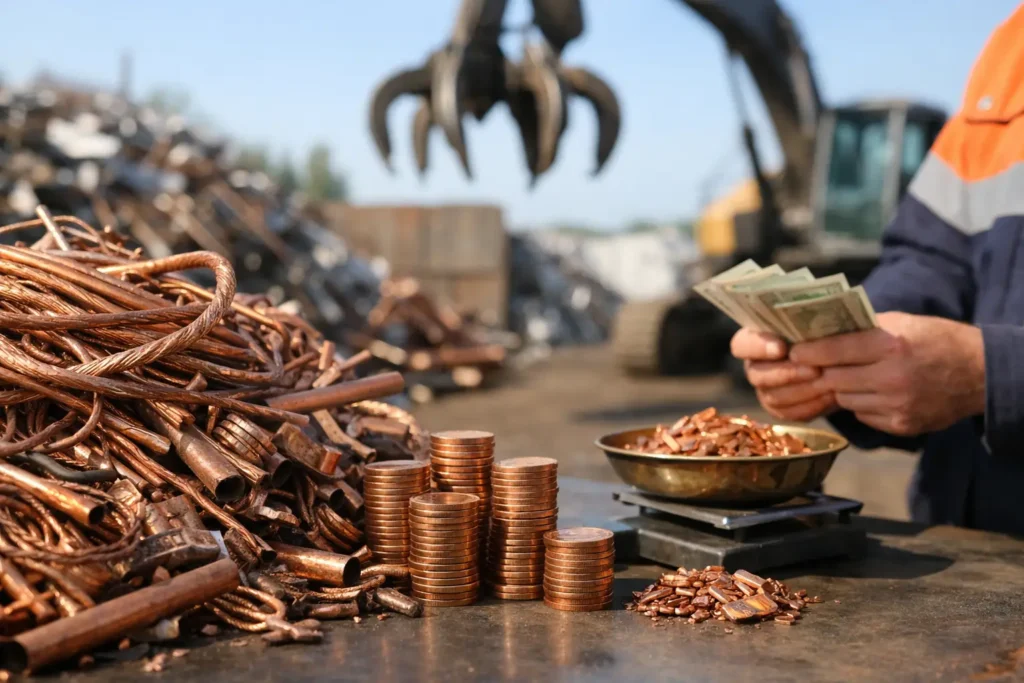
Sell Scrap Copper for a Fair Price in Melton
Published July 14, 2026 ·
Copper sitting in a shed, workshop or renovation pile is not just clutter. Scrap copper is one of the more valuable non-ferrous metals, and a sorted load can put real cash back in your pocket. The difference between a quick, fair sale and a disappointing payout usually comes down to knowing what you have, keeping it clean and dealing with a recycler that grades it properly.
For homeowners, trades and businesses across Melton and greater Melbourne, the job is simple: separate the copper from the mixed rubbish, bring it in or arrange collection, and get paid based on the grade and current market value.
What Counts as Scrap Copper?
Copper is used wherever electricity, water or heat needs to move efficiently. That means it turns up in far more places than most people expect. Electricians often build up cable offcuts and old wiring. Plumbers deal with copper pipe, fittings and hot-water service components. Mechanics, air-conditioning technicians and demolition crews can recover copper from machinery, motors, radiators and building strip-outs.
Common copper-bearing materials include clean pipe, roofing copper, cable, electrical wiring, busbars, fittings, taps, hot-water cylinders, appliance components, motors and refrigeration units. Some items are mostly copper, while others contain copper alongside insulation, brass, steel, plastic or other metals. That is why accurate sorting matters.
Copper should never be removed from infrastructure, public assets or property without clear authority. If material has come from a job site, rental property, commercial premises or demolition project, keep records showing it is yours to sell. A professional yard will ask sensible questions where required and follows identification and transaction requirements.
Why Copper Grades Affect Your Payout
Not all copper receives the same rate. The cleaner and more concentrated the copper, the less processing is needed before it can return to the recycling stream. That generally means a stronger price per kilogram.
Clean Copper
Clean, uncoated copper is usually the premium grade. Think bright wire with insulation removed, clean pipe without soldered fittings, or copper offcuts free from paint, plastic, steel and excessive contamination. It is high-value material because it can be processed with minimal extra work.
Mixed or Heavy Copper
Copper pipe with joins, fittings, paint, solder or minor attachments may be classed differently from clean copper. Heavy copper can still be valuable, but the grade depends on how much non-copper material is attached. A load of pipe mixed with brass valves and steel brackets should not be treated the same as clean pipe.
Insulated Copper Cable
Cable is one of the most common forms of scrap copper, especially for electricians, data contractors and renovators. Its value depends on copper recovery. Thick cable with a high copper content is generally worth more than fine wire with heavy insulation, plugs or mixed materials.
Stripping cable can improve its grade in some cases, but it is not always worth the time. For a small household load, taking it in as insulated cable may be the sensible option. For regular trade quantities, sorting cable by type can make a noticeable difference over time.
Copper-Bearing Items
Motors, transformers, radiators, compressors and appliances can contain copper, but they are not pure copper. They need to be assessed by what they contain and how much separation is required. Do not assume a heavy motor will be paid at a clean copper rate. It may still be worth selling, but it belongs in its correct category.
How to Prepare Scrap Copper Before You Sell
You do not need to spend all weekend turning a small pile into showroom-perfect metal. The aim is to remove obvious contamination and keep different materials separate. A little preparation makes grading faster, clearer and fairer.
Start by putting clean copper pipe, copper wire, brass fittings, aluminium and steel into separate tubs, bins or bags. Remove loose plastic, timber, rubber and general rubbish. If a copper pipe has a brass tap attached, keep it aside rather than mixing it through your clean copper. The same applies to cable plugs, steel screws and large plastic fittings.
Avoid burning insulation from wire. It is unsafe, creates toxic smoke and can contaminate the metal. It can also leave you with material that is harder to grade properly. Bring cable in as-is if you are unsure. An experienced recycler can identify the material and explain how it will be classified.
For larger commercial or demolition loads, separate material at the source where practical. A skip or ute tray filled with mixed metal takes longer to process than clearly separated piles. On a busy job, that extra organisation can save time, reduce confusion and help preserve the value of your non-ferrous metals.
What Determines the Current Scrap Copper Price?
Copper pricing moves with global supply, demand, manufacturing activity, transport costs, currency movements and the condition of local recycling markets. There is no fixed rate that applies forever, and anybody offering one without seeing the material is oversimplifying the job.
Your final payout also depends on grade, weight, cleanliness and volume. A few kilograms of mixed cable will be handled differently from a regular contractor load of sorted bright wire. Large volumes can be easier to collect and process efficiently, but grade still matters. More weight does not automatically mean a better rate if the material is heavily contaminated or mixed.
The practical approach is to ask for a current quote, describe the material honestly and have it inspected on arrival or during collection. Transparent grading is what protects both sides of the transaction. You should know whether you are selling clean copper, mixed copper, insulated cable or a copper-bearing item before payment is finalised.
Drop Off Small Loads or Arrange Fast Collection
A few lengths of old pipe, wiring from a renovation or a box of fittings can be dropped off without making the process complicated. Bring the material in, have it sorted and graded, and receive payment once the transaction is complete. It is a straightforward option for householders, plumbers and electricians cleaning up after a job.
For workshops, factories, construction sites and demolition projects, collection can make better commercial sense. Heavy bins, bundled cable, stripped-out plant and recurring metal waste take time to move. A planned collection keeps your site clearer, frees up valuable storage space and gets recyclable metal moving without tying up your team.
Melton Scrap Recycling handles both smaller public loads and larger commercial quantities, with practical collection options for eligible loads. If timing matters, provide clear details about the material, estimated quantity, site access and whether it is already sorted. That allows the collection to be organised quickly and avoids delays on the day.
Common Mistakes That Reduce Copper Value
The biggest mistake is treating every reddish metal as clean copper. Brass can look similar, while coated pipe, mixed fittings and cable each need their own classification. Separating materials before arrival gives you a clearer result and avoids lower-grade mixed loads.
Another common issue is throwing copper in with steel, aluminium cans, old appliances and general renovation waste. Once a load is mixed and dirty, sorting takes longer and valuable pieces can be missed. Keep a dedicated container for non-ferrous metal on site, even if it is only a sturdy bin in the corner of the workshop.
Finally, do not hold onto usable quantities waiting for a mythical perfect price. Copper markets can rise and fall, but storage has a cost too. Material can be stolen, damaged, buried under other stock or simply become another job nobody gets around to. Sell when the load is worth your time and you have a clear, current quote.
Recycling Copper Keeps Value in Circulation
Copper can be recycled repeatedly without losing the core properties that make it useful. Recovering it from old cable, plumbing and machinery reduces the need for new extraction and keeps valuable material out of landfill. For businesses, it is also a practical way to turn waste management into a recoverable return.
That benefit does not need to be complicated. Sort your copper, keep it clean, and move it through a trusted local recycler rather than sending it away with mixed rubbish. You clear space, get paid fairly for the grade, and put a useful resource back into circulation.
If you have copper pipe, cable, fittings or a larger commercial load ready to move, set it aside today. A quick grade and current price can turn that forgotten pile into cash without dragging out the job.