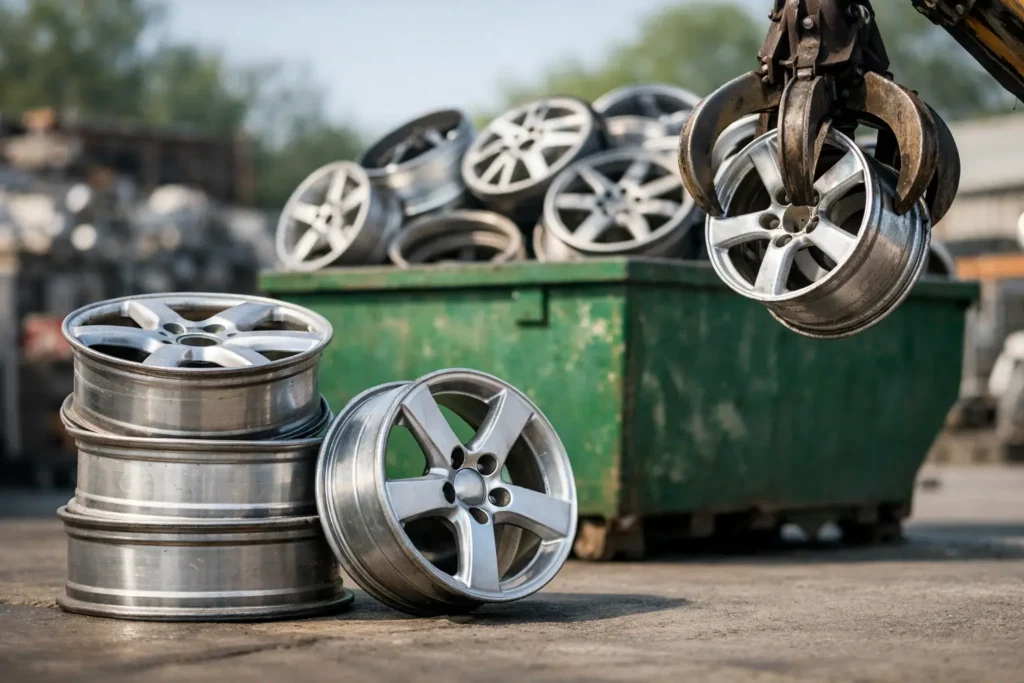
Where to Recycle Aluminium Wheels
Published July 1, 2026 ·
If you’ve got a stack of old rims in the shed, behind the workshop or sitting next to the fence, you’re probably asking the right question: where to recycle aluminium wheels without wasting time or getting messed around on price. The short answer is simple – take them to a scrap metal recycler that accepts aluminium rims, grades them properly and pays on the spot. The better answer depends on what condition the wheels are in, how many you’ve got, and whether you want the fastest drop-off or a pickup arranged.
Aluminium wheels are too valuable to throw in hard rubbish. Even damaged, scratched or outdated sets still carry scrap value. For homeowners, that means turning clutter into cash. For mechanics, panel shops, tyre shops and wreckers, it means clearing space and recovering value from stock that’s no longer worth storing.
Where to recycle aluminium wheels near you
The best place to recycle aluminium wheels is a local scrap metal yard that buys non-ferrous metals. That matters because aluminium is priced and processed differently from lower-value mixed metal loads. A general waste facility might take them, but that does not mean you’ll get paid for them. A dedicated scrap recycler will usually inspect the wheels, sort them by type and contamination, and offer a market-based rate.
If you’re in Melton, Melbourne Metro or surrounding Victorian areas, a local metal recycler is usually the quickest option because you can either drop the wheels off or arrange collection for larger loads. That suits both one-off sellers and trade customers who need regular clear-outs.
Not every recycler handles every wheel in the same way. Some buyers want clean aluminium rims only. Others will accept wheels with minor attachments still on them, but the rate may change. That’s why it pays to ask upfront what they accept and how they grade the material.
What counts as recyclable aluminium wheels?
Most factory and aftermarket alloy rims are recyclable. If the wheel is made from aluminium alloy, it can usually go through the scrap stream and be processed for reuse. That includes wheels from passenger cars, 4WDs, utes, trailers and some commercial vehicles.
What changes the payout is not usually whether the wheel can be recycled, but how clean it is. A bare aluminium rim is straightforward. A wheel with tyres still fitted, steel inserts, wheel weights, excessive dirt or other attached parts may still be accepted, but it takes more handling. More labour and more separation usually mean a lower return.
Cracked, bent and heavily kerbed rims are still recyclable. In fact, many scrap loads come from wheels that are no longer roadworthy or worth repairing. Cosmetic damage does not stop the metal being recovered.
Wheels with tyres still on
This is one of the most common sticking points. Some people load up a set of complete wheels and expect the same rate as clean loose rims. That rarely happens. Tyres have to be removed or managed separately, and that extra work affects the price. If you want the best return, ask whether the tyres should come off before you bring the wheels in.
Painted, dirty or damaged rims
Paint, brake dust and road grime are normal. They do not automatically make the wheels worthless. But heavy contamination can affect grading. If you’ve got time, a basic clean-up helps. If you don’t, it’s still worth getting a quote rather than leaving them sitting around.
How scrap recyclers price aluminium wheels
If you want to know where to recycle aluminium wheels for a fair return, pricing is the real issue. Scrap aluminium pricing moves with market conditions, and wheel grades can vary from one load to the next. That means no honest recycler can promise one flat number for every rim in every condition.
What you should expect is a clear quote based on current market rates, the condition of the wheels, the volume you’re bringing in and whether extra sorting is needed. A seller with two loose clean rims will be priced differently from a workshop with twenty wheels still fitted with worn tyres. Volume can help, but cleanliness and preparation still matter.
This is also why transparency matters. A good recycler tells you what they’re buying, how it’s being classified and what affects the rate. If the price sounds vague or keeps changing without explanation, move on.
Should you sell wheels privately or scrap them?
It depends on the wheels. If they’re genuine branded rims in good condition, straight, matching and still desirable for resale, you may get more by selling them privately. But private selling takes time. You need to photograph them, list them, answer messages, deal with no-shows and negotiate with buyers who often want a bargain.
If the wheels are damaged, mismatched, poor quality, badly worn or simply not worth the effort, scrap recycling is usually the smarter move. You get rid of them fast, free up space and get paid without the back-and-forth. For many people, that certainty is worth more than chasing an extra few dollars through a private sale that may never happen.
For trade sellers, the equation is even simpler. Floor space, yard space and staff time all cost money. Old rims that sit around for months are not an asset. They’re dead stock.
How to get the best result when recycling aluminium wheels
You do not need to overcomplicate it, but a few simple steps can make a difference. First, separate aluminium wheels from other scrap if you can. Mixed loads take longer to sort and can reduce clarity on pricing.
Second, remove obvious non-metal items if it’s practical. Tyres, plastic centre caps and loose attachments can all affect how quickly the load can be processed. If removing them is not realistic, ask the recycler before you travel.
Third, be clear about quantity. A set of four wheels is one thing. A ute load from a workshop clean-out is another. The more accurate you are, the easier it is to get a realistic quote.
Finally, choose a recycler that values speed and straight answers. You should not have to chase basic information about what’s accepted, when you can drop off, or how payment works.
Where to recycle aluminium wheels if you have bulk loads
Bulk loads need a different approach. If you run a tyre shop, mechanical workshop, dismantling yard or industrial site, regular wheel disposal is not just a once-off tidy-up. It’s part of operations. In that case, the best recycling option is a scrap buyer that can handle repeat volumes, sort the material efficiently and arrange pickup when needed.
That saves staff time and keeps the site cleaner and safer. It also gives you a more consistent outlet for scrap, which matters when aluminium prices move and you want a dependable buyer rather than a different solution every month.
For sellers in Victoria, working with a local operator like Melton Scrap Recycling can make that process simpler because you can arrange either yard drop-off or collection depending on load size and urgency. That suits both small automotive sellers and larger commercial jobs.
Common mistakes to avoid
The biggest mistake is sending aluminium wheels to general waste or landfill. You lose the scrap value and add to disposal costs for no reason. The second mistake is assuming all wheels are worth the same. Material type, condition and attachments all affect price.
Another common issue is holding onto low-value stock for too long. People often mean to deal with it later, but later turns into six months. If the wheels are not being reused or sold, recycling them now is usually the cleaner, quicker option.
It’s also worth avoiding buyers who make things harder than they need to be. If the process feels vague, slow or inconsistent at the start, that usually does not improve once you arrive.
What to ask before you take your wheels in
Before loading the car, ute or trailer, ask a few direct questions. Do they accept aluminium wheels in your condition? Do tyres need to be removed first? Can they handle bulk quantities? How is the material priced? When can you drop off or book a pickup?
Those questions save time and stop surprises at the yard. They also tell you a lot about how the business operates. Straight answers are a good sign. Hesitation usually is not.
If you’re clearing out old rims, damaged alloys or workshop scrap, the right recycler will make the job simple: confirm what you’ve got, tell you how it will be handled, and pay fairly based on the load in front of them. That’s what recycling should look like – practical, honest and worth your time.
Old aluminium wheels are not rubbish, and they should not sit around like they are. If they’re taking up room, move them on and turn them into something useful.